Category Archives: Uncategorized

Preparing for Rough Weather

In the days leading up to Thanksgiving, I am getting more calm as the rest of the country gets revved up.  It is my extra busy time from October 1-Thanksgiving.  It is the time of year when squash/pumpkin production isn’t terribly high in Hawaii, but the demand suddenly is.  It is also the time when we all want to think in terms of comfort food, pumpkin patches and family gatherings.  But with a tough Summer behind us, I am grateful that my preventative steps helped in the patch.

October was an intense month where some days, all I could do was just continue to believe that my actions would prevail, and the harvest would come.  It did.  The Summer was a sluggish season where Winter rains came in June.  There was flooding when there should have been long hot days.  Many farmers felt like disappointments, when really, it was one of the toughest seasons all across the country.  Even in the darker moments, when the seasons flip, and hurricanes come one after the next, I always feel that there is something that you can do.  The weather is not your fault, but we need to continue to search for ways to minimize loss.

I got a call from more than one farm across the state that noted that their pumpkins were rotting on the ground.  My answer was simple:  get them up off the ground.  For many this seemed like a time consuming act, but for me, loosing your entire crop isn’t an option.  I recommend that as the pumpkins fruit, take a piece of untreated lumber and slip it under the fruit.  It will cause the sow bugs/rollie pollies to go under the wood rather than destroy the skin of your squash.  It will also keep the squash from sitting on wet ground, and reduce the likelihood of rot.  I have had many people say how time consuming it is, so here is my method and maybe it can work for you.  Keep stacks of scrap wood at intervals near the edge of your patch.  As they fruit, carry a few squares of wood under your arm, and slip them under the new fruits as you see them.  This time of year, squash in Hawaii is just starting to take off, but Winter rains are also heading our way.  It is a great practice that has allowed me to loose no fruits to ground rot.  It also keeps the skin display perfect, while you are making a mental note of which of your vines are producing.

The pumpkins may roll off the blocks as they grow.  I simply check on them once in a while and replace them or add a second block if the squash is a really large one.  After harvesting, the block gets collected, dried in the sun and used again for another squash.  Try it out and see how it works for you.  You never know what the weather is going to bring, and this way, you are ready.  You can still “block” the fruits even mid or late season.  You can even do it when the field is flooding.  Any action, no matter how late, is better than none.

Fixing at the Farm: jacking the delivery car and replacing muffler clamps

Keeping the farm up and running often means keeping the delivery cars up and running as well.  It has been a rough month of wear and tear on both me and the cars.  Lots of go go go with all of the pumpkin outreach.  So something was bound to fail, and two things did.  First, my rear drum on the hub worked it’s way loose, creating an annoying squeak squeak squeak sound that could have led to an expensive replacement if it continued long enough to destroy the splines on the axle.  That is all repaired now, so the next thing was the muffler clamp rusted out completely. In doing so, the muffler pipe came out and created an exciting, though annoying to others, muffler sound.

So first, let’s jack the car.  What to know:   Safety!!!! Don’t even start without a floor jack, two jack stands and safety goggles.  DSC_0121 Know the rating of the equipment and of the vehicle you are jacking.  This floor jack is rated to 4000lbs, and the stands to two tons.  The car weighs less than two tons…that is the key.  Vehicle must weigh less than the numbers on your jack equipment.  Don’t know the weight of your vehicle?  Look up the year and model online, or in the manual, or in my case, inside of the door.   For this simple muffler repair, three tires are on the ground, with a wooden block on front and back of one of the wheels that is touching the ground. Next, after jacking off the solid frame, the jack stands are placed at two other nearby locations on the car as a back up.  This will seem way over the top for many, as the car is barely “up” off the ground, but it is better safe than sorry.  Next, safety goggles on…and off the top of your head.  Then once the car is jacked and secured, hit the old rusted muffler clamp with a mallet a few times to loosen, then apply penetrating liquid of your choice.  Let it sit a bit, then take two wrenches that are the same size, one top, one bottom and “break” the rusted hold of the bolt. The top wrench will hold the top of the bolt in place, while the bottom wrench will be put on the bottom of the bolt and you will push the wrench clockwise, while the upper wrench is pushed in a counter clockwise position.  This is breaking free the bolt so that they can be removed from the muffler pipe.  Mine came apart in a pile of rusted bits.  Without the safety glasses, this could have gotten in my eyes.  Make sure you have the new clamp of the right size first.

A small repair, but it keeps the car on the road, and deliveries right on schedule…without waking the neighborhood!  Here is a mini video to go through some of the above.  Good luck, and never go under a car without multiple safety points jacked and secured!

Error
This video doesn’t exist

as always, my video cuts out (LOL) but you get the idea.

the pieces for my VW A closer look at the replacement clamp.  Note the two circular parts that need to be put around the smaller pipe prior to clamping the lot together.  The top of the clamp is at left.  It is considered the top, only because that makes it easier to screw on the nuts from the bottom.  Here is how it would look like as you are piecing it together…

the finished result and this is with the two circular pieces, and the two part clamp cinched down over where one pipe was inserted into the other.  You could use three hands, but by assembling one side of the clamp prior to pushing the pipes together, it makes it much easier.  Then two wrenches again, one holding the bolt from spinning at top, then the other wrench tightens the bottom nut.  I went back and forth and tightened each one so to tighten evenly.  Then the real test…start the engine and listen for what the muffler sounds like… then joy ride to follow!  Yes you can do this one….Good luck aspiring gear heads!

Proud to Represent Hawaii

Hawaii often gets left out of many agricultural events.  People often ask me why.  It is simple: fruit flies.  They have made our exporting of produce difficult for the last 100 years.  With that being said, they have also made it the most challenging place to grow many otherwise common vegetables.  Marketing has showcased pineapple and sugar, two plantation crops that are uneffected by these pests. But we are not so proud to note that every year, new agricultural pests erode what small food production we have in the Hawaiian islands. When asked why I didn’t bring squash to the expo, other growers just shake their heads.  Those who have been around a while usually say, “oh fruit fly? Lucky you are growing anything at all.”  They are right.

It is for that exact reason that I began researching, and later breeding squash for Hawaii, and other areas with tropical fruit flies, and the newer introduction, Pickle Worm.  When California gets an invasion of fruit flies, they sound the alarms.  When Hawaii gets a new pest, it barely makes the news.  Another one, is not what any of us need.  But they continue to come in every year.  That is one of the many downsides of importing over 90% of your food.  It leaves the door open for pests from around the world to enter the islands.  Don’t believe me, try talking to someone from Australia.  We have many of the same issues.  I had more than one person ask for my squash at the National Heirloom Expo last year, I had to direct them to the images on my booth,  often the response was, “couldn’t you smuggle one in?”  I know they meant well, wanting me to represent my breeding and farming efforts with the real thing, but the very last thing I want to do is destroy California agriculture so that I can have something to show.  I explained the magnitude of what one selfish act could do.

But after having so many inquiries, I just thought my way through the situation.  Though I could not bring squash into California, or anywhere else in the US, I could get seed through. I wanted to collect more research data, as I entered year 4 of my farm’s independent research for squash in Hawaii.  It was brought to my attention, that maybe I should include it in the Baker Creek squash trials.  I will be telling that story at a later time, but for now, I just wanted to share the very good news that the Hawaiian Black Kabocha not only survived, but it produced in a very different environment, and surrounded by all new pests, and squash virus.  Why does this matter?  It matters in many more reasons other than having a squash in the line up at the expo.  It is another potential solution for islands and areas suffering from both fruit fly and drought.  It can be a solution for the food production efforts of other places.  The labors of one can help many.  After the expo I received an angered email that noted how self-centered my actions were.  Now, it was time for me to shake my head, knowing in my heart, he couldn’t be further from the truth. So Hawaii, this was for you.  Mahalo nui loa for the dozens of top ranked chefs who taught me the nuances of flavor, so that I could be a better informed squash breeder.  Because it is simple, if I am going to be breeding for pest resistance, I may as well breed for excellence in flavor and texture as well.  Hit that ball out of the park for all of us.

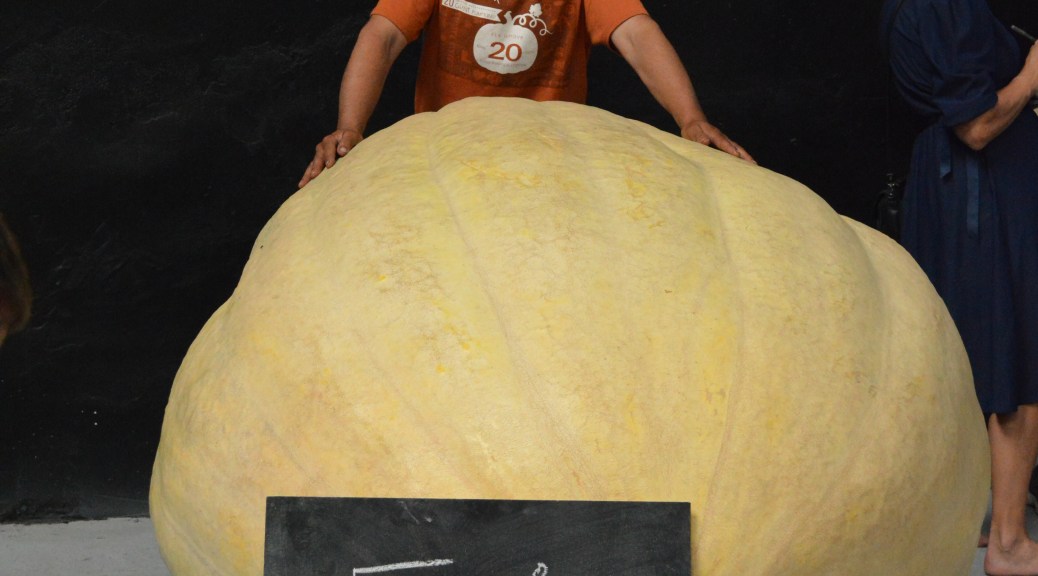
So here she is sitting pretty in the line up.  Only a Hawaii grower knows how much that means to get her there.

DSC_0691

Creating a U Pick Tomato Garden for the Poultry

Tired of the poultry eyeing the tomatoes?  How about designing a garden with them in mind.  They like a diverse selection of healthy foods, just like us, so why not let them collect the low hanging fruit.  Let me explain…

DSC_1072

These now aged shipping pallet beds were created in the chicken area, which could be a recipe for disaster, unless you think of all parties in your design.  Wild chickens are all around in Hawaii, so everyone thinks about how to keep them out, but few think in terms of working with them in the garden.  The pallet garden was the perfect place to plant a sprawling wild type cherry tomato.  Dime sized and quite acidic, they make a great cooking tomato, tossed by the handful into curries, stir fry, sauce.  They are easy to grow and resist mildews.  Prolific enough to share with the barnyard.

DSC_1074

The pallets are 4′ tall, so that leaves that entire length of a drop for tomato, and in this case, Mexican Oregano plants also drape the sides of the pallets.  This creates a shaded, edible environment, that also gives some protection from the heavy rains that flooded the area just a few days ago.  In the photo above, Indigo  surveys the area for ripe tomatoes that are at “chicken level.”  The ones at the top, are harvested for human consumption, and the ones near the ground become a U pick for the pig and the chickens.  The bonus is that they are constantly looking for tomatoes, and in the process, they find all of the snails and slugs and get them too.

Red gets a tomato

Here Red walks the “tomato zone” to see if she missed any.  She is just coming through a long molt, so she is happy to be out of the coop and strutting her stuff with the others.

Indigo

Indigo, the neighborhood rooster enjoys showing the hens the fallen tomatoes after the storm.  Everyone wins, everyone gets a share.

Planting Chili Peppers in Containers

It is an interesting year for chilis in Upcounty Hawaii.  Cold, wet, Winter weather has changed their schedule.  This is normally time for their big growth time, but this year the season is different.  Am I ok with it?  Sort of.  This is why I plant so many heirloom varieties.   Some are loving this weather, while others are waiting for their time.  I learned many things this year.  The importance of pruning, and timing the pruning to the plant’s growth cycle.  I also learned how to grow chilis from cuttings.  Though only one lone Thai Dragon Pepper was a successful grow out from a cutting, it is a lovely plant, and I learned that the method does work, and that I should try it throughout the year to find ideal times.

I also did two rounds of grow outs from seed despite my Spring travels.  I have two new success with orange Habanero, and Purple Cayenne.  Then back to making sure to care for the varieties that have already shown potential. Like Black Hungarian, and Aji Limon (Lemon Drop.)  Two peppers from two different parts of the globe, but both like the highly variable conditions at the farm.

I love to plant and transplant when it rains.  Though it is bright and sunny in the video, the skies opened and closed several times in the past few days as yet another tropical storm spins by.  I decided to start an absurd number of chilis this summer, knowing that it was now or never.  Germination becomes more difficult in the months ahead.  Many chilis go semi-dormant in Winter, unless we have a warm Winter.  I get them going when we still have longish days, then we will see what the fall brings.  It may get hot in Aug and September, which would set them up with strong growth.  Or we may be having our Winter now.  We never had Winter rain this year…so in many ways this is our Winter.

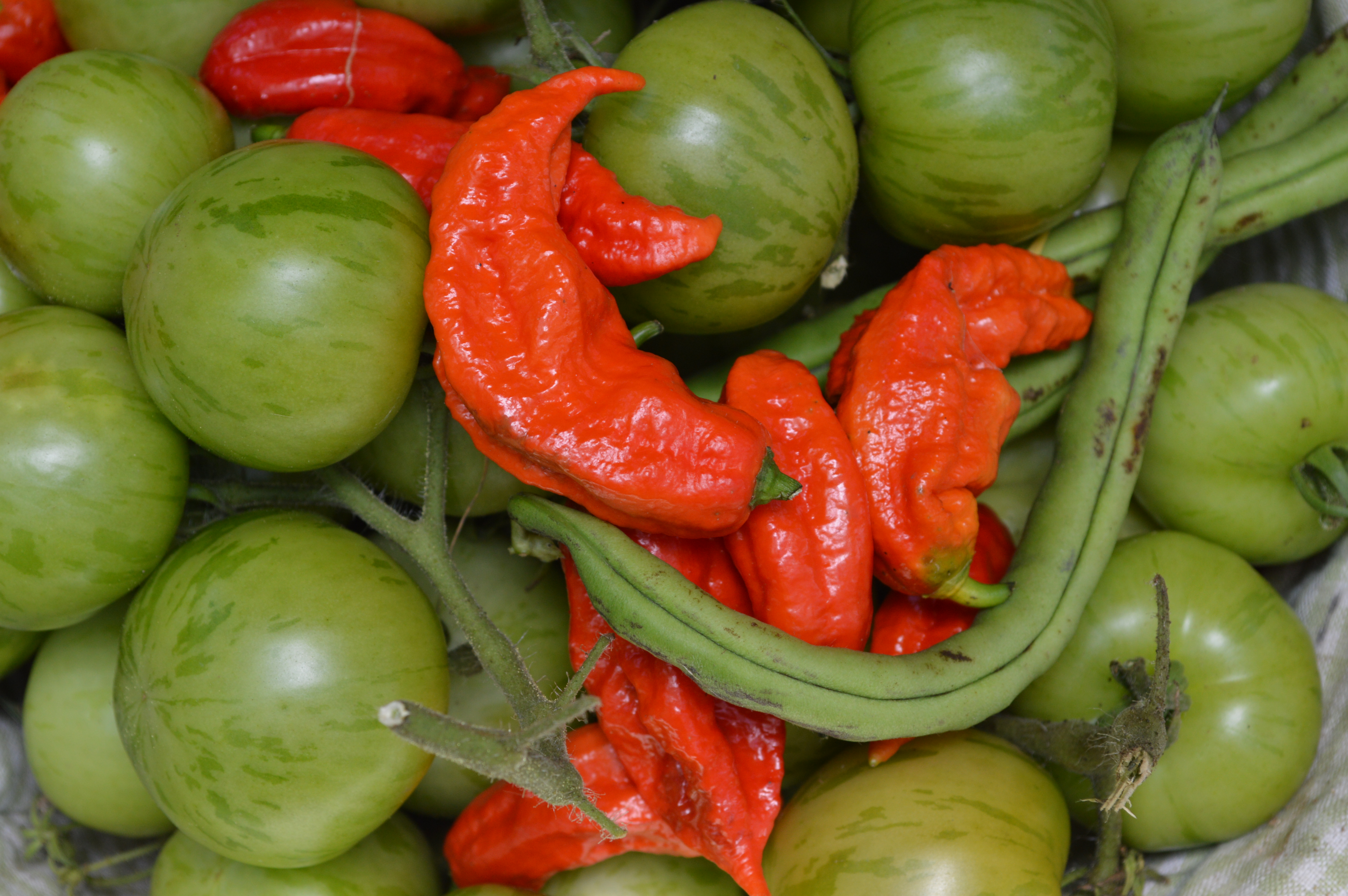
What I am learning, is that I may love chilis as much as I love squash.  They too vary in heat, texture, and flavor.  They also have lovely foliage, and flowers.  They also are more tolerant than I would have ever guessed.  They let the squash smother them, then appear alive and well from under the vines.  I have some plants that are 2.5 years old now.  They love my homemade fish fertilizer, and the Ghosts seems to like more water than I would have ever guessed.  I harvested about 15 Ghosts off one yearling plant that is set right out with the squash.  I have it in a container tub, and let it get some of the spray in route to the squash.  It is a great way to have them be accessible, while also lifting them up above the squash leaf shade so they have optimal sun.  Not to mention, it is easy to collect them so to cook with them, and one watering will water the whole lot.  Containers can dry out quickly, so this is ideal.  The peppers are healthy, happy, and thriving.

Ghosts warn you of heat with color and a strong scent

So here is a video to give some beginning farmers and gardeners an idea of how to make your own soil mix for your container garden.  I recommend that everyone grab up large pots and tubs when they seem them being discarded.  They come in handy, and it allows you to have a garden on your lanai, doorstep, or in my case, containers mix right in with other plants on the farm.

I choose to transplant my chili peppers when they get a couple pairs of leaves.  That gives them a more substantial root system, and they are less likely to wilt and die after transplanting.  I get several plants going in each big container, if they all take, I can always transplant some of them, giving the others more space.  I often add a squash vine to the mix ( I know I know) or a basil plant, so to get a variety going.  These containers will be put on a wire mesh table top where nutrients, and water will drizzle onto the squash vines.  I give them fish emulsion monthly. It works wonders.  The two year old plants have over 100 blooms this year…even in partial shade, and unusual weather.

I began fermenting this past week, and I am excited about the flavor of the orange Habanero in one of the squash ferments.  More on that later…I am just throwing that out so to encourage you all to grow more than you think you will use.  Many people struggle with growing a variety of peppers, so they may be likely to trade for some of your chili bounty.