Tag Archives: organic

Learning to Propagate Chilis from Cuttings

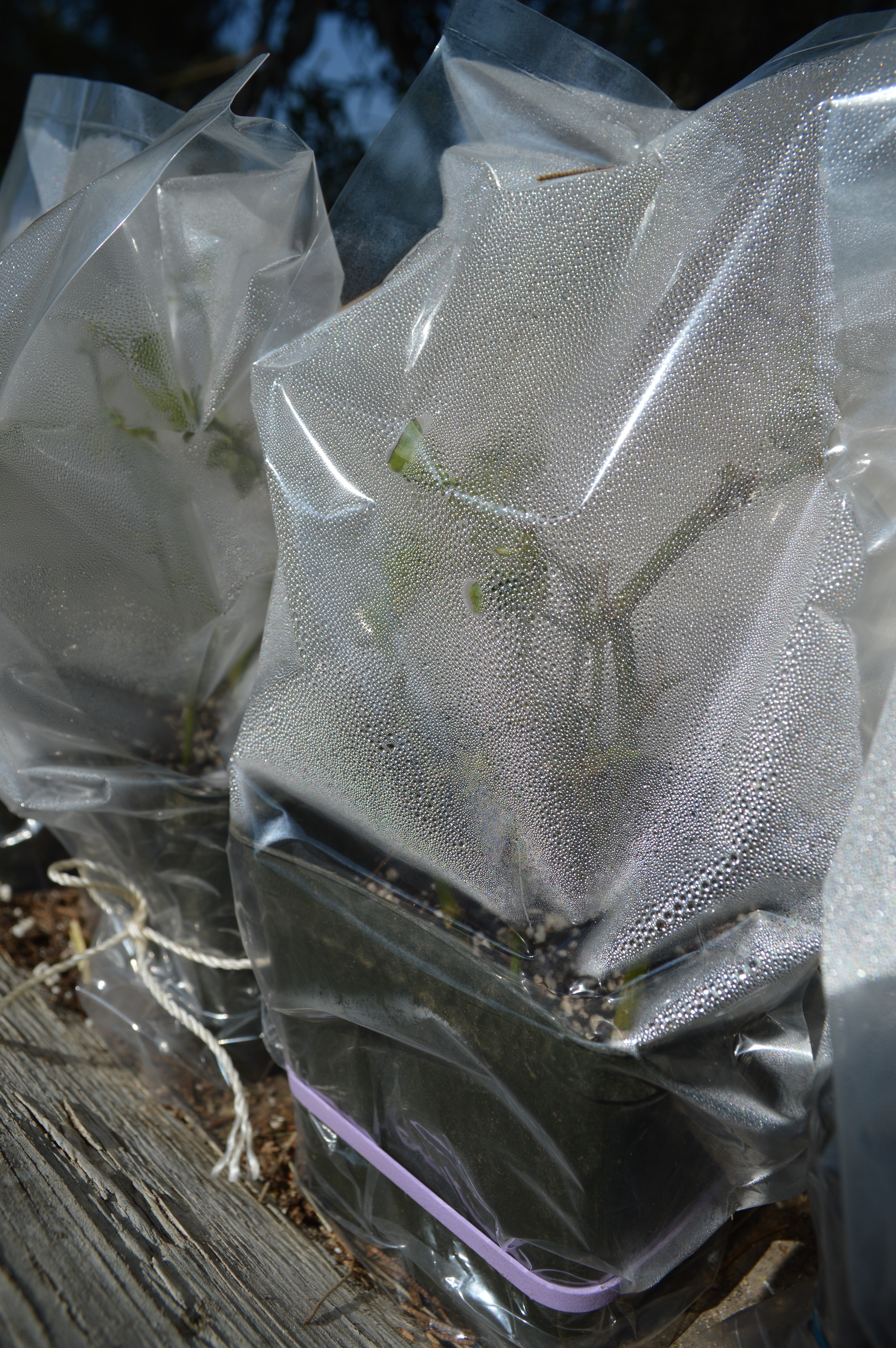
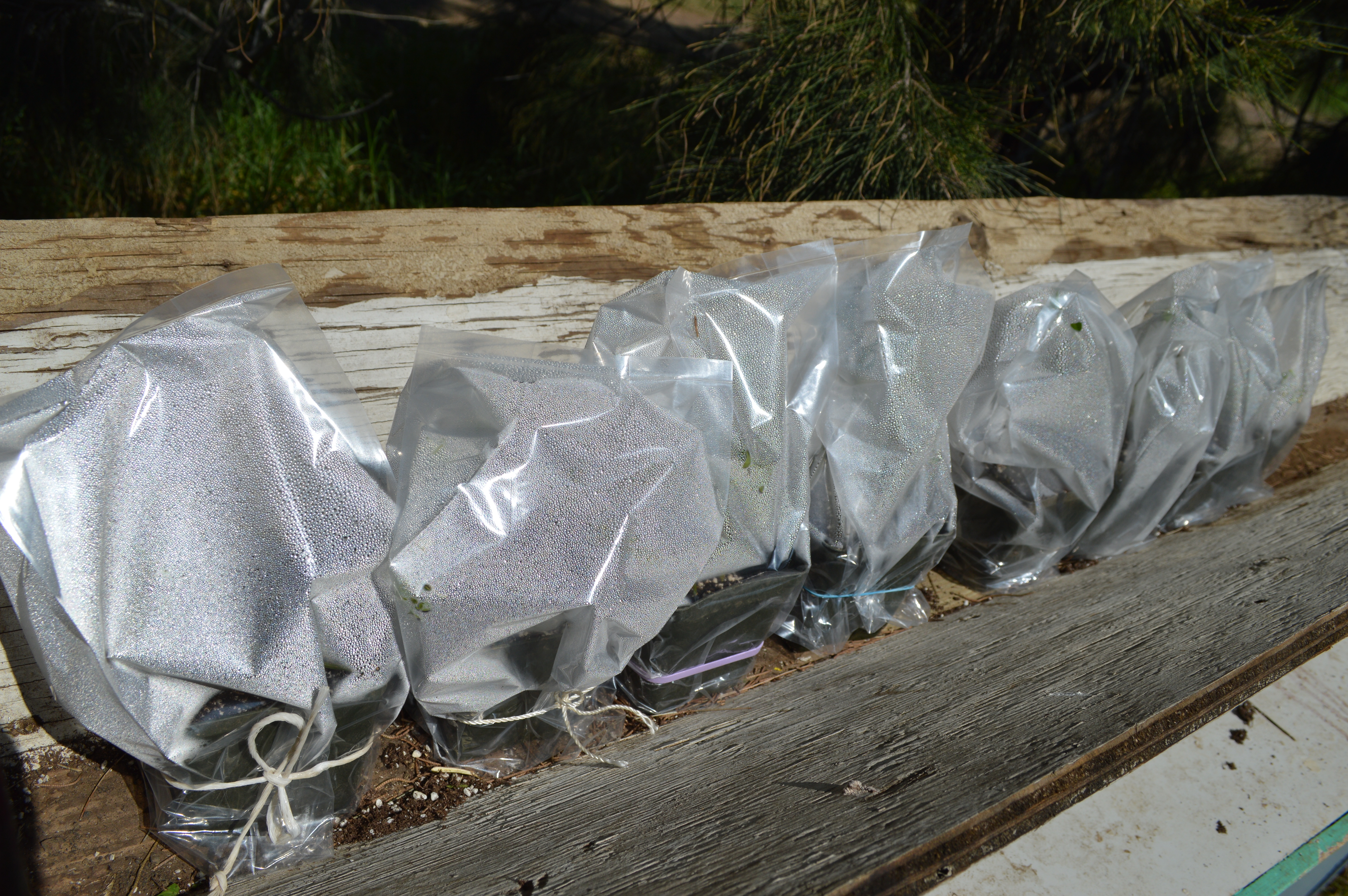
It was time to give the yearling Ghost Pepper plants a severe pruning.  Reducing them by 50% was less painful, when I got the idea to propagate from cuttings.  Here  are my attempt to do so using the simplest of tools.  Reclaimed growers rockwool are used for some, while potting mix is being used in others.  Other tools needed are : large sandwich type plastic bags, rubber bands, or string, small containers, trays of water, a sharp knife, pruners, and liquid (or powdered) rooting compound.

DSC_0326 DSC_0325

I used cutting from my Ghost pepper plants, Aji Limon, and Thai Dragon.

hot housesmini hot houses

Tips:

Keep them moist and out of direct sun (these were moved after being photographed)

Short stems with two sets of leaves are best

Avoid using woody stems

Slice stem at an angle to increase rooting surface

Remove all leaves except for growing one at tip

Use bags to keep humidity high

label varieties

roots should form in 3 weeks

Transplant into soil after 3 weeks

No-till Seasonal Rotation

It was challenging to time my rotation this Spring.  I had waited and waited and tried to coax out every pumpkin I could get.  Then when the production made a swift drop, I went with a hunch and climbed up on the tractor to mow the vines and the grass. There is a point, that even after pruning, and amending the squash plants, where their production levels take a severe drop.  For me this came just short of year #2 when the well tended vines were about 21 months old.  I watched daily for male blooms, but when even their numbers were down, I made the drastic cuts and rebuilding that I will be rewarded for later this Summer.

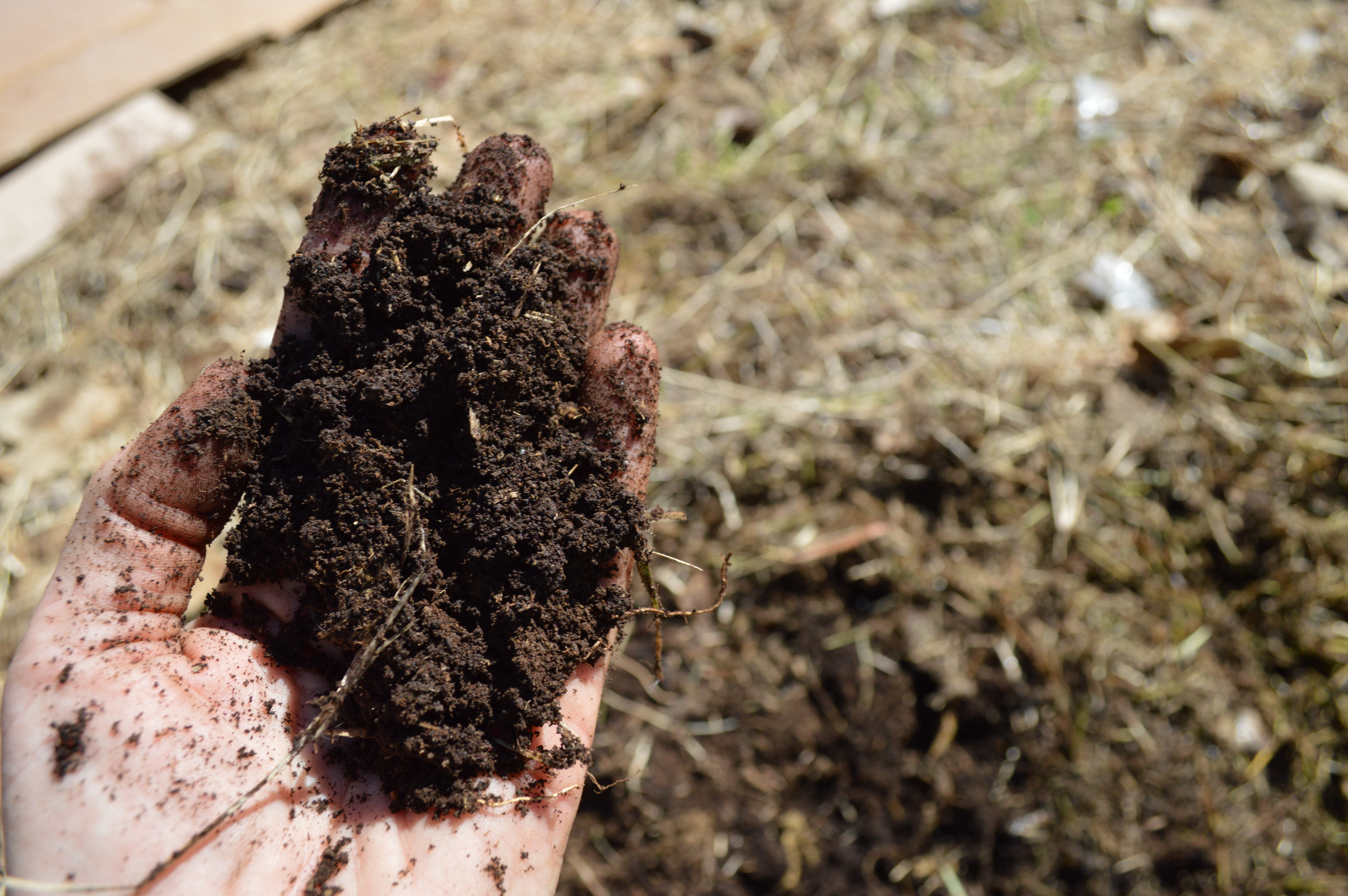
The no-till patch is created in a clock like pattern of raised mounds of homemade soil.  The mounds were constructed from brewery waste hops, horse manure, mulch, coconut fiber, and fish emulsion created in April of 2013.  The images show the following: The mowed field grass dried in the sun, checking the farm made soil mounds for quality, new cardboard was sheet mulched into the center of the “clock like” growing patch. This card board builds soil, retains water, and will give the worms a great place to thrive.  I started to wet the cardboard with the overhead, then the rains came, which was very good luck. Next image is of roughly 1/2 of the clock patch being mowed and altered to a time.  I have weekly orders to fill, so I must leave as many active plants going as possible, while I begin the new plants.  Weather can be very up and down this time of year (hot days quickly turn to cold horizontal rains like today) Growth can be sluggish for the vines that like normal summer type days.  Next image, I am pulling back the cut grass to show the growing mounds that became lost in a sea of vines and creeping grass.  These mounds will be weeded, amended with farm made fish emulsion, then surrounded by cardboard as in the circle center.  Then I will replant with a variety of heirloom squash, some tomatillos and okra…maybe some eggplants…

It felt risky to chop any vine that was producing, but I know as those new productive vines sprawl in a couple of months, I will be sitting back in my chair, sipping a lime aid, thinking that this was exactly what needed to be done.

 DSC_0108 DSC_0107 DSC_0106 DSC_0103 DSC_0102 DSC_0098

The one year transition to an organic no-till farm

Dream Keeper- A new Hawaii grown variety

My newly created organic squash (very non-gmo)
My natural, in the field plant breeding has resulted in the delicious, dependable and strong variety that I called Dream Keeper!

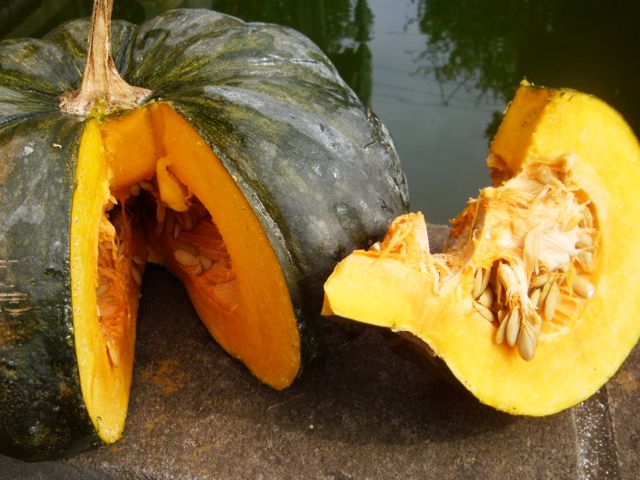
Dark green, with light green and gold freckles, Dream Keeper is a new organic squash that I created by cross-pollinating two strong C. Moschata strains. The result…a beauty that is virtually mildew and bug proof without sprays. On the inside she is as gorgeous as a Hawaiian sunset.

Sometime in my lifetime, many farmers forgot how to build soil

For hundreds of years, farmers built the soil as a foundation for the food that fed their families.  A foundation for their future. A built-in daily vitamin for themselves that would be harvested in the months ahead.  Then something happened when I was still measured in relation to my Gandpa’s knee.  There were better ways, they were told.  Better?  Faster, more….but really it was the point of diminishing returns.  More lackluster crops were produced in greater numbers.  A strong line was drawn. Agricultural crops were now treated very differently from vegetable gardens.  Farmers seemed to hang on to the build the soil method in the vegetable patch that fed their family, and in times of need, their neighbors.  Why was that?  Was it because that was the domain of the woman of the house?  She held onto these methods that are methods that organic farmers still use today.  Rotating, covering, mulching…So was it scale that was the issue?  Probably.  In the never-ending American push that bigger was better, we learned quite late that bigger was simply bigger. And the “better crop” was in the farmer’s own veggie patch.