Building Worm Paradise in Hawaii

Being raised on a Wisconsin farm may have given me rather high expectations for soil. Our humble 40 acre farm had deep, rich, black soil that you could sink your arm into, well past your elbow. That was considered “below average soil,” and that is where my false soil illusions began.

My brother and I would hunt night crawlers and all kinds of earthworms for Summer trout fishing. It was rarely much of a challenge to fill a bucket in a few minutes. The biggest challenge was to dig without severing the multitudes of them that squirmed below our shovels. We often abandoned the tools so to dig with our hands. We also wanted our worms to be happy and content in their last hours before they became trout bait. So sever we would not.

Fast forward over three decades and several thousand miles and land me in the Hawaiian islands where you would again find me digging in the dirt in search for worms. The result was quite different, because day after day, I found none. Not a single worm. This was a discouraging discovery that I needed to resolve, because if there were no worms, there would be no farm.

Industrial agriculture, wind erosion, lack of cover crops, multi year drought, years of nutrient depleting sun, and lack of organic materials, are things to consider when beginning a transition plan for a parcel. Though this area was prized for being some of the richest soil in Hawaii, that estimate took into account only soil type, and left nothing to be said for soil treatment.

The summary was easy: there was nothing to temp a worm to take up residence, and every other action on the farm was contingent upon this cornerstone of soil health.

The solution was equally clear: create a worm paradise.

If key players like worms were missing, that was a good indicator that other members of the soil building chain, like soil microbes, were also in short supply. I decided to focus my attention on the actions of one person, and develop a farm plan based around a worm’s favorite location: the compost heap. Creating a farm that was comprised of an organized pattern of composting heaps that would be piled on top of existing soil. The squash crop to be would be planted directly into the decomposing heaps, benefitting by the heavy food source available. The worms would be able to pull nutrients from this moisture and food rich pile, and bring the nutrients deep into the depleted soil.

No-till was an easy choice for methods, because a decade long drought and wind erosion had left little to till. No-till gardening techniques were expanded to a 1/4 acre scale. Between garden and farm in proportion and methodology, this framework would conserve moisture, encourage microbes, worms, and stifle weeds.

three sisters method of beans, corn, and squash, surrounded by reclaimed cardboard.  Soil building and moisture holding cardboard also minimizes weeds
three sisters method of beans, corn, and squash, surrounded by reclaimed cardboard. Soil building and moisture holding cardboard also minimizes weeds

Cardboard created a zero waste solution, along with growing blocks reclaimed from the local hydroponics farm. Together, the cardboard, and both basalt and coconut coir growing blocks would create a moisture holding, shady mulch where worms could hide and soil would form. As pumpkins were harvested, some would be chopped into chunks and buried face down in the mulch. This created “worm buffets” that were also cool hiding places where worms could gorge and reproduce.

The image says it all.  The additions have changed the soil dramatically.
The image says it all. The additions have changed the soil dramatically.

Now a year later, the soil is several inches deep of sweet smelling soil. Just like the days of my childhood, I often dig with my hands so not to risk severing any of the welcome guests that will not become trout bait. An “intensive soil care” initiative was the first move for the farm, and the efforts have surprised even the most hardened of soil scientists. Now reconditioned into a healthy soil system, EM-1, homemade fish emulsion, and coffee grounds are the additions made to the area.
OLYMPUS DIGITAL CAMERA

OLYMPUS DIGITAL CAMERA

Vines now tumble and interlock with each other, birds, bees, and butterflies circle overhead. Mushrooms show themselves and again disappear into the cycle. The purple worms surface and dip through the paradise that was both created for them, and one that they helped to create. Several tons of food has been gathered from a small, once dusty parcel, giving hope to one more farmer who has spent their first year farming new soil.

The mini-farm at 10 months old

The one year transition to an organic no-till farm

From Farmer’s Daughter to a Seed Advocate

I am a farmer’s daughter, and though all thought I would marry a farmer, I became my own farmer. We can trace farming back more than 7 generations in my family, back to those who left Ireland so long ago. So why do I mention this? Because as of late the idea has been weighing heavily on my mind. At last week’s GMO round table, here in Hawaii, I watched people’s head dip low in shame when I mentioned my family legacy with the earth. You see, I don’t “look” like what they think a farmer should look like, and that makes it evermore easy for the pro-GMO clan to dismiss my optimism as the result of being young and silly. But the next generation of farmers looks an awful lot like me, and many, like me, want to return to the farming ways of our own ancestors.

The way I look at it, just by living and breathing all of that farming knowledge throughout my childhood has put me above the rookie category from the get go. So ever more often, when the topic of GMO vegetables comes up, I notice that more are averting their eyes, and changing the subject. I know where my ancestors would stand on things. They were proud of their “family” tomatoes, beans, potatoes and the like. My Brother continues to garden and he grows the same variety of tomatoes that my Grandmother did. Needless to say, that is a wonderful link to a woman that shaped our childhoods. The downside is that kind of seed connection between generations may not always be a possibility.

One issue that never gets brought up by any of the Big Island GMO panel discussions is that when we lose our tie to the seed, we shatter our ties to the many thousands of years of food knowledge that bonds us to both our human family, and to the plants that feed us. This link to ancestral intelligence, along with the pride in growing the food that they did, is what helps people get through hard times. You are never alone, as you carry your ancestors with you. Sometimes we have physical reminders like a pocket watch from a grandfather. At other times, the tie to a people and a place are contained within a tiny seed. The Native Hawaiians and other First Nation Peoples get it, as do many regional farmers who pride themselves in growing what their ancestors did. Any farmer who ever left their homeland did so with seed in their pocket, guaranteed. My family is no exception.

When people ask “how long am I going to farm?” I never have an answer, because farming is a gift. It is a calling. I think about seed a lot these days, and I have to say that I feel successful as a small farmer, because people hug me a lot. I mean a lot. Sometimes I get hugs everywhere I go. It isn’t so much me, but it is my actions, and my interest in their family history. By seeking out the ancient and historic seeds, I am using my skills with the land to rekindle people’s ties to their own ancestors. By planting, nurturing, and harvesting the food of their ancestors, I am tied in with their family. That is why they hug me, and that is why I keep speaking up for those who came before us.

Can Hawaiian Native Plants and Agriculture Co-exist?

Last November I questioned the idea: In Hawaii, where many native plants are endangered, or under threat, can I help the three varieties of native plants that exist on the farm property to thrive, while also benefiting squash production?  The answer ended up being a clear yes.

As we know, squash need a lot of everything: sun, water, compost, bees, the works. So instead of using non-native plantings to attract more bees, what if I studied the nature of the abundantly flowered native Ilima shrub and tried to work out a system where each would benefit?  The result : The Ilima Project.

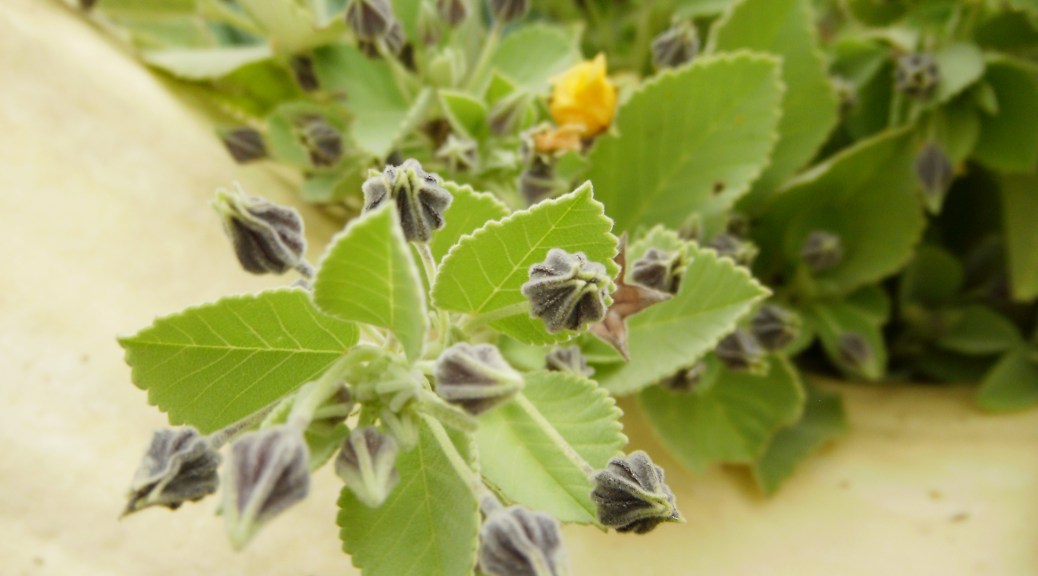
Ilima is special, it is a hardy shrub that has struggled in the past 17 years as the Ka’u desert has extended it’s Northern border.  I found several of these native plants, and decided to be their caregiver by not pulling them up, and planting around them instead.  It created a perfect companion plant for the squash, while also nurturing a plant that many of the elders noted that “it used to be everywhere,” much like local kabocha squash.  I decided these two could stage a comeback together.  The Ilima thrived and it was most grateful for any bit of water or compost that it is offered.

I read in the excellent Bishop Museum Book, “Native Planters of Old Hawaii,” that the Ilima plant was often pruned heavily so to create even more buttercup like blooms for lei making. Though we often search specifically for the crop that we farm, here we can see how a regional and historical book can assist in modern farming, by applying this information that can assist with pollination. The fast growing shrub was tolerant of my experimental no-till techniques, and the bees plunged into bloom after bloom and pollinated the squash as well. The smaller blooms attracted many new bees and beneficial wasps that were “new” to the farm. The Ilima thrived, and created helpful pollination assists, as well as wind blocks for the squash that really doesn’t care for wind.

No-till using Ilima as a companion

success!  Growing squash with the Native Hawaiian Ilima plant
Success! Growing squash with the Native Hawaiian Ilima plant

As for the squash, they were happy too, as they climbed up and around the Ilima shrubs and across the no-till cardboard mulch. I grew out one of the world’s rare squash for seed preservation (the bright orange one from Armenia, C. pepo in the photo) along with my go to Hawaiian heirloom squash for the community, a Long of Naples, a grey ‘Crown’ squash that originated in South Africa, and also many lovely Thai squash (C.moschata.)

I am just adding compost to the beds so to have a late summer crop. The Ilima shrubs (seen in the rear of the wheelbarrow photo) are continuing to thrive.

Fish Composting Beds Opened!

composting bed
Remember this? Well….I am very pleased to report that it is now this!

Compost

I used EM-1 to add even more rich microbes to the heathy new compost and replace any that may have gotten burned out when the fish composting really heated things up. The fish composting was a success! (yeah! Thank you to Redwater Cafe and their continued donation of green waste and fish bits, Merriman’s for cardboard, and Starbucks for the donation of coffee grounds to help me build the soil!) The compost is a bit chunky due to my using a lot of sticks, but after a little bit of sifting out large pieces, the new compost was ready to be added to one of the beds. This will give a Spring makeover to a well used bed.

Seed Saving the Rare Giant Pink Banana Squash of Uganda

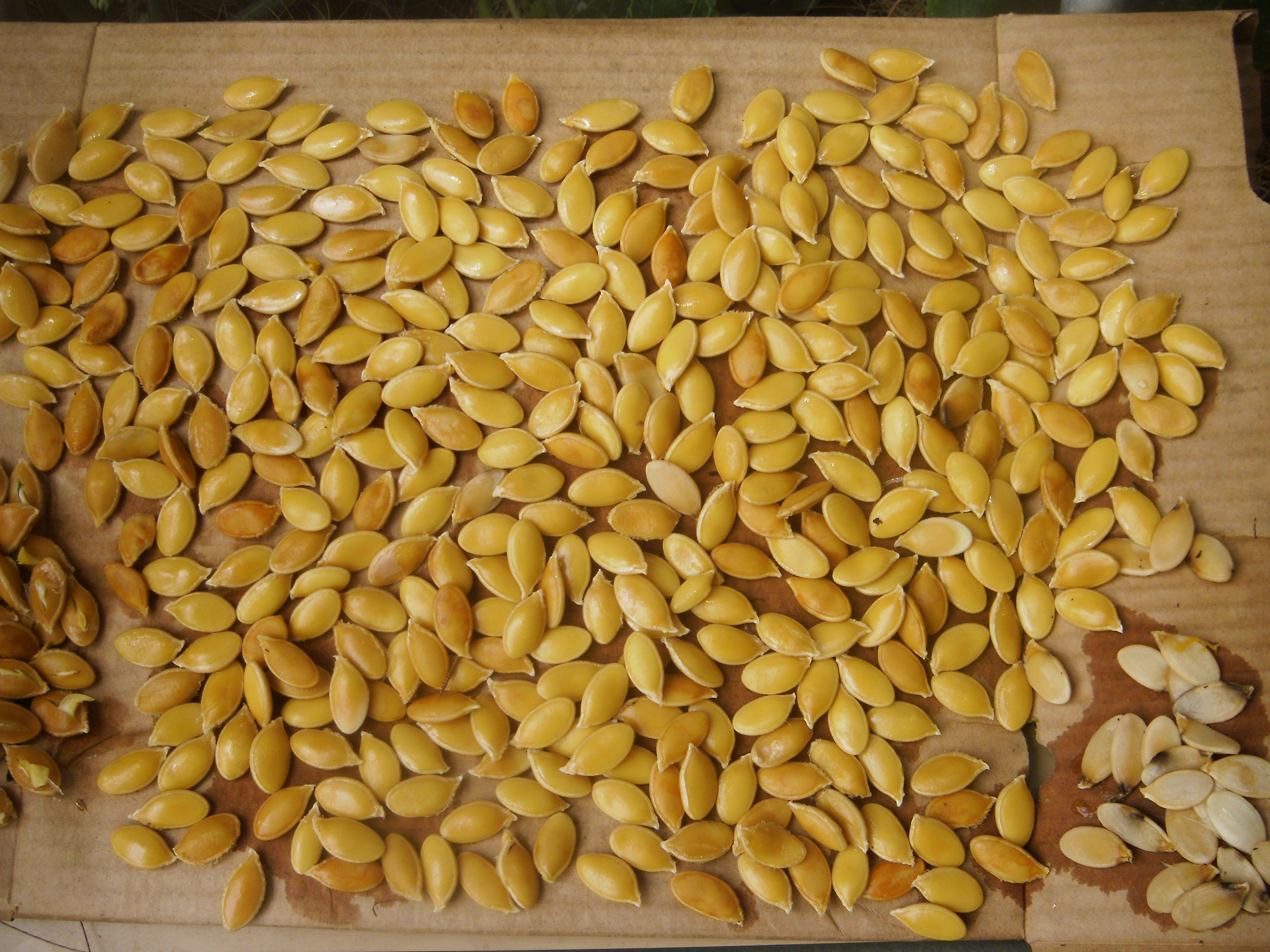
I noticed that the 40lb Ugandan squash had developed a soft spot during it’s extra long time on the vine. In order to reach maximum seed maturity, you should leave it as long as possible so to increase the odds of seed viability. I decided it was time to seed save and harvest the next generation of pure seed before risking the possibility of seed rot within the softened squash. My hunch was right as we can see from the abnormal amount of liquid that spills forth from the squash. The seeds were quite viable as several needed to be plunked into the ground immediately as they had begun to germinate within the cavity of the squash. I am happy to report that those germinating seeds are now tiny seedlings next to the Mother plant.

Here are a couple quick videos to show the short and sweet process of collecting, and cleaning the giant seeds of this extremely rare c.maxima variety.

Three Ultra Rare Squash Grown for Seed

Yervian, c.pepo, Armenia (top) Gori Blue Mottled, c. maxima, Gori, Republic of Georgia, central Asia (bottom left) Moon like squash, c.maxima, Uganda, Africa (bottom right)
Yervian, c.pepo, Armenia (top) Gori Blue Mottled, c. maxima, Gori, Republic of Georgia, Europe (bottom left) Moon like squash, c.maxima, Uganda, Africa (bottom right)

It was a tough Winter for these rare beauties, but these are some of the success stories from the first season of seed saving ultra rare squash from around the world.three rare

These are part of an effort to save some of the world’s rare food crops from extinction.

the pursuit of pumpkin