The Fermented Farm: Beer Traps

People ask me what school of farming I use.  There are a lot of groups to choose from:  organic, no-till, Hawaiian natural farming, Korean natural farming, biodynamic, intensive, permaculture…the list goes on and on.  I use elements of all of those, and I have adapted them to the particular situation I have, and my situation is one of ever changing conditions.  If there is any one thread that continues through all aspects of my farming, it is microbes.  Today, I am going to share one of the ways fermentation is part of my farming practice.  Beer!  Yes simple as it may seem, the humble dregs of beer kegs, and other cast away remains of beer gets used in my farming as beer traps.

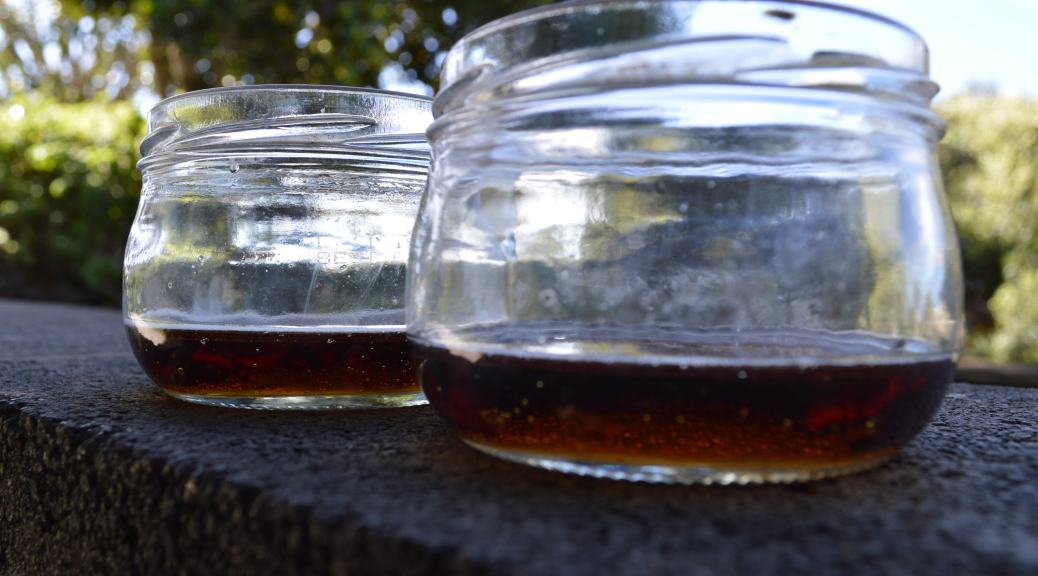
A beer trap is my way of capturing the insects, slugs, and snails that would otherwise damage newly planted seeds, and seedlings.  It is a highly effective way of trapping them before you plant your seeds or seedlings, as well as during your growing season. I trap before I plant.  People often think that in the dry upcountry, we don’t have slugs and snails, but we do.  When you add a little moisture to the plot, every single slug or snail will be drawn to that parcel.  By simply taking reclaimed cups, saucers, trays, plastic tubs, and the like, and putting an inch or more of beer in the bottom, you will have a very effective way of removing the pests from your field.  My strategy is to place traps near new plots of seedlings, depending on the time of year, I will catch a wide variety of the bugs that would lessen my productivity.

DSC_0693

Above are two small traps that will be put out today.  With this small amount of beer, you will be surprised what shows up in there.  I can add some water to top off the traps.  Each day the beer trap will have a riper aroma, making it even more tempting as bait.  To increase your success, you can burry the traps so that they are nearly flush with your soil, you can make them larger, deeper, out of different materials, but the basic idea remains the same.  Trap before you plant and you will see results.


Farm Fermentations: squash, beet and seaweed

I began fermenting back in July as a means of finding even more uses for the vegetables that I grow.  In the past six months, I have continued to explore ways that fermentation can be good for me, my farm, other farmers, and the entire community.  It continues to be a journey of discovering new things with each new ferment.

This past week I decided to continue to work with other farmers and their abundance.  It turns out that my quarts of fermented produce have become a wonderful item to barter with. Squash is the core of all I do, so squash is also the core foundation of my fermentation.  I have experimented with two varieties of winter squash, one variety of summer squash from my fellow farmer Lark, and pipinola.  Pipinola is what I consider a cousin of squash.  We have a unique name for it here in Hawaii, but it is more commonly known as chayote.

I have previously sung the wonders of pipinola on my webpage, but I would like to add that it is a good source of vitamin C.  Raw chayote it crunchy, and crisp, which are two great things for fermentation.  It is also quite neutral in flavor and color, making it my fill in for cabbage.  It also releases water quite easily when salt is added.

DSC_0745

I began my pipinola growing with green skinned heavily wrinkled fruits.  I found a variation that I liked which was a smoother, softer skinned fruit.  I selected these traits and gradually replanted the fruits that displayed this smooth skin.  Like any variation there are upsides and downsides.  The smoother, softer skin, makes the skin easily used in the kitchen instead of the tougher skinned ones.  The downside, is that they are much more susceptible to damage through bruising and nicks.  Pipinola/chayote is grown by replanting the fruits, and the one large seed within will germinate with a dynamic vine.

One you have your fermentation base vegetables, it is great to explore how new combinations can change it all up.  So this week, I investigated how other farm goods can be brought into the mix.  I have always loved root vegetables which are not easy to grow where I am farming.  Beets have come into season again here in Hawaii, so it was time to revisit the Bonk family and get my hands on some beets. Marlene was happy to take a quart of pumpkin/carrot/pipinola kraut, while I was excited to fill my bag with beets.

With each new vegetable, I create a series of ferments that are linked by that one new flavor.  If we were talking fashion design, my ferments would be a collection, so I will refer to them as such.  In the beet collection, I decided to marry the sweet with the heat of ghost peppers in another, as featured above, I threw it all in.

Each of us will like different combinations of vegetables, and as is the case with fermentation, you may like some fermented vegetables, that you do not like unfermented.  Fermentation transforms, melds, marries flavors into a complex profile.  So with the new addition of beets, we can look at how they shape the ferment in terms of nutrition, flavor, and color.    There is also the need to consider what is the limit of how much beet we can handle?  When is it enough? Experiment so to know the limitations of your ferments.  I love seaweed, known here as limu, but there is a point where enough is enough.  To much limu can make the ferment very salty, and very intense in minerals. It can pack a punch and “kinda levels” those not used to it.  I feel like beet could go the same route, in being an overpowering vegetable, where you need to understand how to use it as an accent, in a combination of flavors, and as a main flavor. As is the story of fermentation, time will tell. Longer fermentation time may make it mellow…or not.

DSC_0659.JPG

Above, locally sourced Ogo seaweed is busy making my ferments both intense and complex.

Repurposing found objects is also a great way to begin in fermenting.  I chose to repurpose a 4 qt crock pot crock and found a lid that would work with it.  Most of my ferments are done in one quart jars, but I decided to try a larger quantity of the “kitchen sink” ferment.  Quart jars were used for smaller volume experiments.

I’ll be keeping you posted on how the new farm ferment collection turns out, but until then, think in terms of abundance in your garden, your cellar, your farmers market, and region.  Abundance is a luxury as long as you do not allow it to overwhelm you.  Too much of a good thing can be stressful, and putting up a bushel of vegetables on your own, is quite a task.  I can honestly tell you that it does get easier to work your way through a volume of produce.  I think starting with what would roughly fit in a grocery bag is a good place to start.  So give it a try…and good luck!
Tropical Raw Energy Bars With Pumpkin Seeds

I am a chronic meal skipper, so at the start of every new year, my promises to myself are always about food.  I try to challenge myself to prepare ahead of time, and then have healthy grab and go items. Eating homegrown is so satisfying, and it can be an important way to retrain yourself into new ways of eating things from your garden.  But even knowing that, prepping takes time. So I have created strategies to have healthy options at the ready.

One of my success stories is a no bake bar that is comprised of raw foods. This recipe uses two farm ingredients, banana and pumpkin seeds.  I am drying macadamia nuts right now, and in the future, those would make a lovely addition.

I use a mix of ingredients to combine into a snack bar full of energy providing nutrients.  In general terms, the additions are of two main categories:  ingredients that will make things stick, and ingredients that need to be stuck together. Prep time under 10 minutes plus refrigeration.

DSC_0586

sticky ingredients” can be:

coconut milk, almond milk, nut or seed butters, ripe banana

things to stick ingredients” can be:

Oat bran, ground flax seed (these two or similar ones will create the body of the bar) dairy free or regular chocolate chips, seeds like chia, hemp, sunflower kernels, pumpkin seeds, coconut flakes…

I then use carob or cocoa powder to flavor the lot.

Here is roughly my process:

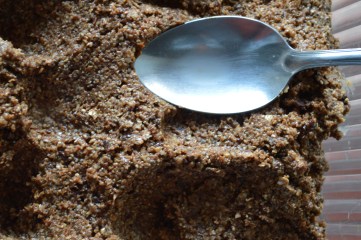
Every time is different, but today, I put some pumpkin seeds through the grinder (or if using the food processor, I put them in whole), add in some sunflower kernels, chia/flax/hemp seeds, some coconut flakes (the big ones) some nuts, dairy free or regular chocolate chips, coconut milk, granola, almond milk, carob powder or cocoa powder.  Added flax seed bran, and oat  bran, and added bran until it was a good consistency to press into a pan.

I just put in what I have.  I add only enough of the milks to smoosh it all together.  I think the addition of  a glob of almond butter and ripe smooshed banana makes the bars rich and satisfying.  I then just press it into a square pan, and top with more coconut,  pressing the coconut into the top of the bars.

I have always mixed this in a large bowl, but today I made it in a food processor since I had it out and ready to go.  I find that it is easy to use the back of a large spoon to press it all into the pan before topping with more coconut.

DSC_0587

I then I cover the pan, and pop it into the fridge, and I will cut them into squares after a couple hours. I keep them in the fridge, and then put a couple in a travel container to carry with me. I keep key ingredients on hand so this takes just a few minutes. It could be served as a healthy desert too!

I should be making these every week….now there is a New Year’s resolution I can stick with!

Squash and Awe Podcast Interview

I had the wonderful opportunity to be a guest on Jackie’s Organic Gardener Podcast this past Thanksgiving.  We spent just over an hour discussing all things gardening.  From books, to heirlooms, to soil building and more, we covered a lot of ground.  This interview was done the day after Thanksgiving, I chose that day, because it was the hardest year of farming  for me yet, and having just met my orders for Thanksgiving, I was so relieved that I was almost giddy. This talk shares some of the things I have experienced in my first years farming

Squash and Awe on Organic Gardener Podcast

While you are there, subscribe to her podcast and listen to all kinds of ideas on gardening!

Winter Garden: using up aging seed

Even with the highly variable days of a Hawaii Winter upon us, I continue to plant. In these short days, sometimes hot, sometimes rainy days, followed by very cool nights, squash can be sluggish to germinate and take off. I use this as a window of opportunity to get a other plants going nearby. I consider this a great way to make the most of my gardening time.  I have been enjoying the holiday season in these past weeks, and part of that enjoyment is spent in the home garden.  Fog, mist, and bright sun have all come through in unpredictable patterns, though this is not ideal for squash, other plants have enjoyed having their time to shine.

This seemed like an impossibly bad time to plant heat loving chili peppers, but in 2015, we had a very unusual year, leaving my chili plants stunted and at risk.  I wasn’t going to give up on them, though.  Our long come and go seasons can work for chili plants.  Especially those that hail from cooler places, and/or higher slopes.  I have raved about Aji Limon aka Lemon drop pepper, a widely available heirloom chili from Peru.  It loves this mix of hot and cool, wet and dry.  I am happy to report, in the past three weeks, those stunted transplants, when planted into the garden, have really taken off.  They needed care, pronto.  I waited, and waited for the right weather to come, but what they really wanted was to get out of the pot and into the ground.  Here is what they look like now. Textbook pretty little pepper plants that are going into their fruit setting. The aging, weevil eaten seeds of the Christmas limas got a change to grow, and my beloved pipinola (chayote) climbs upwards.  Also seen is the collard plant that also wanted to be transplanted.

I take great pleasure in trying to seed save, but I also like to keep the varieties actively growing, rather than storing the seeds.  The downside of my process, is that my attention is often away from these seeds, so when I have some old, slightly buggy seeds, I get them in the ground quick.  I remain grateful for the “save.”  In an ideal world, all would be labeled and stored in climate controlled situation, but for me, I am thrilled if I find the time to dry the seeds and plunk them in a jar for home planting.  Pumpkin seeds get VIP care, but beans and greens seeds often get less storage, and often just go from garden to shelf to garden again.  Let’s look at the results.  The “forgotten” seeds  are pushing forth from the no-till garden. They will be great providers of fresh seed and of course a lot of meals this year.

DSC_0577

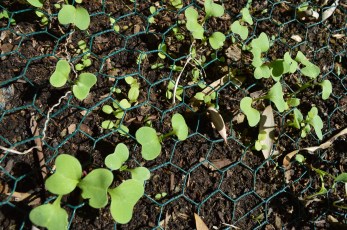
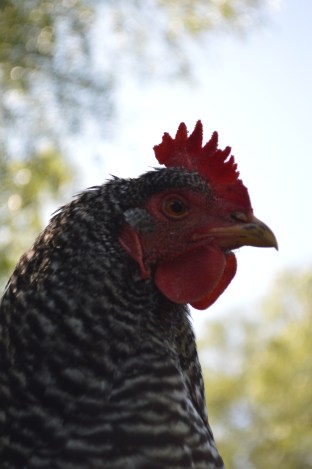
I also take full advantage of the rarely clear space in the garden, by sprinkling any aging seeds about.  Seen above, some lettuce  germinates with radish through a simple, put effective means of my chicken proofing the plot. (Sorry Betty)  Betty is a spurred hen, a real sassy gal with a wonderful love of high kicking her way through the garden.  She puts the “free” in free range.

I think this time of year is a great time to get mizuna, mustard, radish, collards and kales going.  I love my greens, beans, pumpkins and such.  So I plant heavily, and put them “up” in ferments, or use them for fresh eating.  I also freeze my lima beans for making soups and chili.

Yesterday, as I plucked plump chayote from the vine, a gentle, female Jackson Chameleon caught my eye.  She was a teenager, enjoying the afternoon mist and using the chayote vine as a bridge across the garden.  It is a beautiful addition to my workday in the garden.  I hope your garden is also filled with inspiration!

DSC_0105

Lima Bean and Pumpkin Chili

Maybe it needs a better name, but for now, it will have to do.  As I savor the last bite, I am filled and satisfied with this now much more nutritious dish.  Holiday visitors passed through the kitchen as I was making the chili, and it seemed to be an unlikely recipe to most.  My invented recipe intrigued an eight year old who dreams of being on a “kid chef” show on the Food Network.  He watched me like a hawk.  The recipe is made in a slow cooker, and can be adapted to all tastes.

This time of year, I often collect a nice amount of the heirloom Christmas lima bean.  I am frequently pressing these beans into the hands of school kids in hopes that they plant them here in Hawaii.  They should be grown in everyone’s home garden, school gardens, and on fences, banana trees, bamboo…you get the idea.  They are perfect for Hawaii’s long, come and go seasons.  It creates a pretty vine, and the bees love the delicate bloom.  I’ve sung it’s praises before, and I am at it again. Plus the bean is big and very flavorful.

DSC_0106.JPG

Above is an image that shows how they catch the morning light in the garden.  In the photo, they are covering an unsightly windbreak that I made two years ago out of bamboo threaded through shipping pallets that were placed on their side.  It has held up, and become a beautiful area that is also effective against the wind tunnel effect. I bought the first lot from  Baker Creek Heirloom Seeds three years ago, and since then, I have supplied half of the state of Hawaii with them, and also included them in many special meals.  It was the best $2.50 I have ever spent in the garden!

But back to the chili.  Lima beans make a lovely chili bean, especially these lovely burgundy speckled ones, and the spice of homegrown chili peppers mixed with sweet pumpkins is a wonderful, and thrifty match for my eat what you grow style.DSC_0400

So the concept is the take away here. Here is what I did:   I picked, shucked and rinsed the lima beans, harvested a few chili peppers and selected a nice aged pumpkin.  I soaked the beans for a couple hours, then decided just to cook them on low overnight in the slow cooker.  I could have added a wedge of onion to the water that covered the beans, but I forgot.  By morning, the home cooking filled my tiny abode.  I had 1/4 of the crock pot filled with dried beans and then filled the entire crock with water.

In the morning, I drained the beans, saving the cooking liquid on the side.  I did this by simply setting a colander inside a large bowl. I returned the beans to the 4 qt slow cooker, and added 1/2 a chopped onion, 2 packets of chili seasoning, 1.5 lbs of hamburger, one can of tomatoes, and a can of tomato paste, plus three cloves of garlic.  Then I chopped about 1.5 pounds of pumpkin, salt and pepper.  I also added about 3 cups of the bean cooking broth back into the cooker.  Normally, I would add my fresh chili peppers, but this one was made with little kids in mind.

When I make this again for myself, I am going to make a meatless version.  The lima beans and pumpkin make a satisfying chili, and the meat just isn’t necessary.  The beans were already cooked, so it was a matter of waiting for the pumpkin to cook.  This gave me plenty of time to shuck more beans for later cooking and planting, as well as give me some time to turn the home garden upside down section by section, in my December garden overhaul.

By 4 in the afternoon, I couldn’t wait any longer, and snuck a small sample bowl…and then another. I was waiting for the pumpkin to be tender. By this time, I was hungry, and this really hit the spot.  I could have easily added more of the bean broth to thin it out a bit.  I added some more salt at the end of the cooking.  I smeared it with some sour cream and piled it on top of basmati brown rice.  There were zero complaints about either the limas or the pumpkin.

Three Cheers for the Media

I just want to write a note to bring attention to the efforts of editors across the country who made the decision to include a story about sustainable agriculture in their papers.  It may not seem like much to some of you, but it means a lot to we small farmers and heirloom seed preservationists/researchers who are trying to get our voices heard.  The idea?  That we have answers right in front of us.  Myself and many others have been trying our best to share old news that is also good news:  Heirlooms matter.  So it is all the better when editors get an opportunity to pick up an AP article about such things and run with it.  So farmer hat is off to the Editorial staff at the following publications:

SFGate of San Francisco, California

The Washington Times of D.C

Lancaster Farming of Ephrata, PA

The Star Advertiser of Honolulu, HI

MySA of San Antonio, TX

and of course the team at the West Hawaii Today of Kona, HI who put the ball in motion.

For running this article about my farming efforts in their publications.  Each and every action matters from seed to soil to getting the word out to others.  So thank you news teams for helping to share a bit of good news.

The Pumpkin Toffee Cheesecake Trials

As a pumpkin grower, and a great lover of food, many expect me to make lots and lots of pumpkin pie and soup, but three years on, and I have yet to make either.  I cook with pumpkin every single week of the year, but I have yet to make some of the most traditional preparations.  I make all kinds of savory dishes, and once an a while something sweet.  So it was at Thanksgiving three years ago that I first made a Pumpkin Toffee Cheesecake. This year, I returned to that beloved, yet rarely made delight.

DSC_0514

It was really a treat, and I cannot explain why it has taken me so long to return to it.  I am making up for lost time though, with four cheesecakes having been made in two weeks time.  I do realize that not everyone likes either pumpkin pie or cheesecake, so combining them may not be everyone’s choice.  I was so pleasantly surprised that I encourage you to give it a try. I have toned down the sugar, and upped the pumpkin to suit my taste.

First off, I am not a big dessert person.  I would always take a second helping of the main course over dessert, but during the holiday season, it seems to be my time for desserts.  I love to share them with one and all.  I have combed through dozens of recipes online and each time I look, they seem more and more glamorous.  They look absolutely wonderful with caramel sauce zigzagging back and forth, but I have never done that.  It is a sugar issue for me.  Here is a caramel topped one. that looks very special for any event where it will be on display.

I stuck with a rather modest “everyday” cheesecake.  The first year, I mixed toffee pieces throughout the cheesecake, and this year, I put them on top.

Here is how I adapted the online recipes:

I stuck with a pretty simple cheesecake preparation that began with roasting a pan of chopped squash without any water, so to dry out the pumpkin a bit. Then I added the lot of baked pumpkin pieces to the food processor to puree.  I got the oven ready at 350.  I used pre-made graham cracker or shortbread crusts.  Pre-made crusts often make sense here in Hawaii, where the cost of the shortbreads is much higher than the crusts.  I add in the ingredients to the food processor, and let each one get mixed in well.  I watched many chefs walk away and leave the food processor churning away, so I did the same, cutting the work time down considerably.  This year, I also used evaporated milk instead of half and half or cream.

With it all churning away, I pulled two small cookie sheets so that each cheesecake would have space in case it needed to bubble over (which none of them did) but it also makes it easier to handle the lot.  I turned the oven off after 45 minutes, and let them continue to set for another 20 minutes. I made a simple icing out of sour cream, some sugar and vanilla, drastically reducing the amount of sugar.  I figured there would be enough sugar in the toffee pieces that I put on top. The icing was a nice finish, but it isn’t necessary.  I enjoy the simplicity of one made without the additional cream.

With the food processor filled to the very top, it allowed me to fill two crusts, giving them a little shake to even the cheesecake batter in the pans. I needed to rush one of them, so I put it in the freezer to set prior to dinner.  It all worked quite well.  This is a forgiving dish, with many unique variations to try. I hope to keep experimenting with this. A farmer friend of recommended his goat cheese, which I will try at a later date.  I also thought about a macadamia nut crust just for a bit more texture.

So go ahead and see what you come up with.  May you be inspired!

Preparing for Rough Weather

In the days leading up to Thanksgiving, I am getting more calm as the rest of the country gets revved up.  It is my extra busy time from October 1-Thanksgiving.  It is the time of year when squash/pumpkin production isn’t terribly high in Hawaii, but the demand suddenly is.  It is also the time when we all want to think in terms of comfort food, pumpkin patches and family gatherings.  But with a tough Summer behind us, I am grateful that my preventative steps helped in the patch.

October was an intense month where some days, all I could do was just continue to believe that my actions would prevail, and the harvest would come.  It did.  The Summer was a sluggish season where Winter rains came in June.  There was flooding when there should have been long hot days.  Many farmers felt like disappointments, when really, it was one of the toughest seasons all across the country.  Even in the darker moments, when the seasons flip, and hurricanes come one after the next, I always feel that there is something that you can do.  The weather is not your fault, but we need to continue to search for ways to minimize loss.

I got a call from more than one farm across the state that noted that their pumpkins were rotting on the ground.  My answer was simple:  get them up off the ground.  For many this seemed like a time consuming act, but for me, loosing your entire crop isn’t an option.  I recommend that as the pumpkins fruit, take a piece of untreated lumber and slip it under the fruit.  It will cause the sow bugs/rollie pollies to go under the wood rather than destroy the skin of your squash.  It will also keep the squash from sitting on wet ground, and reduce the likelihood of rot.  I have had many people say how time consuming it is, so here is my method and maybe it can work for you.  Keep stacks of scrap wood at intervals near the edge of your patch.  As they fruit, carry a few squares of wood under your arm, and slip them under the new fruits as you see them.  This time of year, squash in Hawaii is just starting to take off, but Winter rains are also heading our way.  It is a great practice that has allowed me to loose no fruits to ground rot.  It also keeps the skin display perfect, while you are making a mental note of which of your vines are producing.

The pumpkins may roll off the blocks as they grow.  I simply check on them once in a while and replace them or add a second block if the squash is a really large one.  After harvesting, the block gets collected, dried in the sun and used again for another squash.  Try it out and see how it works for you.  You never know what the weather is going to bring, and this way, you are ready.  You can still “block” the fruits even mid or late season.  You can even do it when the field is flooding.  Any action, no matter how late, is better than none.

the pursuit of pumpkin