

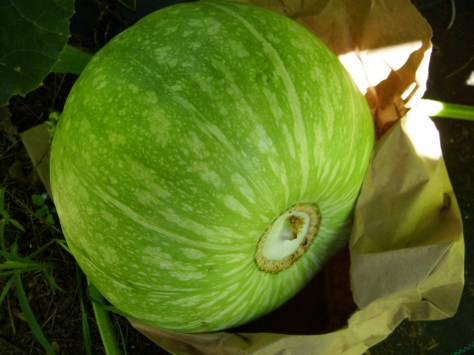
Protected from the Melon fly with plain brown paper bags, this simple but effective method keeps this exquisite beauty safe.

Shaded by Ironwood trees, this is the first of it’s kind here in the islands.

I was in need of a serious amount of mulch material (and a truck) to complete some of the new composting beds this week. Here I am just about running out of steam after a long, hot afternoon spent shoveling. The fine ground brown waste was purchased from Organagrow mulch
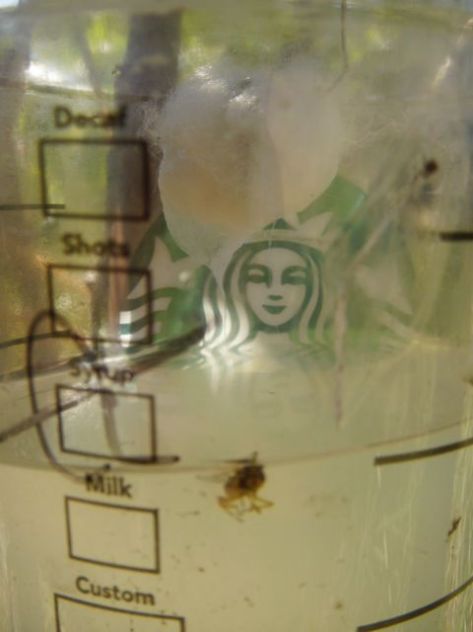
A venti Starbuck’s cup had a second life on the farm as a fruit fly lure. Here in the foreground, a male Oriental Fruitfly (one of 4 species of fruit fly here in Hawaii) floats in a mild soap solution after being lured by the Methyl Eugenol drops that were placed on the suspended cotton ball. A cheap and effective reuse solution. Next…the Melon Fly!
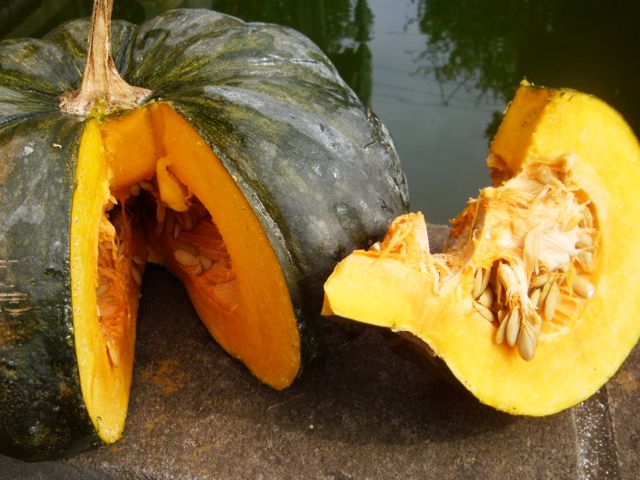
Dark green, with light green and gold freckles, Dream Keeper is a new organic squash that I created by cross-pollinating two strong C. Moschata strains. The result…a beauty that is virtually mildew and bug proof without sprays. On the inside she is as gorgeous as a Hawaiian sunset.
For hundreds of years, farmers built the soil as a foundation for the food that fed their families. A foundation for their future. A built-in daily vitamin for themselves that would be harvested in the months ahead. Then something happened when I was still measured in relation to my Gandpa’s knee. There were better ways, they were told. Better? Faster, more….but really it was the point of diminishing returns. More lackluster crops were produced in greater numbers. A strong line was drawn. Agricultural crops were now treated very differently from vegetable gardens. Farmers seemed to hang on to the build the soil method in the vegetable patch that fed their family, and in times of need, their neighbors. Why was that? Was it because that was the domain of the woman of the house? She held onto these methods that are methods that organic farmers still use today. Rotating, covering, mulching…So was it scale that was the issue? Probably. In the never-ending American push that bigger was better, we learned quite late that bigger was simply bigger. And the “better crop” was in the farmer’s own veggie patch.

The first bloom of the first heirloom in my 2012 squash seed trials. It was simple, beautiful and perfect to mark what would become the first of many plants that were grown so to try to solve a problem here in Hawaii.
 Squash and Awe