Category Archives: Hawaii

Fermenting My Way Through Summer: Pipinola/Chayote

For those growing in Hawaii, we know Pipinola, also known as Chayote, but we may not know what to do with it.  This squash relative is a big climber, which can be a blessing, or not so much, depending on where it is growing.  Edible from the chestnut like seed, to the fruit, leaves, and even the tasty stem tips too.  Like all squash, every single bit of it is useful, and edible. Even the pig adores them, as she crunches them like apples.  They do not have a great deal of nutrients, nor do they have a lot of flavor, which brought me to ask, “what do I do with a bushel of them?”  When conditions are right, they will produce a lot at once.My method is to harvest, and follow by pruning the vines heavily twice a year.  The green material is perfect for adding to your compost, the lush vines help to conserve garden moisture, and they make for a very useful pig food/bedding making for what I call Hannah’s edible bed. The vines will soon produce more than you know what to do with, or at least that is how it was, but now this changes everything.
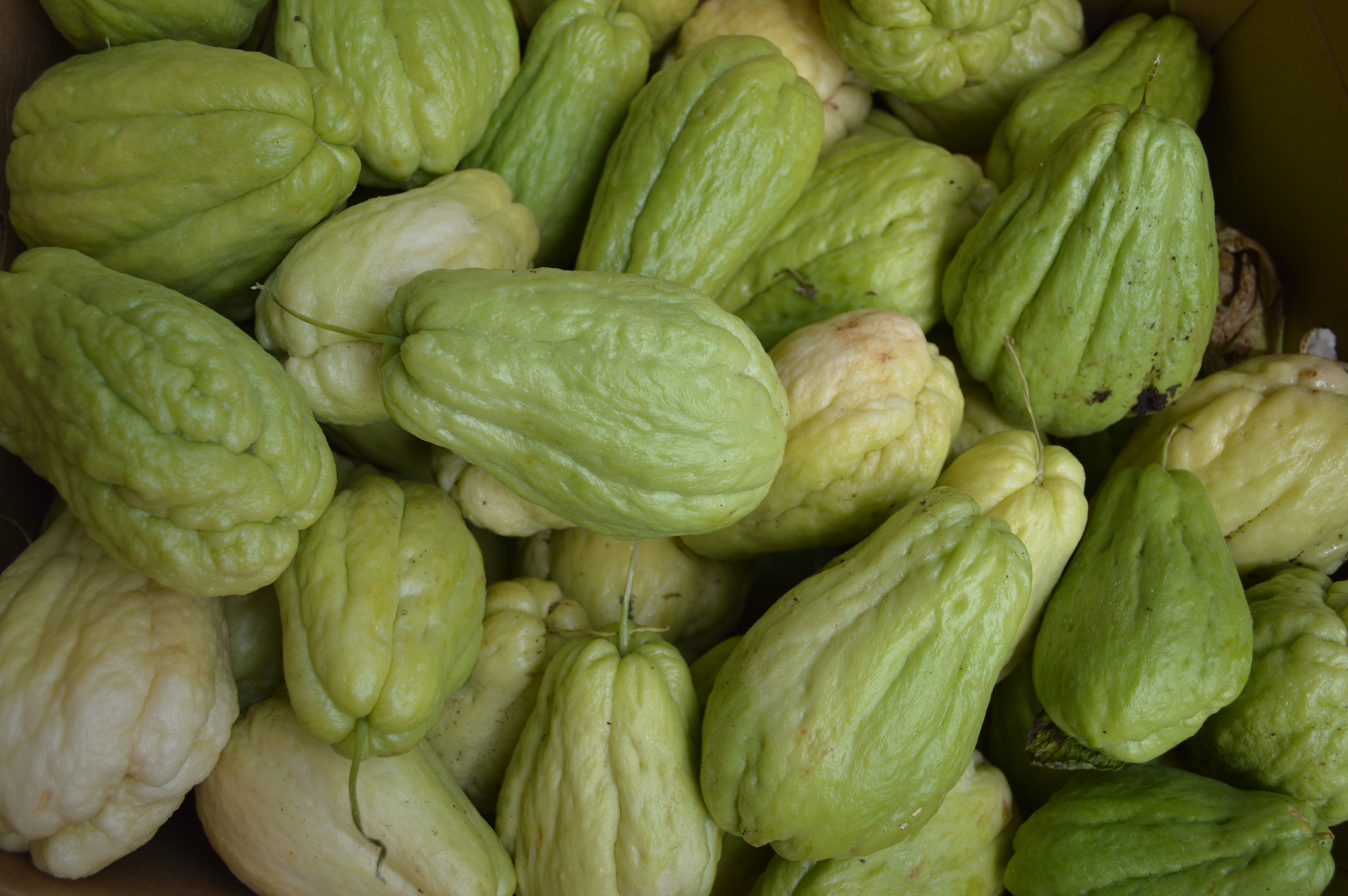
DSC_0745

As I was sorting through vine and pipinola fruit, separating the split sprouting fruits out so to replant, or fed to the pig. The small medium and even larger ones seemed to have untapped potential. An idea popped into my head:  could this be fermented? I kicked off the rubber boots and looked it up online.  In the Americas, expats often use them for kraut.  There were several references to how they are available in Mexico, Central, and South America, by the bag or bushel.  Elisa Fusi charmed my idea with this wonderful blog post about her organic farming and cooking while visiting Panama.  More and more recipes turned up as I sat by the computer.  I was growing excited, and needed to begin.  I keep couple cases of jars on hand at all times, because, you just never know when a storm is going to hit and you need to put up a bushel of something.

The recipes varied primarily in the way they let the fermentation take place.  Some used jars with lids, some used crocks, one used a bowl covered in plastic wrap.  I decided to use the jars, since my counter space is limited, and having them ferment in the jars seemed one step closer to being completed.

Each recipe called for a slightly different amount of salt as well.  So here is how I did it:

Washed down counter, cutting board, and selected a knife.

Pulled a box of kosher salt and a large glass bowl out of the cabinet.

Washed jars, and set them aside with new lids

DSC_0747

I pulled out the ol’ trusty thrift store Cuisinart, and selected the shred blade, feed tube pusher, and the tool that slides into the shred blade and fits it to the machine. I made a nice work area with several clean dish towels up and out of the way.

I washed and sorted the pipinola/chayote, then quartered or halved them to fit in the food processor feed tube.  I left them clean and in two colanders so to keep them close at hand.  There is no need to dry them.

Next, I rifled through the spice drawer looking for underutilized, but fresh spices.  Several recipes called for caraway seed, which I use in my Irish Beer Bread.  I am sitting on a goldmine of fennel seed and lemon grass too. I pulled some garlic too.

Then I started shredding until I filled the whole container.  Then emptied it into the glass bowl.  I added about 4 teaspoons of salt, to over a quart of shredded squash, a dash of caraway seed, and minced two garlic cloves.  I massaged it all together for about 5 minutes.  In that time, the pipinola begins to foam and release liquid.  I then loaded the soon to be kraut into jars, leaving an inch of room at the top, and pressing the mixture down firmly.  Liquid should cover the kraut.  The lid is screwed on, and they were placed one after the next onto a shelf out of the sun.

I could have walked away at that point, but instead, I kept going.  I had just bought fresh seaweed, and the orange Habanero were producing, and I cannot make anything without pumpkin, I was skidding into a creative buzz.  So I kept going, and trying all kinds of made up combinations.  I treated each in the same manner, of packing the solids down, and having enough brine to cover them.  I backed off on the salt when adding salt-laden seaweed, I pumped up the garlic and chilis to make a sort of “Squash-chi” kraut kimchi combo.

Each day has begun with my taking five minutes to open them all, release any air pressure that built up, and then smoosh down the solid material so to keep it pressed together, and below the brine line.  We are now at day 4, and I have already eaten a pint through my daily sampling, so do make plenty.  I have just gifted jar today, and I am sure there will be some requests for trades.

I made a trade today, exchanging my pumpkin for zucchini, I thought that that may be nice to use as well.  I picked up some Hawaii grown Sweet onions too.  So the day is filled with promise for fermentation, since I still have most of the bushel of Chayote still to go.  Overall, it was easy, fun, and I felt like it made a great product out of a rather extraordinary harvest.
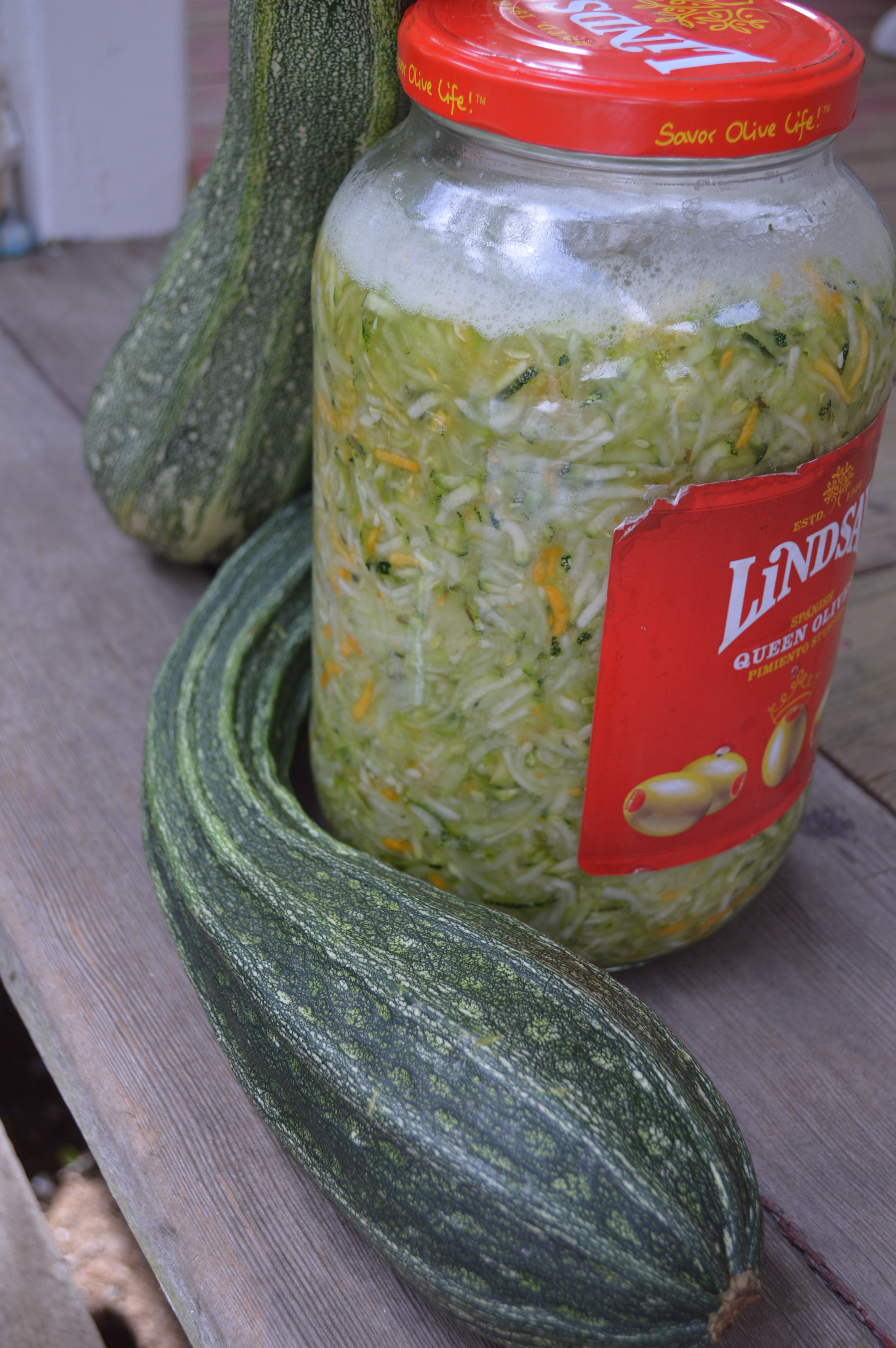
Three Squashkraut
A gallon jar from a restaurant makes the job easy. A trade with another farmer makes my range more interesting. This is 3 squash kraut with sweet onion.

These will all be refrigerated in the next week.  They will then keep in the fridge for months.

Population Density and the Farm

People dream of farming on Hawaii Island, aka the Big Island, and they are inspired by all of the potential that it holds.  So these agriculturally minded people create interesting CSAs, they make farms, and aspire to be a farmer’s market vendor.  What most of us fail to consider is the weight of a low population density and how it will affect business.  Without growing the demand for such goods, we will soon be in trouble.  Why? A lot of space between populations means long delivery distances.  With only a few restaurants that buy local produce, that  means that you must have all of them on your team. As in 100%. And that is tough to do unless you are the only farmer around.  That sounds funny, but I have met people in other parts of the country who have a lot of customers because they deliver a great product, but equally important, they have a captive audience and no competition from other farmers or imported goods.  That is an amazing scenario, but not likely here in Hawaii. And we all know that we are not getting much income off our markups in the first place.  We have to produce the product too. I am not discussing “hobby farms” here, I mean to address the issue of farmers that have to survive off their farming.  A friend of mine just couldn’t relate.  I only half-jokingly noted that it is like a realtor having to build the house, go door to door trying to sell it, then get only a few dollars over cost, or even not cover the costs, then immediately do it all over again.  Like I said, it is only half-joking. Maybe that isn’t a perfect example, but farmers are in a really different situation than most people can relate to.

Though in the past three years, I have only stuck one toe into the pools of complexity that surround agriculture in Hawaii. I was more than a little discouraged to find out that almost no farmer that I know is making a living off farming.  They are considered part-timers because their spouse hold a ft job in an office, a non-profit, or a hotel. It is survival.  Right now, grant monies are being directed to new farmers, and as these programs churn out students of all ages and abilities, in our nation’s most expensive place to live, it is hard to tell these inspired new farmers that on top of all else, they need to enter into the difficult task of building new markets as well.

So let’s get back to population density.  On my May trip to Oahu, I saw a familiar face at a unfamiliar farmer’s market. There was the banner of one of my neighborhood farms.  Why on earth were they selling leafy produce on Oahu, several island away from their farm?  It wasn’t just them, there was another Hawaii island farmer there as well, he noted that, “We just don’t have the business that we need to survive.” So they fly to Oahu every Saturday?  Looks like it.  Another well-respected local farmer ships about 90% of his produce to Maui.  Same idea.  Maui has a population density that we do not, and they also have a much better chance of someone caring that their produce is sustainably produced. It is at best, daunting to consider those logistics for farm survival.  Air travel to another island is not cheap in Hawaii, nor is shipping food.  Leafy greens are light, but they require refrigeration.

So what are my suggestions?  One is that I think we need to make a more intensive effort of gardening on Hawaii Island.  Switch gears back to the backyard.  We have yards on the big island, and with some training in soil building and gardening, it is quite possible to grow quite a bit of your own food.  Another idea is to build the movement. One long time Hawaii island resident noted that the desire for local, sustainable food never really took off, in fact it may have been better in the 70’s.   My research indicates that they are right, in the 70’s over 80% of the island’s food was from Hawaii, much of it from this island.  So are we backsliding?  Maybe.  The increase in our island’s importation of foods combined with a locally grown following that isn’t increasing at the same rate.  It feels like it is growing, but from what I hear, local is on many peoples lips, but not on a large number of Hawaii island plates.  I know a lot of circles who buy a large percentage of local produce, but I also know the Costco set who proudly announce that they bought produce from Europe that morning.

Pruning Squash Leaves for Plant Health

I plant close, I’ll admit it, too close.  I am a chronic over planter, but I have my methods.  One is making sure that, as one farmer summed,  ” feed the heck out of your plants.” Yes, I do.  Exactly.  I set those plants up for success by giving them a lot of micro nutrients, worms lolling about, mulch to hold it all in, and you cannot forget my homemade fish emulsion.  Like all good things, success comes from a layering method giving a strong base to grow just about anything.  DSC_0409

So it is mid July, it is now finally hot and sunny in upcountry Hawaii, and my May plantings are beginning to sprawl.  What do I do?  Prune the inner leaves and let the air circulate.  Let the other plants like corn, tomatoes and flowers get to see the light, by removing the squash leaves that are very close to each other.  A healthy squash plant will have “choke” (Hawaii slang for a lot) leaves.  So cut off the ones dusted with mildew, give the bed a good soak with diluted fish emulsion, and let ’em sprawl.  In the weeks ahead, they will smother the entire area where I shot this video.

Bear with the video, it is hot and mid day as I deliver this squinty, yell at the camera squash tip.  But it is sent to you now, so that you can fully benefit from it.  The extra fish emulsion will give it a boost of energy at week 6, a heavy vining time in the squash’s life cycle.  So prune, put the leaves in hot compost so to rot it down.  Don’t leave the leaves in the garden or you will encourage the powdery mildew.  Bag the leaves in an old garbage bag, tie it shut, leave it in the sun to cook and kill the mildew before moving them to your compost.

I happen to breed varieties that are naturally resistant to Hawaii’s bouts of mildew, they are often unaffected, when a new trial plant is suffering in it’s first season.  Only the strong plants survive my plant editing.

Powdery mildew is common here in Hawaii, even in dry up country.  I mean very common.  If a plant is getting a lot of natural nutrients, good air circulation, sun and water, don’t fret, maybe try a different species or variety of squash.

Only a small percentage of the squash varieties that I trial even like their VIP care.  So many varieties simply don’t like growing here.  Hawaii has a little bit of everything pests and disease, with the highly unpredictable growing conditions for plants, none of which is welcomed by many squash varieties.  I tried to grow the super dependable Hubbard, and it didn’t like the farm conditions at all.  Now that the soil is really soil instead of half rotted compost, it may like it.  Sometimes it is the time of year that you plant, or even the day that you choose to plant on.  If at first you do not succeed, try again.  You will be a better farmer or gardener if you fall on your face a few times.  Trust me. I do it all of the time.

Try (New Things)

What if you thought that you couldn’t grow tomatoes or melons, or pumpkins, only to find out that you could have all along? A lot of Hawaii gardeners begin by thinking of mainland season, and mainland vegetables, Soon they watch their dreams fizzle as plant after plant fails. I read and respond to so many messages where all I can do is encourage experimentation, research, and expand your tastes. All kinds of plantings are possible, but sometimes, you have to be the one to figure out those possibilities. Now, so many of us have websites that can hopefully cut your research down by several seasons, if not years,  But due to micro climates, what works for me may not work for you, or maybe it will.   Often we must just try and see.  Many just want answers, they just want seeds, while others are problem solvers and researchers.

DSC_0964

Think it cannot be done? It can, trust me on that one.  We are now mining history for seed solutions that have been solutions for many generations. They have just been pushed out of popularity due to commercial interests. It is not too late.  The Internet connects growers and seed savers from around the globe.

hidden Marina Di Chioggia Possibilities are being rediscovered every season. So give it a try, and see if you can find your own solutions.  Inspiration is contagious.

DSC_0404

Interplanting With Squash

Squash are not known being team players in the garden, but are we giving them a fair chance?  Squash will grow out and over everything in it’s path, but if you plant other vegetables at the base of your squash you solve many things at once, let me explain.

For example, the Three Sisters method was a smart interplanting solution invented by the Native Americans, including the Iroquois.  Don’t believe me? Well, squash stars (well assists) in the beautiful flip side of the 2009 US Dollar coin.  That is right, not only I say that squash can play fair in the garden, the evidence is minted.

Though I was not yet able to do a true, successful Three Sisters Native American planting technique, I’ve been able to keep true to the underlying truth that considered what plants need, and how those needs can be connected in a self caring system.  I add in cherry tomatoes, or tomatillos, along with beans, corn, and squash.  At times I add plantings of okra or sunflowers in lieu of corn.  Tall stands of okra become an excellent resting spots for small birds that feed upon the pickle worm moths and other flying foes.  They use the okra as a lookout spot before diving in for a bug. So for those of you who think that a squash farm is just squash, you are missing a lot of the fun, and a lot of the harvest.  Not only does it create multiple crops from one watering and one application of fish emulsion, but it also is good for the soil.

Need more convincing?  Please remember that squash vines will grow away from this central point, leaving the other plants to breathe. So give squash a chance in your small garden or farm.  It will smother weeds, feed your family, and reduce water evaporation for those, like me, who grow in drought conditions. If the vines threatened to take over, prune them.  It is that simple. There is little to lose, and much to gain.

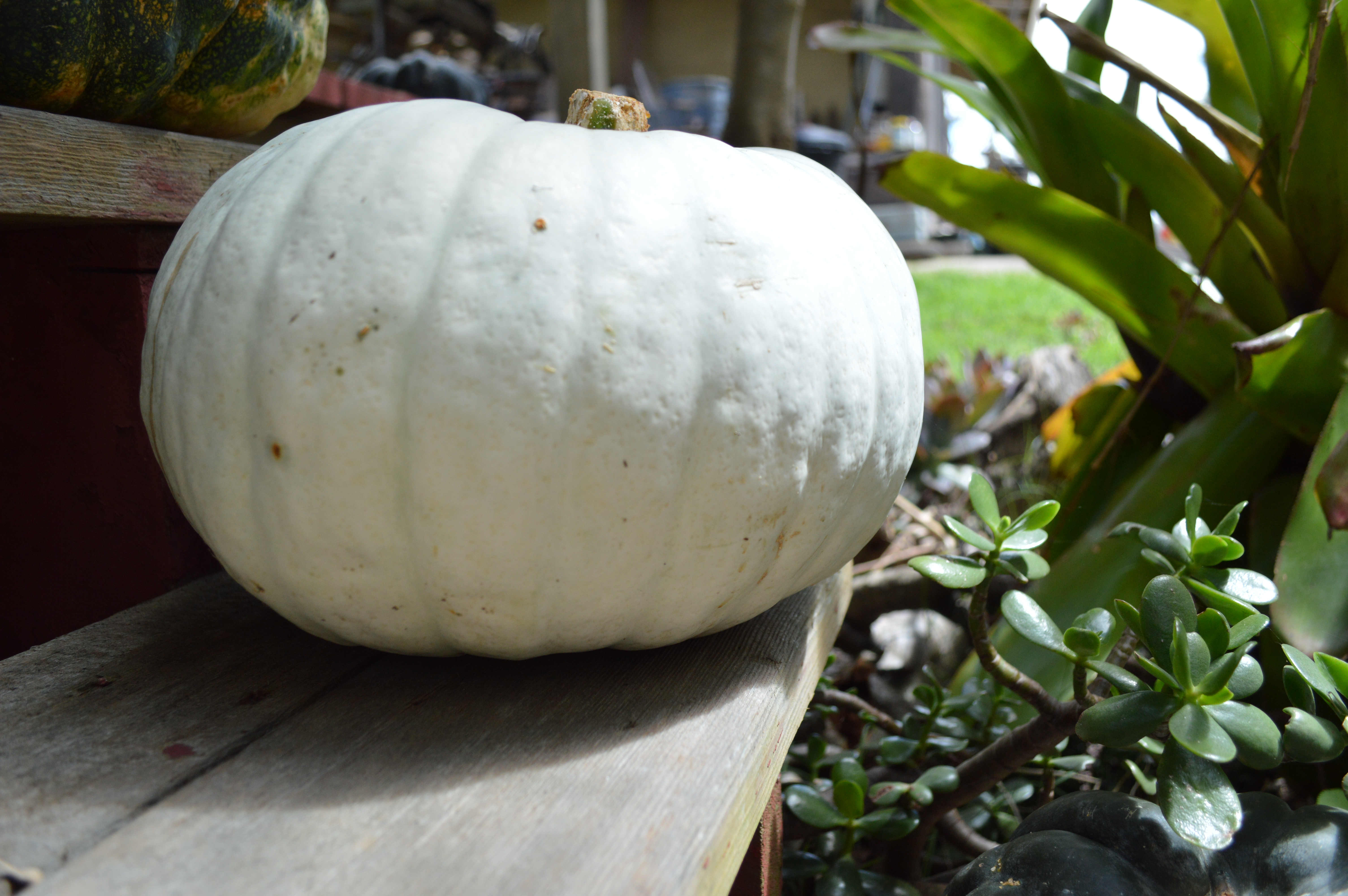
Glass Gem popcorn, Tigerella tomatos, Hawaiian Black Kabocha, Jimmy T's Okra, Rattlesnake pole bean...in harmony
Glass Gem popcorn, Tigerella tomatos, Hawaiian Black Kabocha, Jimmy T’s Okra, Rattlesnake pole bean…in harmony

Spring Cleaning at the Farm

In mid April, I have my days set on clean up.  Pulling grass, pruning chilis and eggplants, and replanting for the seasons ahead.  In the ever variable weather conditions of upcountry Hawaii, “now or never” springs to mind.  So here I am showing you how my mini kitchen gardens dapple the farm.  Though the invasive grass of the area may smother, it also protects the freshly made soil from wind erosion, as well as dehydration from the sun.

So try to think your way through tough situations, like how to deal with a smothering, drought hearty invasive grass that was brought in for the cattle industry, yet smothers the rest of us.  You are never going to win in this battle, you can only figure how to work with it’s existing properties. Kikuyu grass exists in Hawaii from 6000 ft elevation on down.  It also smothers other places like Australia.  Mowing it is one use, but the grass can be used as a living mulch that will retain soil moisture as squash vines crawl on top of it.  The grass can make bee pollination difficult, but at the same time, for squash, it can also make it difficult for melon fly and pickle worm to attack your squash plants.  There is an upside and usually a downside to just about any farm related matter in Hawaii.

What Wants to Grow

When planting a garden, it is always nice to consider what wants to live in your area, rather than simply what you want to grow.  Consider being flexible in your chosen flavors, and expand to include unfamiliar tastes that happen to need very little care in Hawaii.  Here in Hawaii with the multitude of micro climates, one often feels fortunate when they discover something that becomes almost “wild” in their garden.  Other gardeners actually mope and complain, while ripping those plants out.

Such culinary wonders as mint and Florence (bulb) fennel spring to mind.  I know many who can grow these plant, but they do not.  They claim that they do not like the taste of them.  The point that I often make is simple: learn to like what likes to grow where you are.  It makes life oh so much easier, and it brings you into new culinary adventures as well.  Letting some of your beans and greens go to seed, and reseed themselves is a great joy, if you let it be.  Let your garden be a little less controlled, a little more lush, and give up on trying to dictate what grows where, and when.  Be an observer, and celebrate how nature leads the way with gardening lessons just as important as those that we search out in workshops and books.

If you notice that your Giant Red Mustard seems to shine in your garden, leg it over to your nearest library and seek out recipes that call for mustard greens.  Mint is expensive in the shops, but loves to tuck in under a drippy eve, or hose.  Mint pestos, mint coolers, mint dappled in fresh salads, or asian style noodle soups.  Research and celebrate, and I promise your gardening days will shine a little bit brighter..

Mint becomes a lovely ground cover underneath edible radish blooms.  This no till garden has many layers of life, just like nature itself.  Radish blooms will soon give way to radish seed pods that can also be harvested young and chopped into your dishes to make a meal sparkle.

Get Growing Hawaii: lemongrass

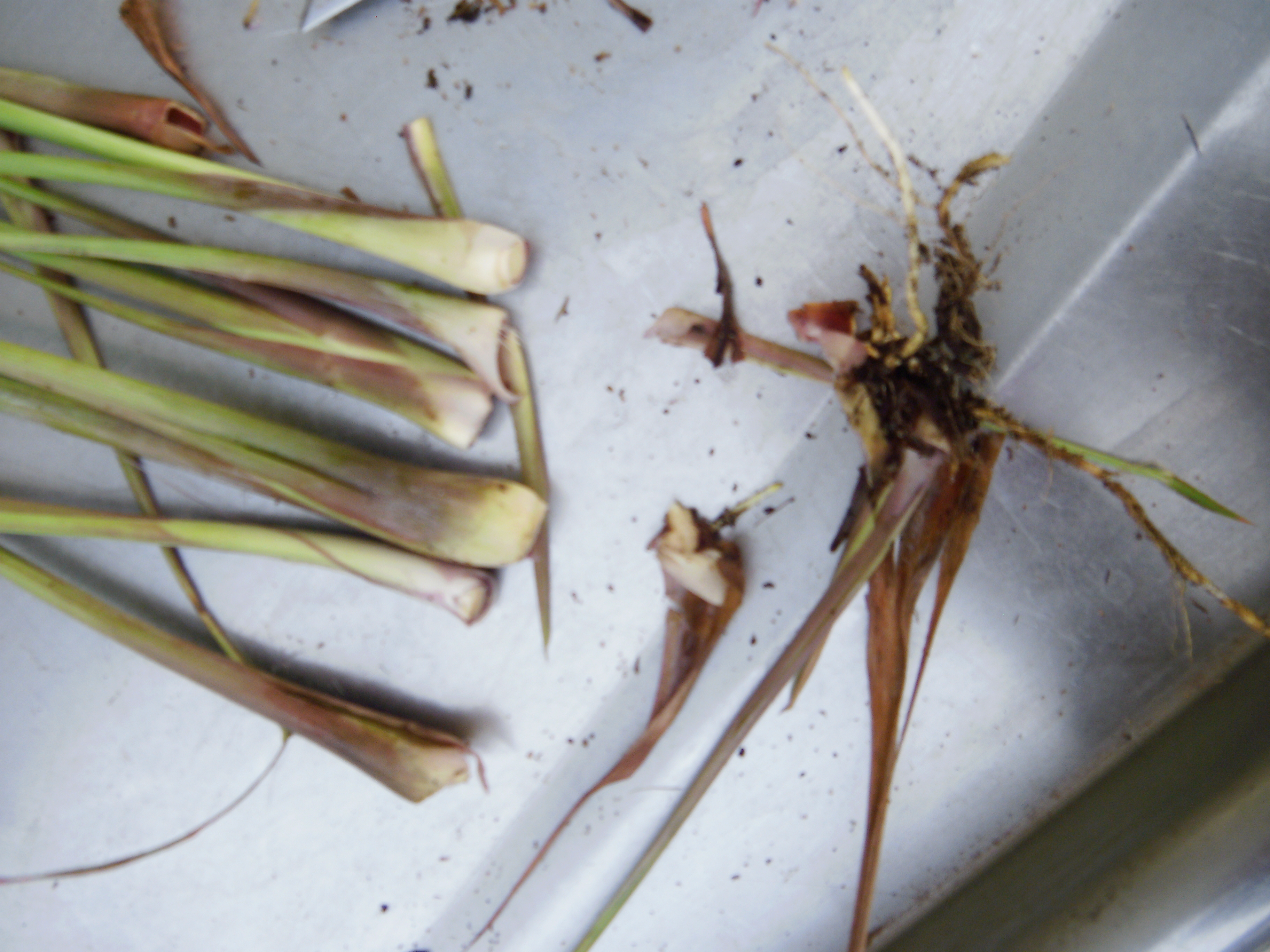
prepping lemon grass

I will openly admit it, I had no idea how to begin a lemongrass plant until I started composting the kitchen scraps from Redwater Cafe.  There in the midst of the “chop and drop” veggie scraps from the labors of many busy chefs sat the small fragile roots of the end cuttings of lemongrass.  I had never really thought about it prior, but when I saw the end pieces, I did what any thrifty farm girl would do, and planted them immediately in an area where my chili peppers grew.  I nearly forgot about them until, as I was pulling weeds, there were the beautifully formed shoots of lemongrass, waiting for harvest.  The luxury of garden plucked lemongrass was completely new to this midwesterner turned Hawaii farmer.  There were coconut milk curries awaiting these flavorful stems…I had to get cooking, but first, my forward thinking self cut the roots off and separated them and replanted them all about the garden.

I highly recommend this lovely herb in your tropical garden, and even your higher elevation garden (I am at 2600ft in Hawaii.) It sits quietly and stately anywhere you plant it.  Tall and grassy as the name illuminates, it becomes a year round herb that can be grown out of your kitchen trimmings.  Trust me, when you are not paying big bucks in the shops, you will find lots of uses for it.  The fragrance is divine, and treat it well with enriched compost and it will prosper. For some ideas to get your plantings inspired, see http://www.saveur.com/article/-/Recipes-with-Lemongrass and check out this lemongrass knot tying video too! http://www.saveur.com/article/Video/Video-How-to-Tie-Lemongrass

Growing notes:  We do get a variety of rust on the lemongrass leaves here in Hawaii. I recommend harvesting leaves/stems frequently, and if hit with rust covered leaves, just leave it planted, but cut them down to the base, as they will regrow quickly.  Make sure to quarantine leaves in a plastic bag so to not spread the rust plant disease. to other plants, farms or gardens.

Finding My Voice

The National Heirloom Expo, The Squash Epicenter, The Squash Super Bowl.  I have called it many things in the past few months as I made preparations to attend for the first time.  My nervousness and excitement grew as my dreams and participation level also grew.  I had gotten myself into a beautiful mess of sorts as I responded to a critical email from Jere Gettle, president of Baker Creek Heirloom Seed Company, and founder of the National Heirloom Expo, with a very quick and decisive “YES!” to his question of if I would present a talk.  This may not seem like a lot to many, but in the weeks prior, as a first year farmer, I had gone from the idea of I should go to the event, to being a presentation speaker. It was slightly terrifying upon review of my situation.  It was a big step, but also something that seemed to manifest itself quite naturally.  It was one of those thoughts that flashes in your mind, then 48 hours later, the email came. I tried to calm my near panic with soothing thoughts of “it is meant to be,” and “this is what you are meant to do,”  but it wasn’t working. Regardless of all the reassuring thoughts, trying out my first ever Powerpoint at a National Expo seemed like a bad idea to most.

You see, it wasn’t simply a new Powerpoint, it was the Powerpoint that was rejected in my Hawaii agriculture class when my business plan was deemed “and unworkable business model.”  There was far too much do gooding and elder outreach to be a real farm.  I was doomed to failure as a farmer.  Here I was like a farming Phoenix rising from the smoldering compost of my fledgling farm with my failed Powerpoint. Though the image was nice, the reality was still troubling. I decided that the underdog farmer’s story is just as valid as any other story, and that what good is giving a speech if nobody can relate to you.  Everyone has snuffed the life out of a garden plant, or two, fumbled through absurdly steep learning curves, and had to practically force produce on people so to get them to trust your venture.  So I slid in slides and talking points and the framework told my story, the story of a tiny zero waste farm trying to make a go of it in the midst of a drought, fruit flies, and unexploded WWII ordinances.

For those that do not think in terms of slides or transitions, or talking points for that matter, I am with you. I decided to change my way of looking at the Powerpoint and reenvision it as a photographic safety net. I was not comfortable with my speaking, but quite comfortable with my photography.  I had roamed the globe, and crawled through muck to find the quiet angles of discovery. If I put in enough images I am sure they would shake the words out of me if I froze mid speech.  My Father was a natural storyteller, or as the Irish say, he had the gift of the gab.  He could inform, entertain, inspire, and more. I hoped to channel him during my talk.  Having over six generations of now passed farmers looking over me, I figured one of their farmer entity spirits may have had some time off and would be looking over me during my talk. What I have forgotten to mention is that I often become so terrified when I give a speech, that I have little if any memory of the event.  Perhaps a detail or two, like the woodgrain of the podium, or the ear rings worn my the person who “miked” me up because I have the voice of a mouse. I would be stunned as strangers would hug me post talk and marvel at the monkey story that I told.  My response was frequently, “oh no, I told a monkey story?” But from what I would hear time and time again,  it was a meaningful, well placed monkey story, so I had to just accept that my speaker mind went on autopilot and always saved the day.

I have taken my fear of speaking through many public speaking classes, and even took this fear internationally.  I stood before an inter island grouping of tribal elders, and daringly chose to work without a translator, so I babbled my thank you to them in many tribal dialects.  For once the monkey stories may have revelant, I may have told them, who knows, I went blank. So why did I keep doing this if it pained me so?  It seemed like a reasonable question to those who were concerned about an ulcer being in my future.  So why?  The answer is a simple one for me.  I love stories. I adore language, and the sharing of ideas.  I want to be transported and inspired to reach new places. But most importantly, I believe that those who love stories need to be storytellers themselves. Your own sharing will create a ripple effect so that the great art of the speech will not be lost.  Do and encourage others to do the same, one monkey story at a time.

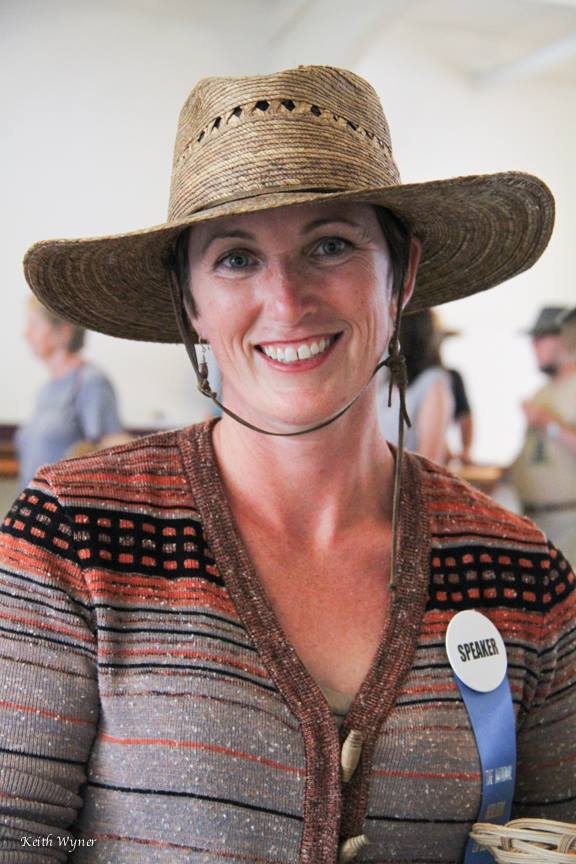
10672244_10152701293169281_7761772200918282263_nAfter the Heirloom expo speech. photo by Keith Wyner