Tag Archives: squash

Three Ultra Rare Squash Grown for Seed

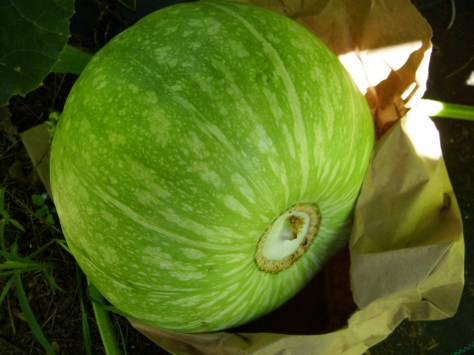
Yervian, c.pepo, Armenia (top) Gori Blue Mottled, c. maxima, Gori, Republic of Georgia, central Asia (bottom left) Moon like squash, c.maxima, Uganda, Africa (bottom right)
Yervian, c.pepo, Armenia (top) Gori Blue Mottled, c. maxima, Gori, Republic of Georgia, Europe (bottom left) Moon like squash, c.maxima, Uganda, Africa (bottom right)

It was a tough Winter for these rare beauties, but these are some of the success stories from the first season of seed saving ultra rare squash from around the world.three rare

These are part of an effort to save some of the world’s rare food crops from extinction.

Rare Yervian c.Pepo squash soaking up the rains

Yervian C.Pepo, Armenia

Yervian C. Pepo, Armenia

Yervian c.Pepo, Armenia

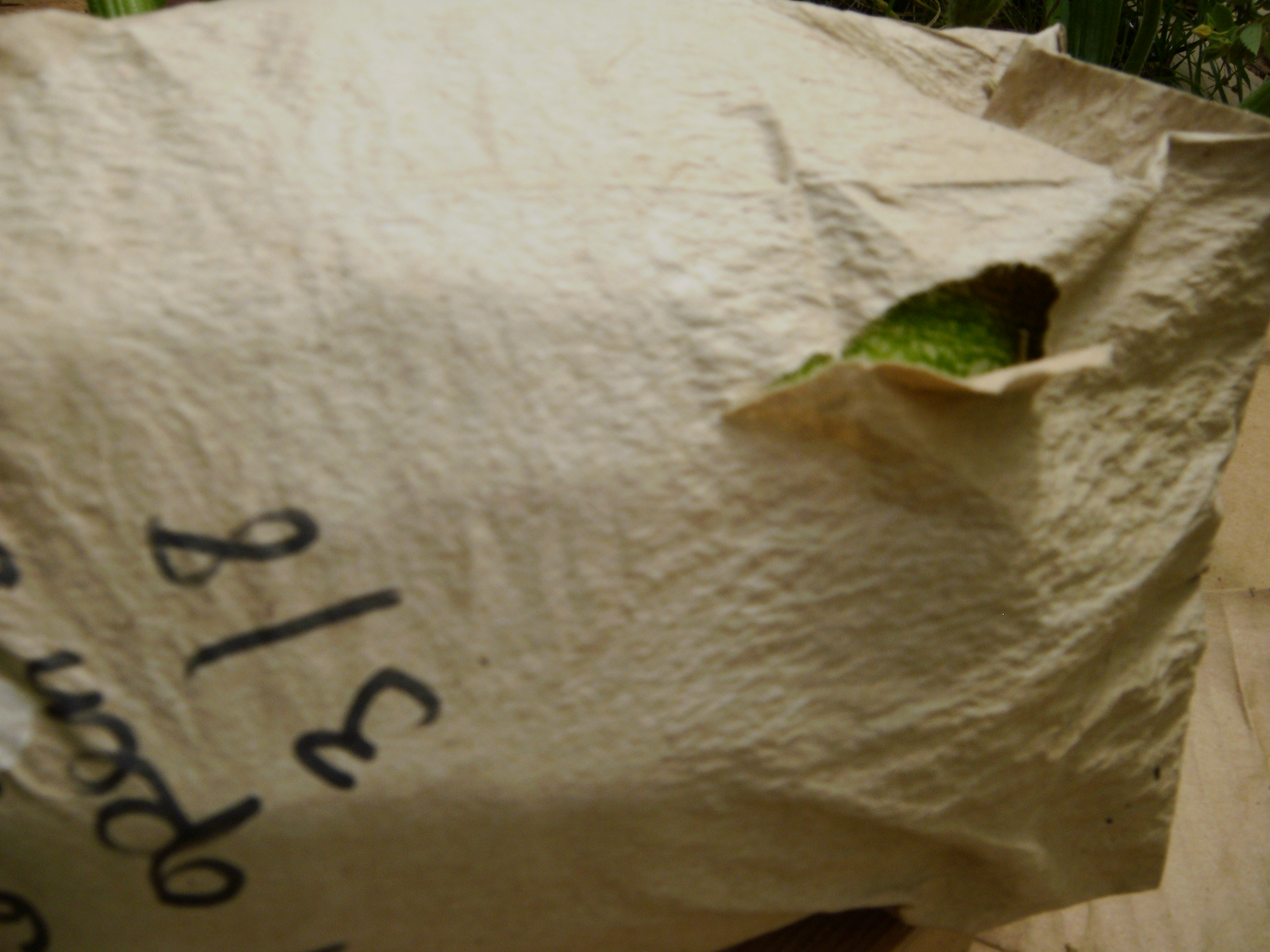
Well after 15 years plus of drought in the area, it is now the rainiest season in years. This well timed ultra rare squash from Armenia burst through it’s protective paper bag as it absorbed the gorgeous rain. I use brown (8 lb) lunch bags to shield against the “double whammy” of Pickle worm and the tropical Melon (Fruit)fly.

Vegan Squash Soup With Cilantro and Fennel Fronds

Vegan Winter Squash soup with fennel and cilantro

In honor of the Gettle Family’s farm visit, I tried to get my vegan game on by creating this lovely little number. Great for that window of opportunity, when you have last season’s squash on the counter, and new Spring herbs sprouting in the garden…or on your windowsill.

Recipe:

I made a homemade mushroom simple stock in a crock pot the night prior. Just bits of stems and some onion, salt and pepper, set the crock pot on low overnight. The next morning I added one can of good quality coconut milk, then used a blender to puree. Be cautious with putting the lid on tight when blending hot soup! In the last blender batch, I added a handful of the tips of young fennel fronds, and cilantro leaves. I removed most of the stems. I added a touch more salt and it was done.

Top with a pretty fennel frond. I have served this soup hot or chilled, and also have spiced it up by adding a dollop of Thai Yellow curry and serving the chilled soup to hungry beach goers.

Enjoy!

Fruit Fly Warfare

It isn’t my nature, but I have been slinking around like a true guerilla with my sites on the fruit fly population.  I wrote a 4 page essay on my findings, that I will spare you for now.  I will unleash it on my readers soon enough.  As some of you bundle up, and pour through your seed catalogs in hopes of Spring, perhaps dreaming about lands where there there is no true Winter, let me remind you, here in Hawaii we have the same brutal Agricultural pests as the Congo.  I wish I were joking.  One soon learns why 90% of our veggies are shipped in from Fruit fly free localities.  Here in Hawaii we are in the heart of yet another fruit fly “bloom” (they can have 8 to 9 cycles within the Calendar year. ) I refuse to be defeated.  Who knows, maybe outsmarting tropical pests will be my legacy.  It isn’t glamorous, but it is true.  OK back to the war…

Three waves of determined effort are necessary, and well, a continuous parts of your growing practice here in Alohaland.

Clean crop practice: I bag the stung squash in reused metallic coffee bags that my Starbuck’s Grounds for your Garden come in.  I then place them in the sun for a couple hours before they are dropped into a sealed bucket where they will die and decompose in the weeks again.

Lures:  The men are targeted and lured by the use of the right scent for the right fly ( sorry guys.)  Though Oriental Fruit fly does not attack squash, they are on the property in large numbers, so I am taking them out for the benefit of someone’s crops.  They may be feeding on a neighbor farm. The mean, but gorgeous Melon fly is my leopard spotted enemy.  Cure lure is their bait.  See reused cup trap image in prior post for the general idea.  Homemade traps have cleared hundreds of males from the two varieties, with the bulk being Oriental Fruit Fly.

Bag…no double bag ’em:  I have used my fledgling Blue Hubbard as a case study plant, trying out all kinds of strategies.  So far, my vote is for a quick, but meaningful hand pollination followed by a parafin wax baggie, topped with a brown paper lunch bag.  Driven by scent, this seems to be a good solution so far.

Non-GMO legislation passed on Hawaii Island

I haven’t mentioned this on the site as of yet, but it is important to do so.  After much debate, the Mayor passed the legislation on behalf of the farmers, the Native Hawaiians, and the many concerned citizens of the state and beyond.  It is hard to sum up the importance of this legislation for me personally, but I will try. I wrote two testimonies and delivered one in person.  It was terrifying for me. I get stage fright, so delivering testimony was one of the hardest things I have ever done. But I had to get it together and look beyond myself to see the power in numbers, and stand tall. On a practical level, it was also completely necessary for me to do because GMO squash would wipe me out. GMOs have the potential to wipe out many who are organic.  You loose you Organic certification if your fruits/veg test positive for GMO.  Believe it or not, some non organic farmers tried to say that that wasn’t a very big issue.  Loosing your certification/foreign markets due to your neighbor’s actions would probably be a pretty big deal to most people.

For me personally, it allows me to continue to grow squash without cross pollination with GMO varieties.  Squash is one of the most susceptible to cross contamination, and since bees travel many miles, it is almost impossible to control without close pinning shut each and every bloom (not possible on this scale that I am growing.)  Different varieties of squash all cross with each other so that without a shutdown of GMO seeds, GMO squash would quickly cross contaminate the existing squash farms, and wipe out all local squash varieties, and we have no local seed bank to go to. It allows me to continue to offer pure strains of pumpkins that were in the hands of our ancestors. It allows me to know what I am growing, and to be proud of what I am doing with my life.  It allows me to expand my farming efforts, and celebrate the uniqueness of our isolated island environment.  It allows me to offer non-gmo squash and pumpkins from Hawaii all of which are grown in hand built soil using organic methods.

This is just what is on my mind right now.  It is like the skies opening after the rain.  It is possibilities for the future of farming, of reclaiming sustainable methods, and feeding our families right.  It sets us apart from the rest of the state in the best possible way.  The Big Island is now a leader.  OK off the soapbox.

Dream Keeper- A new Hawaii grown variety

My newly created organic squash (very non-gmo)
My natural, in the field plant breeding has resulted in the delicious, dependable and strong variety that I called Dream Keeper!

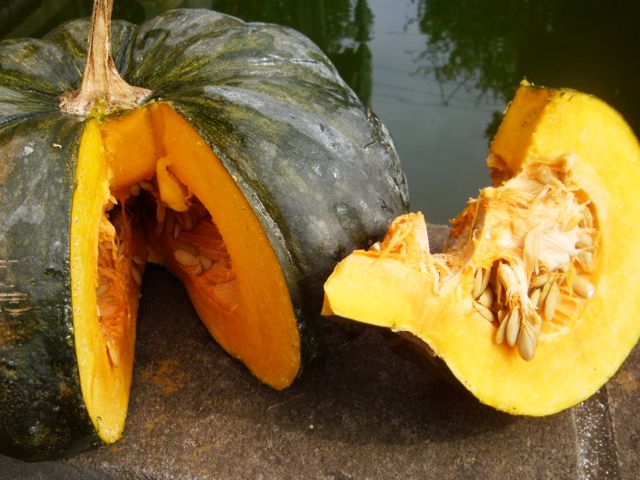
Dark green, with light green and gold freckles, Dream Keeper is a new organic squash that I created by cross-pollinating two strong C. Moschata strains. The result…a beauty that is virtually mildew and bug proof without sprays. On the inside she is as gorgeous as a Hawaiian sunset.

Can You Even Recognize It?

OLYMPUS DIGITAL CAMERA OLYMPUS DIGITAL CAMERA


(Left: a May 1 image of the month old farm, at Right: the same view with additional planting beds fully realized six months later.)

One quarter acre all filled out after 7 months of farming.  We can do it, everyone!  Every inch of soil…and it is now deep rich soil, was lovingly built with one woman (me,) one shovel, and a fair bit of focus.