Category Archives: Farming

Become a Latin (Language) Lover

Alright, so you may have thought this was going to be a steamier post than it is, so let me explain.  Some of you may have seen those Latin names in the seed catalog, or on the packets and you have simply glazed over due to bad experiences in school.  You may be thinking that you do not need this Latin in your life, and it is just there so to look good.  I encourage you to learn what it means in the context of your garden.  This extra effort may make you succeed beyond measure.  Seed packets have limited space, so we should assume  any information found there is quite important. The packet can begin to lead you to your future success.  So I recommend reading them, but also taking the extra step of understanding what they mean.

This year, before you buy all of your seeds, I ask you to look into the Latin names of the varieties that you want to grow.  It is fun ordering seeds, and heirloom growers get really carried away in our celebration of plant diversity.  You may like to select based on color, or taste, or select to grow only rare plants.  I try a lot of seeds, and test them out each year. The results have been extreme.  My growing history is pretty rough, for every one that succeeded, 20 may have been a total bomb.  Part of that is where I am growing (Hawaii) part is our multitude of microclimates, altitudes, come and go seasons, and drought…or floods.  So what I have decided to do is to stop torturing myself with the “oh maybe this year” denial, and just accept that some will not do well where I am, and others may thrive.  I am an optimist by nature, but enough is enough, and I have to accept defeat when it comes to certain plants. The key to future success is not to stop with a success or failure, but to understand what those results had in common.  That is where the Latin name of the plant comes in.

On “research Sunday,” I stayed awake into the early morning hours as I plotted which varieties I hoped to grow for the season.  I took it one step further than your average grower, by making lists of the plants I grew, then looked up their scientific, aka Latin name. This was the year to reorder chili pepper seeds, but with some doing great, and others performing poorly, I would not allow myself to order another seed, before understanding if there was a trend behind my successes and failures.

I searched for the Latin (scientific) name of the plant variety, then checked several sources to make sure that they were listed as the same name.  Check a few sources, because mistakes do happen.  Two of my favorite vegetables to grow are categorized into more than one species (example squash and chili peppers) compare what varieties(also known as the common name of the plant) are within each species.  Example for the Triamble squash, the species is Maxima, and the variety name is Triamble.  Triamble is what the pumpkin is most commonly called, but Maxima is its Latin (scientific) classification that categorizes its genetic lineage. It is necessary for plant breeders, but it can also lead you to success as a grower because it helps you to understand the relationships between plants.

Chilis are a love of mine, so lets look at how this applies to chili peppers.  Below, you will see two comeback stories. They were plants that nearly died when I was away travelling.  When we look at these peppers, you see that they are very different in their structure.  They are, in fact,  in different species, but both are hot peppers.  The plant on the left shows more vigor, and the plant on the right looks healthy, but rather average, if not below average.  The plant on the right I consider so-so in its production of peppers.  I happen to adore the taste, so I grow the plant, but I would never consider growing these peppers commercially.  The pepper on the left has vigor, and it is putting out triple the blooms of the other plant.  This species seems to really want to live in my microclimate.

I have struggled year after year with Poblano, Jalapeno, Anaheim.  My CA growing buddies sometimes laugh and give me a concerned look, as if I am a chili pepper growing “hack.” But when I mention my success with Ghost peppers, they listen up, because Ghost is one of the most challenging peppers for many to grow.  For one, it needs a very long season to  produce. Secondly, it can be very challenging to germinate. In CA, and beyond, Jalapeno may be one of the easiest to grow, so it becomes confusing, until you look to the species names, and you will see where the line between successful and so-so pepper plants is drawn.

The beauty in plant diversity is that one size, or in this case one seed, does not fit all.  If you are optimistic, you move forward knowing success is out there, you just need to find it. Hawaii farmers are constantly told that we cannot get our production numbers up high enough.  The problem is in part due to the fact that many of the plants that have become commercial “sweethearts” do not grow well in Hawaii.  Yet other plants in other species, thrive, and produce crops. Because of the way our distribution channels work  often times, only the common commercial varieties are seen on the produce order form, so chefs do not use the wonderful, unique fruits and vegetables that thrive here. (more on that is another post) In fact, they may not even know that it grows here.
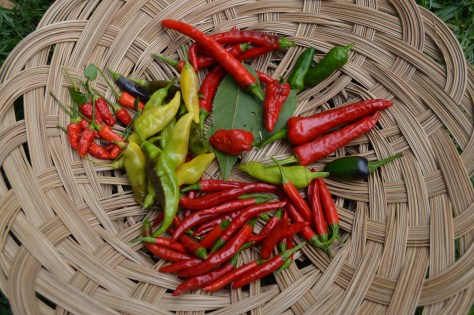
the bounty
Ghost, Thai Dragon, Lemon Drop, Hawaiian, Fish, Cayenne, Banana, Jalapeno

So what I encourage you to do, especially those in Hawaii, is to study what did well (or failed) for you, and then look into its genetic make up.  Are there plant “cousins” that are in the same species that you can also try? To follow with the example, Ghost peppers are in the same species as the pepper image above on the left, Jalapeno is in the same species as the pepper on the right side photo.  So I can be relatively certain that if I select more from the same species on the left, I may have further successes!   I have never felt that the key to agricultural success in Hawaii lies in creating new seeds in a lab, or trying to grow and compete within the narrow scope of commercial hybrids that are shipped in by the hundreds of tons.  Our success is right before our eyes, written in an ancient language.  By learning from our success and our failures, we can make better seed selections in the future,  and we will certainly move forward with confident strides.

So become a Latin lover, and begin the journey of the plant family tree.  You will understand how plants are related to each other, and then maybe explore the possibilities that you may not have tried.  Fail too!  Yes, fail and make note of what did not do well, then use your new research skills to understand that as well.   I say, if we learn from both our mistakes and our failures, we learn twice as fast. Guaranteed, you will love Latin (scientific names) when you have a more successful growing season.  When your harvest overflows, with plants needing so little care, you are going to be happy that you took the time to do a little botanical research. Understanding plant genetics is as easy as reading the plant’s seed packet, or catalog description, so give it a try.

Aloha! and good luck!

Lessons from a Rooster

When thinking back to the family farm of my childhood, I remember the animals most of all.  Some things will never change. I have always felt a connection to the creatures around me.  I credit my parents for instilling the strong sense of responsibility that goes with caring for animals.  When the storms came, you went out, not in. You stayed out until every single one was accounted for. Their health and safety was always on our minds.  But with that being said, I’ve found that I have had to acquire what feels like an enormous amount of skills.  Now, I am the grownup, and that means that I need to figure out how to care for hurt or injured animals, often times on my own. Some of it is natural to me, some of it takes all that I’ve got.

2015 brought upcountry Hawaii the mosquito spread avian dry pox, in wave upon wave of illness. It does not effect humans, or other animals, but it can be devastating to birds of all kinds. I was fortunate that I was given the “heads up” warning by an old artist friend of mine.  Her alert allowed me 72 hours of precious time to come up with a game plan. I was able to prep the birds, by giving them extra things in their diet. Nutrition was key to helping them through the pox, that can also cause blindness.  For six weeks, the illness first struck the domesticated laying hens, then spread to the wild poultry that are near home, and then those at the farm.  I steamed pumpkin scraps and fed all of them really good food.  Lethargic sad looking birds were everywhere.  Even very wild hens and roosters allowed me to gather them up and put them in poultry ICU. That was a clear signal that they were very sick.

The most challenging order of business was eye care, as the pox often involves the eyes of the birds.  I wrapped them in bath towels, nice and snug, then bounced and patted them like a baby before swabbing their eyes with homemade saline solution. Every day, I made a new batch of simple medicine from local Hawaiian salt, and boiling water that has been left to cool.  This went on three times a day, for each bird, at both locations, for weeks.  This work was on top of the normal ins and outs of vegetable farming.  It felt like I lived on coffee for 3/4 of each day.  There are things that you just have to do, regardless, and this seemed like one of them. It wasn’t the kind of thing I could turn my back on.

I had been down this road before, when the neighbor dog was injuring the hens.  I realized how much was possible, and how loyal and grateful each animal became after caring for them.  A lot of people ask me why these animals are so loyal to me, even though none of them are mine.  I think a lot of it comes from the fact that each and every one of them has been sick or wounded in some way, and I did my very best to step up and help them out.

I have been told that chickens are mean, dumb, that they have no memory, and they are untrainable.  I have found that none of these things seem to be true.  I will never forget the day that Ruby, a wild rooster that was blind in one eye, laid at my feet while I kept his son alive, and also able to see.  I was trying to save at least one of the young rooster’s eyes.  I will never forget that day.  It was pretty powerful to have a full grown wild rooster lay at your feet as you gave another one emergency care. It was clear that he knew what I was doing. I was caring for his family, and he knew that he could trust me.  Ruby remained loyal to me.  He was a lovely, powerful rooster that had survived three mauling by roving dogs, the pox, and even severe injuries from a rival rooster.  In the end, he died in my arms, wrapped in a towel, warmed by the setting sun.  I had administered treatment for him dozens of times, but then finally, his complications let me know, that I had to put him down in the quietest way possible.  I cried.

I buried Ruby beneath the chili peppers at the farm.  For a good long while, the dogs and I just sat and watched the scene around us. The setting sun. The closing squash blooms.  The young hens that stood on Ruby’s new grave. I realized that my family taught me to not overlook such times.

For me, this rooster’s story became symbolic of so much more. I realized how much we learn about ourselves by observing.  Ruby’s story also impacted the life of a WWII veteran at a talk I gave a few months ago.  I was explaining about why I chose to explore squash and farming. I give some context so to help illustrate what keeps you going.  There are a lot of reasons to give up, but also plenty of reasons to continue on. Ruby was part of that context.  I had given out one of my farm cards to each and every of the 60 Sr citizens in the room. Each of the cards had a photo image that I took at the farm.  Some were of flowers, others of pumpkins, baby chicks, and, of course Ruby the rooster.  I passed them out before my talk, and decided not to give a power point.  Each person held an image of the farm in their hands, like a piece of the puzzle.  If you put them all together, you understood how I live my life. If you listened to my talk, you understood why I live as I do.

I had tried my best to guess who would like what photo card.  Who might like dogs. Who loved cooking. At the end of my talk, many of the elders were now holding those cards like a treasured possession.  They had a tiny piece of my story, and that inspired them to share their own stories.  In my talk, I noted that in order to make the drive up to meet with them, I had to reassemble the fuel injection of the old VW that now sat in front of the “speaker parking” sign that they had placed in the parking lot for me. I told them that I also chose to go out of my comfort zone, so to save a rooster’s eye, before making the drive to meet with them.  I generally do not discuss surgical type farm things, but this seemed like a group that could handle it.  The point was that farm life can nudge you into self discovery.  There are those that will act, and those that will look the other way.  Along with this came the story of Ruby, and more, filling over an hour with sharing.

As I made my way out, to the sun filled doorway, several hugs and handshakes came my way.  One of the WWII Veterans that lined the back row, pointed at the photo card that I had chosen for him, and excitedly asked if “this is the rooster whose eye I was trying to save?”  I said no, that the photo was of Ruby, the young rooster’s Dad.  I was happy that my card selection was right, that he would like roosters.  He kept holding my hand, squeezing tighter as the tears welled up.  The previous excitement washed away in an instant.  I squeezed back and simply said in the most comforting voice I could muster up, “yeah, that is good ol’ Ruby.”  Then I simply waited in a way that my WWII Veteran father taught me how to do.  Just wait.

I can only guess what my rooster story meant to that man.  His eyes gave me a few clues.  To be the young rooster was easy in comparison.  Young rooster fell ill, and the farm girl cared for him.  To be Ruby was much more complex.  Ruby had put himself in danger over and over again, so to protect.  He had been mauled, and left for dead, and recovered over, and over.  Then, after being through so much, he laid at my feet, showing strength and courage without the fight.  Ruby had learned to trust, regardless of what he had been through.

The Veteran’s handshake tightened, and he lowered his head as a few tears slipped away. Maybe it was my story, or the symbolism, or the fact that in the end, I recognized the complexities of other lives.  Maybe he realized, that if I could see all of that in a rooster, that I probably saw right into his soul as well. I could only guess that he’s been fighting the war, and fighting the flashbacks, and fighting in ways that I’ll never know.  He’s been fighting for more years than I have been alive.  Maybe just what he needed was some farm girl to drive up in an old Super Beetle and allow him to stop fighting so hard.  That maybe in his own way, his tears allowed him to lay down like Ruby, and to trust, before watching me drive away.


Picture Perfect Pumpkins

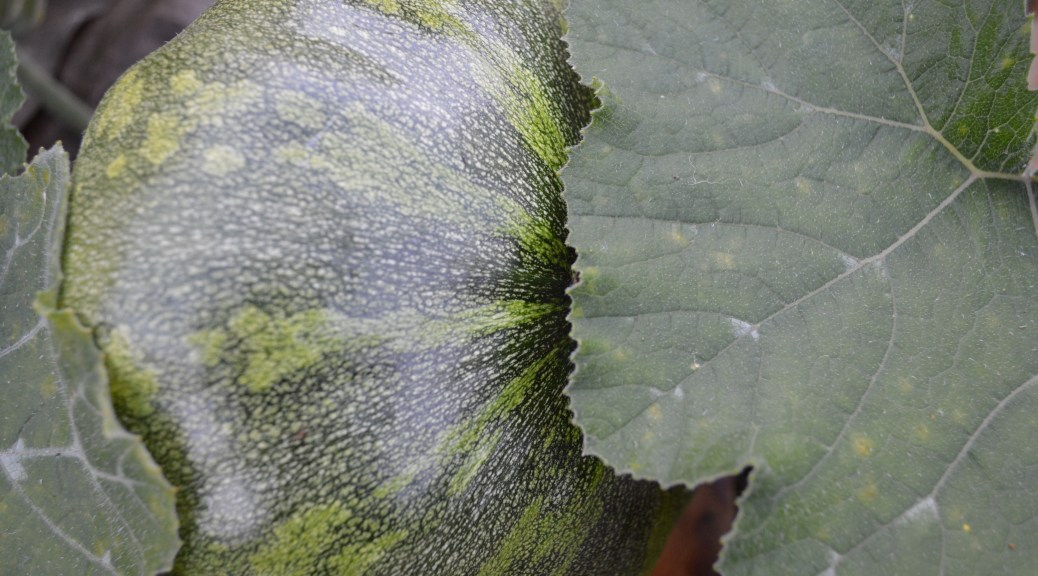
I frequently reference putting a small block of untreated lumber under your pumpkins and Winter Squash.  Many people note that they do not have the time to do so, but also note that wet weather and bugs caused their squash to rot in the field.  I recommend making the time to protect your pumpkins with a little extra care. The way I look at it, by increasing your yield through the reduction of waste, you are saving time.  I took these photos (below) to give people an idea of what squash that have remained in contact with the ground all season can look like, especially here in Hawaii.  Keep in mind that in Hawaii, many of the Winter squash and kabocha that do well here take more than 110 days.  Often more than 120 days until harvest.  Somewhere in there, as the fruit sets,  try to make time to “block” your fruits by lifting them off the ground with a scrap piece of wood. The scrap wood only needs to be 4″x 4″ or so.  Once you have the wood blocks, you can use them over and over for years. I keep them in small stacks near the edge of the patch. It does take some getting used to, but it helps to safeguard from rot that can occur due to surface moisture as well as insects that can damage the surface of your squash.

The above featured squash shows what damage can occur.  Luckily, the harvest occurred before it caused the pumpkin to degrade on the inside.  Since I caught this while it was simply a surface issue, I happily made it into my beloved squash curry for myself.  This could have easily gone deeper into the pumpkin and caused the entire fruit to be lost.

With the way I farm, there is no true “loss” because the damaged squash can become nutritious pet food, chicken food, and rich soil building materials.  But when you farm small, you need to think smart and safeguard what you grow.  Some squash simply drop from the vine, and others may only half develop due to incomplete pollination by bees at flowering.  These things happen, and it is just simply part of the natural cycle of things.  What you can do, is give a little extra tlc to the fruits, and you will be rewarded with picture perfect produce that inspire chefs to put them on display before heading into the kitchen. One chef that I will not name, has been seen giving a slight hug to the squash as they enter his kitchen domain. Huggable produce is good produce.

This extra step in protecting the skin of your  squash will probably add an overall awareness by creating an intimacy with your farm as well.  You can tell a lot from how your squash are flowering and fruiting. A watchful farmer can see signs of insects, powdery mildew, the need for some fish fertilizer, pruning, and more, by stepping carefully into the vines.  These preventative observations can really make the difference in having a successful season. So while you are inspecting your fruits, give them a boost.  You will be rewarded at harvest time.

The Fermented Farm: Beer Traps

People ask me what school of farming I use.  There are a lot of groups to choose from:  organic, no-till, Hawaiian natural farming, Korean natural farming, biodynamic, intensive, permaculture…the list goes on and on.  I use elements of all of those, and I have adapted them to the particular situation I have, and my situation is one of ever changing conditions.  If there is any one thread that continues through all aspects of my farming, it is microbes.  Today, I am going to share one of the ways fermentation is part of my farming practice.  Beer!  Yes simple as it may seem, the humble dregs of beer kegs, and other cast away remains of beer gets used in my farming as beer traps.

A beer trap is my way of capturing the insects, slugs, and snails that would otherwise damage newly planted seeds, and seedlings.  It is a highly effective way of trapping them before you plant your seeds or seedlings, as well as during your growing season. I trap before I plant.  People often think that in the dry upcountry, we don’t have slugs and snails, but we do.  When you add a little moisture to the plot, every single slug or snail will be drawn to that parcel.  By simply taking reclaimed cups, saucers, trays, plastic tubs, and the like, and putting an inch or more of beer in the bottom, you will have a very effective way of removing the pests from your field.  My strategy is to place traps near new plots of seedlings, depending on the time of year, I will catch a wide variety of the bugs that would lessen my productivity.

DSC_0693

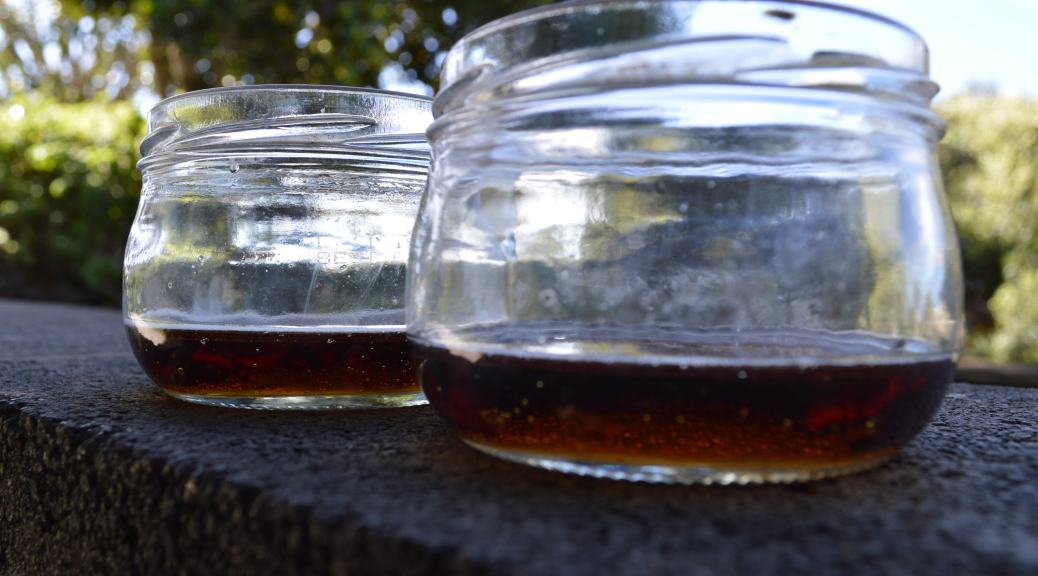
Above are two small traps that will be put out today.  With this small amount of beer, you will be surprised what shows up in there.  I can add some water to top off the traps.  Each day the beer trap will have a riper aroma, making it even more tempting as bait.  To increase your success, you can burry the traps so that they are nearly flush with your soil, you can make them larger, deeper, out of different materials, but the basic idea remains the same.  Trap before you plant and you will see results.


Squash and Awe Podcast Interview

I had the wonderful opportunity to be a guest on Jackie’s Organic Gardener Podcast this past Thanksgiving.  We spent just over an hour discussing all things gardening.  From books, to heirlooms, to soil building and more, we covered a lot of ground.  This interview was done the day after Thanksgiving, I chose that day, because it was the hardest year of farming  for me yet, and having just met my orders for Thanksgiving, I was so relieved that I was almost giddy. This talk shares some of the things I have experienced in my first years farming

Squash and Awe on Organic Gardener Podcast

While you are there, subscribe to her podcast and listen to all kinds of ideas on gardening!

Winter Garden: using up aging seed

Even with the highly variable days of a Hawaii Winter upon us, I continue to plant. In these short days, sometimes hot, sometimes rainy days, followed by very cool nights, squash can be sluggish to germinate and take off. I use this as a window of opportunity to get a other plants going nearby. I consider this a great way to make the most of my gardening time.  I have been enjoying the holiday season in these past weeks, and part of that enjoyment is spent in the home garden.  Fog, mist, and bright sun have all come through in unpredictable patterns, though this is not ideal for squash, other plants have enjoyed having their time to shine.

This seemed like an impossibly bad time to plant heat loving chili peppers, but in 2015, we had a very unusual year, leaving my chili plants stunted and at risk.  I wasn’t going to give up on them, though.  Our long come and go seasons can work for chili plants.  Especially those that hail from cooler places, and/or higher slopes.  I have raved about Aji Limon aka Lemon drop pepper, a widely available heirloom chili from Peru.  It loves this mix of hot and cool, wet and dry.  I am happy to report, in the past three weeks, those stunted transplants, when planted into the garden, have really taken off.  They needed care, pronto.  I waited, and waited for the right weather to come, but what they really wanted was to get out of the pot and into the ground.  Here is what they look like now. Textbook pretty little pepper plants that are going into their fruit setting. The aging, weevil eaten seeds of the Christmas limas got a change to grow, and my beloved pipinola (chayote) climbs upwards.  Also seen is the collard plant that also wanted to be transplanted.

I take great pleasure in trying to seed save, but I also like to keep the varieties actively growing, rather than storing the seeds.  The downside of my process, is that my attention is often away from these seeds, so when I have some old, slightly buggy seeds, I get them in the ground quick.  I remain grateful for the “save.”  In an ideal world, all would be labeled and stored in climate controlled situation, but for me, I am thrilled if I find the time to dry the seeds and plunk them in a jar for home planting.  Pumpkin seeds get VIP care, but beans and greens seeds often get less storage, and often just go from garden to shelf to garden again.  Let’s look at the results.  The “forgotten” seeds  are pushing forth from the no-till garden. They will be great providers of fresh seed and of course a lot of meals this year.

DSC_0577

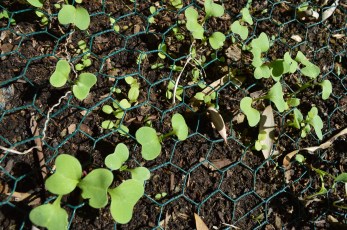
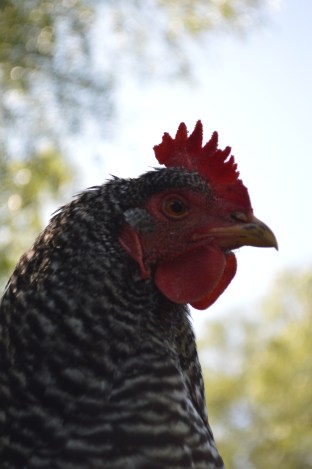
I also take full advantage of the rarely clear space in the garden, by sprinkling any aging seeds about.  Seen above, some lettuce  germinates with radish through a simple, put effective means of my chicken proofing the plot. (Sorry Betty)  Betty is a spurred hen, a real sassy gal with a wonderful love of high kicking her way through the garden.  She puts the “free” in free range.

I think this time of year is a great time to get mizuna, mustard, radish, collards and kales going.  I love my greens, beans, pumpkins and such.  So I plant heavily, and put them “up” in ferments, or use them for fresh eating.  I also freeze my lima beans for making soups and chili.

Yesterday, as I plucked plump chayote from the vine, a gentle, female Jackson Chameleon caught my eye.  She was a teenager, enjoying the afternoon mist and using the chayote vine as a bridge across the garden.  It is a beautiful addition to my workday in the garden.  I hope your garden is also filled with inspiration!

DSC_0105

Three Cheers for the Media

I just want to write a note to bring attention to the efforts of editors across the country who made the decision to include a story about sustainable agriculture in their papers.  It may not seem like much to some of you, but it means a lot to we small farmers and heirloom seed preservationists/researchers who are trying to get our voices heard.  The idea?  That we have answers right in front of us.  Myself and many others have been trying our best to share old news that is also good news:  Heirlooms matter.  So it is all the better when editors get an opportunity to pick up an AP article about such things and run with it.  So farmer hat is off to the Editorial staff at the following publications:

SFGate of San Francisco, California

The Washington Times of D.C

Lancaster Farming of Ephrata, PA

The Star Advertiser of Honolulu, HI

MySA of San Antonio, TX

and of course the team at the West Hawaii Today of Kona, HI who put the ball in motion.

For running this article about my farming efforts in their publications.  Each and every action matters from seed to soil to getting the word out to others.  So thank you news teams for helping to share a bit of good news.

Preparing for Rough Weather

In the days leading up to Thanksgiving, I am getting more calm as the rest of the country gets revved up.  It is my extra busy time from October 1-Thanksgiving.  It is the time of year when squash/pumpkin production isn’t terribly high in Hawaii, but the demand suddenly is.  It is also the time when we all want to think in terms of comfort food, pumpkin patches and family gatherings.  But with a tough Summer behind us, I am grateful that my preventative steps helped in the patch.

October was an intense month where some days, all I could do was just continue to believe that my actions would prevail, and the harvest would come.  It did.  The Summer was a sluggish season where Winter rains came in June.  There was flooding when there should have been long hot days.  Many farmers felt like disappointments, when really, it was one of the toughest seasons all across the country.  Even in the darker moments, when the seasons flip, and hurricanes come one after the next, I always feel that there is something that you can do.  The weather is not your fault, but we need to continue to search for ways to minimize loss.

I got a call from more than one farm across the state that noted that their pumpkins were rotting on the ground.  My answer was simple:  get them up off the ground.  For many this seemed like a time consuming act, but for me, loosing your entire crop isn’t an option.  I recommend that as the pumpkins fruit, take a piece of untreated lumber and slip it under the fruit.  It will cause the sow bugs/rollie pollies to go under the wood rather than destroy the skin of your squash.  It will also keep the squash from sitting on wet ground, and reduce the likelihood of rot.  I have had many people say how time consuming it is, so here is my method and maybe it can work for you.  Keep stacks of scrap wood at intervals near the edge of your patch.  As they fruit, carry a few squares of wood under your arm, and slip them under the new fruits as you see them.  This time of year, squash in Hawaii is just starting to take off, but Winter rains are also heading our way.  It is a great practice that has allowed me to loose no fruits to ground rot.  It also keeps the skin display perfect, while you are making a mental note of which of your vines are producing.

The pumpkins may roll off the blocks as they grow.  I simply check on them once in a while and replace them or add a second block if the squash is a really large one.  After harvesting, the block gets collected, dried in the sun and used again for another squash.  Try it out and see how it works for you.  You never know what the weather is going to bring, and this way, you are ready.  You can still “block” the fruits even mid or late season.  You can even do it when the field is flooding.  Any action, no matter how late, is better than none.

Farm Clean up: the no-till way

In the frantic days before I leave for California, I needed to put some serious order into the farm. I will be going to help harvest the Baker Creek pumpkin seed trails,  and just a couple weeks later, I will be giving my speech at the National Heirloom Expo.  The excitement is building, because one of my very own farm pumpkins is a part of the trials.  I’ve worked hard so to stabilize the variety.  I am hoping that when I get there, it will be shining in the sun, and offering resistance to the drought there.  But for now, I need to focus on getting my own crop in order.  Pumpkin growers frequently count the days when you need to hit your harvest right on schedule for October, and we in tropical and subtropical places need to look 120 days out, and sometimes more.

Hawaii’s high season also creeping closer, where the demand doubles. So,  it is simply now or never.  This year is a big soil building year, as well as planting all new pumpkin vines.  It has been a long summer with quite unexpected weather patterns.  We had Winter-like weather for weeks, including flooding, and now it is like Summer again.  Adaptability is the name of the game.

The soil strategy is working.  I have brought in several tons of hops, mixed them with wood chips from the farm, then piled them on top on salvaged cardboard.  The trick is to turn the piles, carefully, letting them air out in all this heavy rain.  For those of you just tuning in.  In the farmlots, we got several days of flooding after 17 years of drought.  Quite a change, but not entirely a surprise.  Why?  The drought/flood cycle goes together, like it or not.  You cannot change the weather, but you can change your soil’s ability to adapt to changing weather.  Adding soil structure through organic mulch materials, and valuable nutrients both help.  This improvement to soil health also encourages the earthworm, and microbes…and on we go.

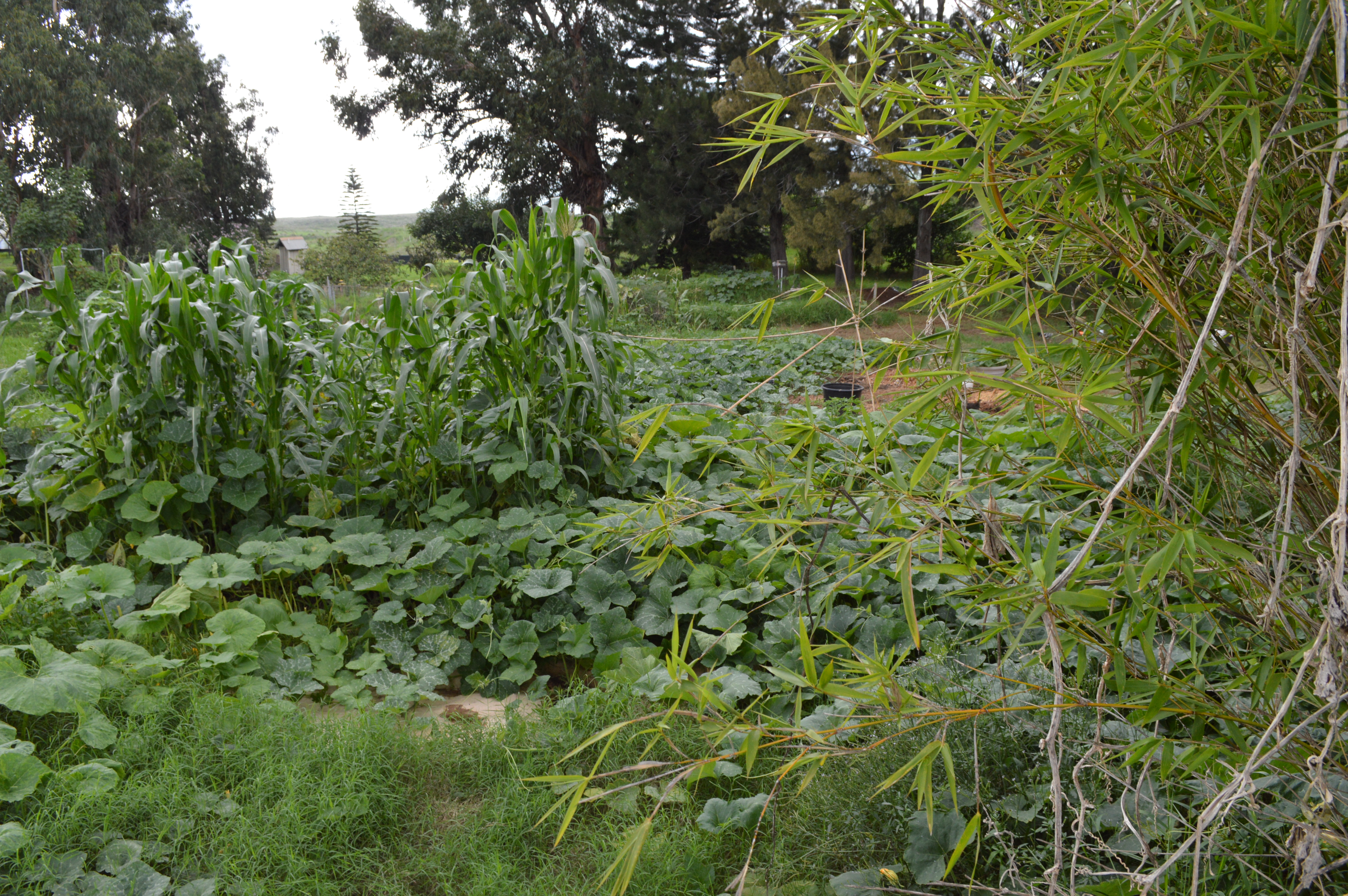
People are often overly concerned about how no-till looks, but really, it doesn’t matter how it looks, what matters is how is responds to the needs of your plants.  We need to get over our thinking that everything needs to be in tidy rows, with nice big parched earthen walkways between.  We are in a drought, and there is a lot more drought coming our way.  By planting very close in super homemade soil, the healthy plants adapt and even help one another.  I seed select only from varieties that are naturally resistant to powdery mildew (a huge problem in Hawaii) and then I can just let the vines sprawl, without worrying about close planted plants and powdery mildew.  What people usually do not see, but you can in these images, is the under story of the mulch.  Ever wonder why I have giant green squash leaves the size of platters?  It is because I have created a natural fertilizer system on which they grow.  When water hits a vine, it encourages it to re-root where the vine touches the soil, or in this case, where the vine touches the nutrient mulch.  I can encourage growth by burying the vine, (like giant pumpkin growers do) and encouraging more roots to form and uptake more nutrients.  This system is why I get so many tons out of a tiny parcel.  A squash plant often produces 2-3 pumpkins, mine may produce 10 times that, because I feed and prune and feed some more.  They are spoiled with love.

Here is a look at the mulch before the vines cover the lot.  The system is as follows:  cardboard, hops and wood chips mixed, some coral sand, coffee grounds, and fermented fish (buried in holes here and there.) Throughout the season, I will feed again with homemade fish emulsion, and top dress with more coffee grounds.  Then too, I will add some EM-1 soil microbes fermented in grain to the field.  Most of soil making is being done below those sprawling vines.  Compost materials are the mulch.  Soil is the solution.

the farm in year 3

Stories in the Rain

I’ve been waking when I should be going to bed. Restless with fatigue as I try to continue on through what seems like an endless list of “to dos.”  The dogs huddle in close trying to warm themselves after what feels like six straight days of soakings.  The drought has ended in floods.  My no-till patch is a bog of hops.  Sloppy mush coming up past my ankles and squash leaves bigger than dinner platters. My Hunter boots have given way with a leak where I put a pitchfork through them, and the top of my foot, six months ago. So now I have as much of the hops slurry on the inside of the boot as on the outside.  The rains fall heavy from dark grey clouds, continuing through the night, but ending every morning before returning again at mid day.  This unlikely deluge has changed Summer to Winter.  I’ve lost track of the names of the hurricanes turned tropical storms.  Each one crossing over the Hawaiian islands and loosing it’s bearings, a bit like me.  I may be sleeping when I should be relaxing, Then awake when it is time for bed.  I read a few pages here and there from a book I picked up from the sale rack while visiting UH Manoa’s campus.  It is a beautiful book that tells the story of another time in farming, a time that doesn’t have to be in the past.  I had high hopes of raiding the agriculture text books, but my visit coincided with the bookstore cleanup where students dumped armloads of books off and fled to their summer freedom.

Stacia Spragg-Braude writes in lyrical prose, describing the daily life of an extraordinary character who continues to farm against the odds.  The beautiful hardbound volume met me eye to eye and I new it would be my birthday present to myself.  (The book summary ) I was heading back to the Big Island, and as I often do, I fill my arms with books, hoping to find the words and wisdom to keep me going even in the darker moments.  As tonight’s rains pour off the roof in an audible cascade, I think about drought and how much I, like Evelyn in the book, thinks of water.  Here in the town where I hang my hat, there is a demarcation line of precipitation levels.  Wet side and dry side.  This year, and for several years prior, the weather, like that in much of the world has been just plain confusing.  The drought was here before the year 2001 when I first planted chili pepper plants and Florence fennel on a washed out hillside in Hamakua.  I learned how to care for banana trees, and would walk buckets of lilikoi (passion fruit) to the elderly neighbors who would know what to do with a bucket of fruit.

In the book, the author writes of how water remains on one’s mind a lot in the dry near arid farmland of Corrales, NM. I can relate.  I find myself starting conversations with, “We never got our Winter rains this year.”  I often get back a blank stare.  In this town, few people think in terms of scraping out a life from the soil.  The few vegetable growers that remain, many of which on small parcels, are being hit hard.  Not only is it an uphill battle to get any to buy local produce, when unusual weather hits, our inability to produce, in walking on water fashion, is considered a let down, or worse yet, failure.  Farming is 100% risk, but we hide that risk by taking the faces out of farming, and international produce brokers stuffing our state full of the vegetable version of fast food.  Chemically contaminated, harvested too young, low in nutrition, and on every plate. You don’t often get rewarded by doing it right.  Fast and cheap has lowered our standards.

So when deluge like conditions strike up country Hawaii, I have to take a moment to rethink all things.  When a five gallon bucket is half full overnight, it leads to a drastic change of strategy.  In the book, the farmers created their own irrigation system from the river.  Here, the creek overflows it’s banks on days like this, I watch it cascading by on it’s route to the ocean. Our farmland irrigation is borrowed from the much wetter parts of the island.  We are taking their bounty.  This creates a false view of water, where farmers can squirt irrigation every day, all day until their fields are filled with puddles.  Almost nobody bothers to improve the soil, so that it actually once again hold water.  Water just appears from somewhere else, and few are even grateful for it.  I remember having a talk about water conversation that fell on many deaf ears.  The farmers crinkled up their noses when I noted that our water reserves were hitting desperate times, and that we were warned to conserve. The general attitude is that they should water more, so that they “get their share” even if they don’t need the water.  They should take it, so someone else doesn’t get it.  I realized that day that I would never relate. I said my bit about building the soil, so to cut their water usage and benefit their plants.  I was laughed at and told that their soil was some of the best in the state.  Weeks later part of the USDA’s soil team visited us, and shook their heads in the same way I did.  For once, “big government AG” agreed with the rookie. The generation before me may be the only one that bred farmers that don’t think about soil health.  My Grandfather would roll over in his grave if he heard them speak.

I was raised in a community that was a lot more like the town of Corrales, or at least the communities that surrounded our farm were a bit like that New Mexico community.  Here, the plantations left a scar on everything that it touched.  Though we focus on the damage done to the land, equal damage was done in taking away the pull yourself up by the bootstraps way of thinking.  Here farmers are pitted against each other, and imported produce is king.  It is hard to stand tall as a community of farmers when someone is standing on your neck.  It has been this way for so long that many barely remember another way, though much of the shift toward the outside suppliers happened within the span of my lifetime on the planet.

The rains now stopped, and the dogs snore.  I find myself getting tired and mistyping the town of Corrales as Corvallis, a place where I WWOOFed in torrential rains in a strawberry patch, as hail fell into the Spring mud just over 3 years ago.  I remember rounding up the animals to shelter them from the hail, feeling grateful to maneuver a stubborn ram, three Nubian goats, and a huge and defiant horse into their shelter.  I was shaking with a healthy dose of fear and adrenaline as I got them all tucked into the open sided barn.  The hail stones stung on my face as the spooked horse stomped and eyed me in that big eyed way that horses do.  The horse had leveled a few in it’s day with one swift kick.  That afternoon, I saw a different side when I clearly put myself in harms way so to help him.  He knew, and kept his kicks to a minimum.  I returned to the farmhouse kicked off the boots, and shivered as I purged myself of raingear in the entryway.  The farm owner, who had inherited the farm, was tucked in with a cup of coffee, feet up in front of the fire.  She was confused at why the animals were brought in out of the hail.  I realized then, just weeks into my farming journey, that what is common sense to one, isn’t to another, and owning a farm doesn’t make you a farmer.  That bit needs to be earned.