The Right Tool for the Job

Farming and gardening are tool driven activities.  But how much is enough, and how much is too much.  Since I run a zero-waste farm, I also encourage others to source used tools.  Used tools are often better tools.  Why?  Well, the quality of materials has made a sharp decline in the last 10 years, but a drastic drop in quality in the past five years.  I enjoy going to resale shops in search of things made of metal and wood.  On one such scavenger mission, the lady checking me out said, “hmmm a bunch of junk.”  I smiled and said in return, that “metal junk is better than plastic junk.” and she agreed.  For $5 I picked up some hand tools, and an adjustable spray nozzle.  They did look rough, agreed, but they were made of metal and will far outlast their contemporary counterparts that you find in big box stores.

I decided that I didn’t need “pretty tools” but I do need durable ones.  Not to mention giving them one last use is always on my mind.  The spray nozzle is hard to find now, as many have been replaced with bright colored plastic that does not do well with all the things garden tools need to handle, like heavy usage, and sun. Same goes for the tools, some of the metals that are used for lower end tools for both the garden and garage are flimsy.  The metal has bent in my hands.  I would choose rusty over new any day.  Check and see if the tool can be repaired.  Can a good solid head for a hoe be put on a new handle?  Granted a new handle can cost the same as a new hoe, but some of the new heads on hoes and shovels are almost a throw away from the start.

The pruners in the image are a junky new ones, that are not fantastic, unlike the quality (and cost) of the high end European ones. With some oil and care, they can be put to use again.  The scrub brush on the other hand is a new brush made of palm fiber.  They are brought into Hawaii from Japan.  I like them, because I dislike plastic scrub brushes.  This one is cheap, natural, breaks down in the compost (leaving only a piece of wire behind) and it dries fast in the hot sun, which is important for sanitation.

So take a look around next time you are at a resale shop or tag sale.  Don’t be afraid of a little surface rust.  They will serve you well, and if you get a rainy day, you can look up online or in a library how to care for them, or even refurbish them.  My $5 shoebox of tools would have cost over $100 new, and I have avoided a lot of cheap plastic and cheap quality metal. It just makes sense in so many ways.  Ask yourself, “does it need to be new?”

Ark of Taste Seeds from Baker Creek!

A couple weeks ago, I was at the Baker Creek Heirloom Seeds headquarters in the Missouri Ozarks.  I sat down in Jere Gettle’s office and spilled the beans:  I had been selected as a Slow Food USA Delegate to represent Hawaii at Terra Madre.  I was shaken, and excited about the prospects.  I had just given a speech a couple days prior at The Spring Planting Festival that explained how heirloom seeds assisted me in finding growing solutions that resist pests, disease, and drought here in Hawaii.  Some of those solutions were found in Ark of Taste seeds.  Take a look at Slow Food’s Ark of Taste .  These are historic vegetables that were in danger of extinction.  How do we keep them going?  Grow them, eat them, put them in our markets, our menus, reconnect them with our lives.  They have been around a long time…for good reason.  They are resilient, and delicious.

I am thrilled to report that Baker Creek Heirloom Seeds has now donated an entire case of Ark of Taste heirloom vegetable seeds to assist in getting me to my Slow Food USA delegate position in Italy…yes, it is in Italy!  Check it out here:  Terra Madre  Two years ago I was cheering for some of my favorite family farmers as they packed their bags and went off to represent all of us.  Now it is my turn to do so.  I will be posting more in the future, but let’s get back to the seeds.

Since funds are being collected to get me that very long way from Hawaii…all the way across the globe to Italy, I am trying to make fundraising fun, and also have some serious perks for the Hawaii community.  What better way to celebrate along with our USA delegation, and be with us in spirit as we represent in Italy, than to be growing Ark of Taste seeds in your gardens? Kind of a seed solidarity!  Jere and Lisa let me go though the vast array of seeds and seek out Ark of Taste varieties that had a strong chance of thriving in Hawaii.  I made my selection, and they have shipped them here.  This generous gift will be helping me, and the seeds will be helping the community here in Hawaii.  Everyone wins!

I have put together a GoFundMe funding page where you can put me to work! That is right, put me to work.  For every action there is an equally loving action performed.  You can send me off to an Italian rare beans cooking class at Terra Madre…then I will give a rare beans class for Hawaii students or adults.  You help put me on a plane to Italy…I will help put food on our communities tables through food pantry donation.  Win, win…win.  I am curating Ark of Taste seed packets into baskets for a silent auction (more on that later) and individual seed packets will also be sent out to those who sponsor at any level $20 and over!  You can also sponsor, and have your seeds donated to a school garden, or a Hawaii gardener.   I have a list of people who will make good use of these seeds! Slow Food is all about community, so please assist in my efforts at building community.  Follow along too on my farm Facebook page and you will see how much is happening.  So think about what you would like to see in the community.  Pick your favorite schools, pick your favorite community action and I will teach what I know.  Thank you for your time, your support, and thank you to those who read this and are currently clearing space in their garden to grow Art of Taste vegetables…it all matters.

Too Much Pipinola?(Chayote)

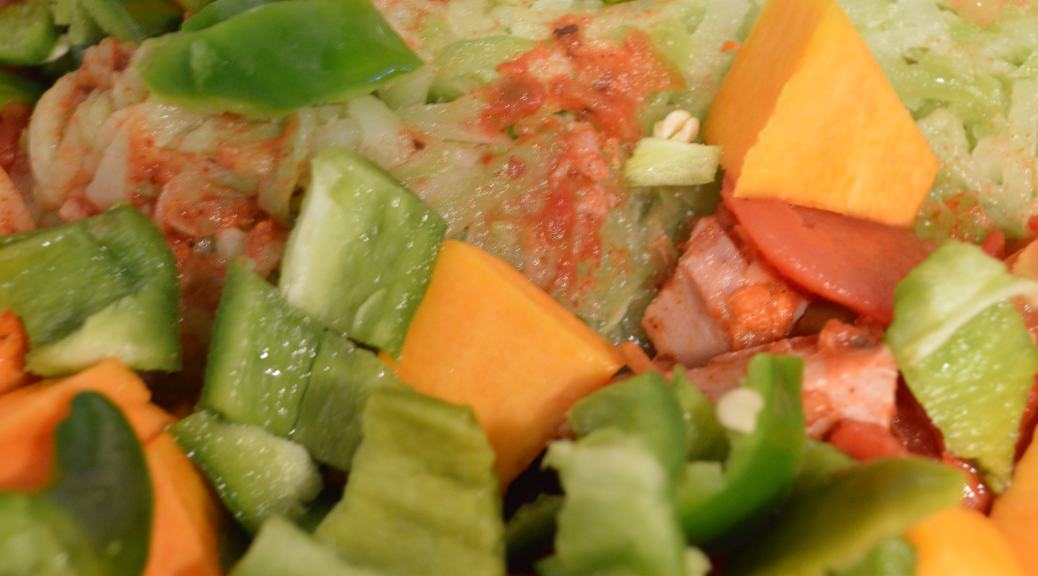
I learned to love chayote, an edible gourd that is known as pipinola here in Hawaii. You may recall that I learned to ferment with it, cook with it, and even how to breed it for the characteristics that chefs find desirable.  Here is a look at the start of one of my 10 minute meals.  When I was getting ready to travel, pipinola were ripening, so I took the time to shred the fruits in a food processor, pack into 1qt freezer bags, then squeeze out the air from the bag.  The result were a nice stack of pipinola blocks.  Today, as you see in the image, I took one of those frozen blocks, dropped it into my slow cooker, and added tomato, onion, chili pepper, taco seasoning, pumpkin and more to the mix.  I will leave it to cook all afternoon, and when I return from the farm, dinner will be waiting.  This same technique would work for chili.  The pipinola takes on the flavor of the taco spices, and acts as a great filler.  It is a great way to add vegetables to your cooking, while also making use of the fruits at your doorstep. I have plans on topping the lot with refried beans and cheese before stuffing the mix into tortillas.

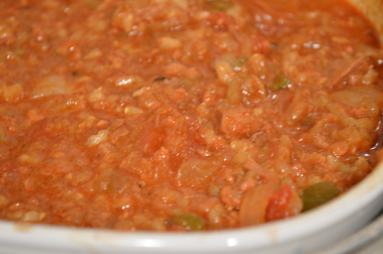
I just returned home to find my neighbor telling me that he can smell my cooking down the street!  It is a homemade smell that we all want to come home to.  I just finished it by thickening it with a can of refried black beans, and some of yesterday’s rice…and I realized that this would make a great dip too!  I will be happy to eat this in many different ways in the days ahead.  Taco salad?  Maybe my kraut tacos…with scrambled eggs in a breakfast burrito.  See the bottom photo to see the transformation it made while I was at the farm trellising more pipinola vines.  Now it is time to top with cheese and test it out.

DSC_0596

Waimea Gold

A brief note to update you all on a new variety I am breeding for Hawaii.  It is called “Waimea Gold,” and it is growing beautifully here.  I have crossed two strong landraces, then inter planted with other c. moschatas that were performing well. I allowed them to again cross, and now I am hand pollinating and selecting traits.  This last step is currently going on, and it will be part of the stabilization process.

The result is a market variety that is beginning to show up at some of our farmer’s markets, and the chefs have been serving them up too.  I have given seed to two local farmers that are growing them already. They have noted that it just “wants to grow” which is exactly what we need.  No fuss. But I will be doing a bit of fussing in the months ahead, as I continue to stabilize the traits.

For those of you interested in plant/squash breeding, here are the traits that I am selecting for:  Small size (3-4lb max), smooth, easy to peel, versatility in flavor profile (can be used in a wide variety of dishes,) pest and disease resistance (especially powdery mildew and pickleworm,) and best of all it is a contender to give the imported bland little kabochas a run for their money.  Tasty and local…not to mention kinda cute.  Here are the current photos! The green ties on the stem mark that the pumpkin blooms were hand pollinated for seed purity. So Waimea….let’s hope we have struck gold!

Squash Rich Soil Poor

Two years ago, I planted a new area with squash, I was hopeful and optimistic.  It was open, free of the Iron wood trees, but it desperately lacked soil and the area needed serious rehabilitation.  I thought I had given it a good look over, but what I had underestimated was the wind. I was fortunate to have timed my plantings in a year where heavy rains broke the 15+ year drought. The plants thrived.  But then the winds came, and destroyed the raised beds, made irrigation very complicated, while also setting back my optimism.  Those Winter rains were a fluke, and they haven’t returned again.  The wind gusts, on the other hand, have returned with great force, just when you least expect them.  For the last two and a half months it has been blowing, then punctuated by dead calm. As a personal challenge, I decided to rethink that area, and figure out how to do raised beds in a wind gust area while also using minimal irrigation.  I needed to figure out a way to farm rock.

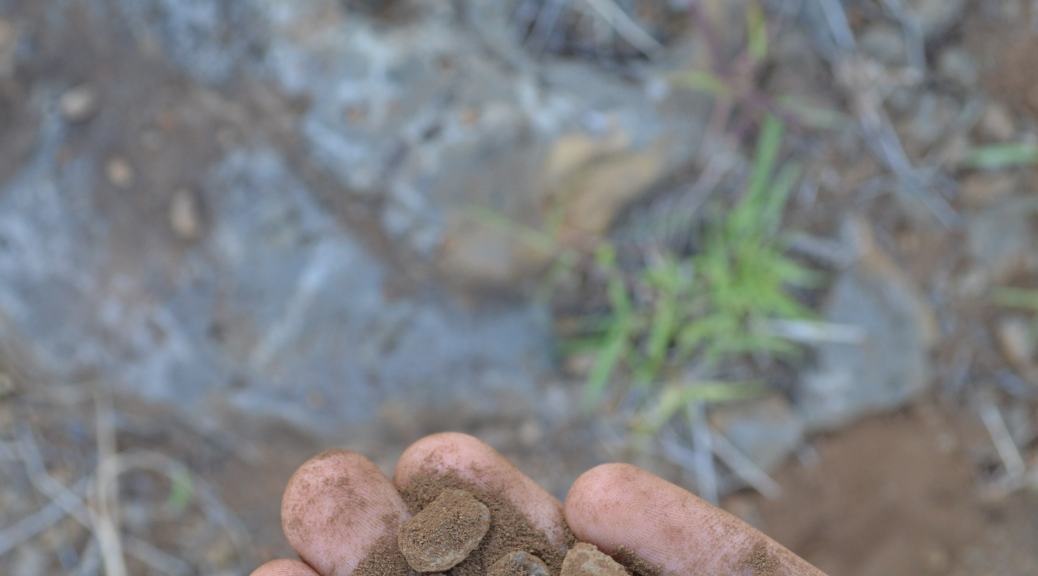
I walked the area with Randy, the AG (mainly pest and plant disease) inspector.  He kicked the ground and noted that they call it the Kau Desert for good reason.  He is facing retirement at a time when farming in Hawaii has hit some pretty hard times.  My projects seemed to offer him hope and a few smiles in is last years as an AG field agent. Farmers often speak of rocky soil, but this isn’t that.  This is rock, period.  100 years ago, and as recent as 50 years back, the Japanese farmers of this area just removed rock day after day.  When I say rock, I should note that they are boulders. They created areas of farmland from this rocky outcropping.  Some areas are now cultivated by tilling methods, some are run as ranchland, and my borrowed parcel is run as no-till.  This Spring I am again facing off with the hardest to farm section of the property.  Here, patches of rock that have been exposed by years of wind erosion, and that hard layer of stone will be under my beds.  Under normal circumstances, you would never plant on top of rock, but this is a test of possibility.  If you can grow there, your system will grow just about anywhere.

The above photo shows what the ground looks like under the new garden system that I am creating.  Roots will not be able to penetrate those stones, so all that they need will have to be delivered through the raised bed system.  The soil that is there is no longer capable of absorbing and retaining water.  But soil has an amazing ability to be transformed back into a condition where it will absorb water. So let’s get to work…what needs to be done?  First think about your wind and wind directions.  Where is it blowing from most of the time?  I am planning on running one simple soaker hose through the base of this bed.  Overhead isn’t going to work like it does in my other patch.  In the main patch, overhead works, because whenever the wind blows, it will blow the water onto a plant, in this area, that isn’t so. Also minimal overhead irrigation works in the other patch because of the tons of soil building materials that were reclaimed and put to work as a living mulch. A technique that works in one area may not work right across the road.  So once you think through your irrigation strategy, think about the movement of the sun.  In Hawaii, you can really notice a difference in the direction of the sun’s rays, season by season.  Lastly, is it in a location where you will be able to check on it easily?  Anytime you are doing a test project, a watchful eye is going to lead you to learning from the experience.

I reused some wire table tops for multiple reasons, I wanted to see if they would:

1)keep the wind from tipping over the stacked design of the beds

2)keep the chickens out

3)create a sturdy base for a trellis

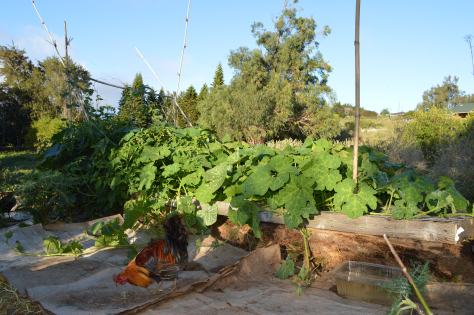
This is what they look like with a variety of squash and edible gourds creeping through.

DSC_1196

Not bad, but it gets better.  Since I have been working to locate and breed heirloom varieties that are disease resistant, I am putting that to the test as well.  Powdery mildew knocks growers flat when they first start growing in Hawaii.  This method of mine would never work without the prior, careful study of natural disease resistance. So in other words, know your plants first.  I am planting absurdly close plantings of all kinds of things: tomatoes, beans, mustard greens, tomatillos, even some flowers.  Most of these I have grown before, but some are new to me heirloom varieties that are getting their “test” here at the farm, such as the Zuni Gold bean that is loved in New Mexico. We see how things turn out for them this year.

DSC_1246

The idea is to create a mini food forest with tier upon tier of food. It is my own interpretation of the “Three Sisters” planting method, combined with another Native American technique that includes burying fish.  I have fermented the fish first, adding much needed microbes to the mix.  My compost scares people.  But I am in Hawaii and we don’t even have compost facilities anywhere near where I live.  I became the compost facility by working with my chef customers. Raw and fermented material is at the bottom, and it will have plants growing above it.

The close plantings will be a “only the strong survive” kinda deal. Plants can “work it out” and find their ways to get enough sun, water and nutrients. So far, they are working together nicely. are two months in. These close plantings also protect from the drying, harsh winds.  These close plantings also create strength in numbers by supporting each other against the gusts.  High winds can snap tomato and tomatillo stalks, even with some trellising.  This will help your system to better take care of itself. Not only will this planting method provide a great variety of foods and beans will add nitrogen to the soil, it is also planted with bees in mind.  Bees area squash growers friend, but unfortunately, they are few in number here where I grow.  So I make a bee buffet of all kinds of blooms.  I plant in harmony with the native Hawaiian plant Ilima and give those small blooming shrubs extra care and nutrition, and they supply lovely blooms to attract our bees.

DSC_1231

Here we see tomatillos growing in harmony with the squash plants.  Those bright yellow blooms will be a beacon to the bees.  Strings run up from the table tops to a simple bamboo trellis that has the ability to shift in the wind.  It has already withstood nearly 20 days of heavy wind, so it has proven itself.  DSC_1247

As for the chicken proofing, Hunter is seen here patroling the surrounds while not disturbing the plants themselves.  The chickens and I have all enjoyed their collecting of many harmful to the garden insects.  I should also note that these plants are growing in very raw compost, and all reclaimed materials were used.  This is not something that I advise you to do, but I am doing it as a means to see how fast the restaurant waste can turn to soil.  It can be done with careful planning, and a lot of trial and error.  I will leave that for another post.  So I encourage you into thinking of creative ways to grow your food, create your soil, save our water and nourish our bees.  If this can be grown on rock using restaurant waste, so much is possible.

Become a Latin (Language) Lover

Alright, so you may have thought this was going to be a steamier post than it is, so let me explain.  Some of you may have seen those Latin names in the seed catalog, or on the packets and you have simply glazed over due to bad experiences in school.  You may be thinking that you do not need this Latin in your life, and it is just there so to look good.  I encourage you to learn what it means in the context of your garden.  This extra effort may make you succeed beyond measure.  Seed packets have limited space, so we should assume  any information found there is quite important. The packet can begin to lead you to your future success.  So I recommend reading them, but also taking the extra step of understanding what they mean.

This year, before you buy all of your seeds, I ask you to look into the Latin names of the varieties that you want to grow.  It is fun ordering seeds, and heirloom growers get really carried away in our celebration of plant diversity.  You may like to select based on color, or taste, or select to grow only rare plants.  I try a lot of seeds, and test them out each year. The results have been extreme.  My growing history is pretty rough, for every one that succeeded, 20 may have been a total bomb.  Part of that is where I am growing (Hawaii) part is our multitude of microclimates, altitudes, come and go seasons, and drought…or floods.  So what I have decided to do is to stop torturing myself with the “oh maybe this year” denial, and just accept that some will not do well where I am, and others may thrive.  I am an optimist by nature, but enough is enough, and I have to accept defeat when it comes to certain plants. The key to future success is not to stop with a success or failure, but to understand what those results had in common.  That is where the Latin name of the plant comes in.

On “research Sunday,” I stayed awake into the early morning hours as I plotted which varieties I hoped to grow for the season.  I took it one step further than your average grower, by making lists of the plants I grew, then looked up their scientific, aka Latin name. This was the year to reorder chili pepper seeds, but with some doing great, and others performing poorly, I would not allow myself to order another seed, before understanding if there was a trend behind my successes and failures.

I searched for the Latin (scientific) name of the plant variety, then checked several sources to make sure that they were listed as the same name.  Check a few sources, because mistakes do happen.  Two of my favorite vegetables to grow are categorized into more than one species (example squash and chili peppers) compare what varieties(also known as the common name of the plant) are within each species.  Example for the Triamble squash, the species is Maxima, and the variety name is Triamble.  Triamble is what the pumpkin is most commonly called, but Maxima is its Latin (scientific) classification that categorizes its genetic lineage. It is necessary for plant breeders, but it can also lead you to success as a grower because it helps you to understand the relationships between plants.

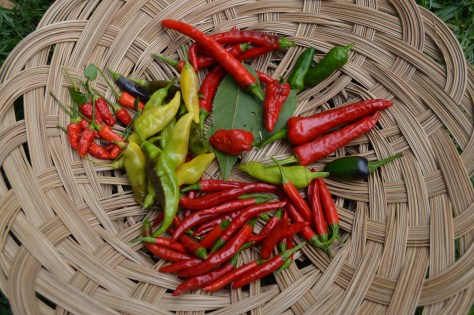
Chilis are a love of mine, so lets look at how this applies to chili peppers.  Below, you will see two comeback stories. They were plants that nearly died when I was away travelling.  When we look at these peppers, you see that they are very different in their structure.  They are, in fact,  in different species, but both are hot peppers.  The plant on the left shows more vigor, and the plant on the right looks healthy, but rather average, if not below average.  The plant on the right I consider so-so in its production of peppers.  I happen to adore the taste, so I grow the plant, but I would never consider growing these peppers commercially.  The pepper on the left has vigor, and it is putting out triple the blooms of the other plant.  This species seems to really want to live in my microclimate.

I have struggled year after year with Poblano, Jalapeno, Anaheim.  My CA growing buddies sometimes laugh and give me a concerned look, as if I am a chili pepper growing “hack.” But when I mention my success with Ghost peppers, they listen up, because Ghost is one of the most challenging peppers for many to grow.  For one, it needs a very long season to  produce. Secondly, it can be very challenging to germinate. In CA, and beyond, Jalapeno may be one of the easiest to grow, so it becomes confusing, until you look to the species names, and you will see where the line between successful and so-so pepper plants is drawn.

The beauty in plant diversity is that one size, or in this case one seed, does not fit all.  If you are optimistic, you move forward knowing success is out there, you just need to find it. Hawaii farmers are constantly told that we cannot get our production numbers up high enough.  The problem is in part due to the fact that many of the plants that have become commercial “sweethearts” do not grow well in Hawaii.  Yet other plants in other species, thrive, and produce crops. Because of the way our distribution channels work  often times, only the common commercial varieties are seen on the produce order form, so chefs do not use the wonderful, unique fruits and vegetables that thrive here. (more on that is another post) In fact, they may not even know that it grows here.

the bounty
Ghost, Thai Dragon, Lemon Drop, Hawaiian, Fish, Cayenne, Banana, Jalapeno

So what I encourage you to do, especially those in Hawaii, is to study what did well (or failed) for you, and then look into its genetic make up.  Are there plant “cousins” that are in the same species that you can also try? To follow with the example, Ghost peppers are in the same species as the pepper image above on the left, Jalapeno is in the same species as the pepper on the right side photo.  So I can be relatively certain that if I select more from the same species on the left, I may have further successes!   I have never felt that the key to agricultural success in Hawaii lies in creating new seeds in a lab, or trying to grow and compete within the narrow scope of commercial hybrids that are shipped in by the hundreds of tons.  Our success is right before our eyes, written in an ancient language.  By learning from our success and our failures, we can make better seed selections in the future,  and we will certainly move forward with confident strides.

So become a Latin lover, and begin the journey of the plant family tree.  You will understand how plants are related to each other, and then maybe explore the possibilities that you may not have tried.  Fail too!  Yes, fail and make note of what did not do well, then use your new research skills to understand that as well.   I say, if we learn from both our mistakes and our failures, we learn twice as fast. Guaranteed, you will love Latin (scientific names) when you have a more successful growing season.  When your harvest overflows, with plants needing so little care, you are going to be happy that you took the time to do a little botanical research. Understanding plant genetics is as easy as reading the plant’s seed packet, or catalog description, so give it a try.

Aloha! and good luck!

Lessons from a Rooster

When thinking back to the family farm of my childhood, I remember the animals most of all.  Some things will never change. I have always felt a connection to the creatures around me.  I credit my parents for instilling the strong sense of responsibility that goes with caring for animals.  When the storms came, you went out, not in. You stayed out until every single one was accounted for. Their health and safety was always on our minds.  But with that being said, I’ve found that I have had to acquire what feels like an enormous amount of skills.  Now, I am the grownup, and that means that I need to figure out how to care for hurt or injured animals, often times on my own. Some of it is natural to me, some of it takes all that I’ve got.

2015 brought upcountry Hawaii the mosquito spread avian dry pox, in wave upon wave of illness. It does not effect humans, or other animals, but it can be devastating to birds of all kinds. I was fortunate that I was given the “heads up” warning by an old artist friend of mine.  Her alert allowed me 72 hours of precious time to come up with a game plan. I was able to prep the birds, by giving them extra things in their diet. Nutrition was key to helping them through the pox, that can also cause blindness.  For six weeks, the illness first struck the domesticated laying hens, then spread to the wild poultry that are near home, and then those at the farm.  I steamed pumpkin scraps and fed all of them really good food.  Lethargic sad looking birds were everywhere.  Even very wild hens and roosters allowed me to gather them up and put them in poultry ICU. That was a clear signal that they were very sick.

The most challenging order of business was eye care, as the pox often involves the eyes of the birds.  I wrapped them in bath towels, nice and snug, then bounced and patted them like a baby before swabbing their eyes with homemade saline solution. Every day, I made a new batch of simple medicine from local Hawaiian salt, and boiling water that has been left to cool.  This went on three times a day, for each bird, at both locations, for weeks.  This work was on top of the normal ins and outs of vegetable farming.  It felt like I lived on coffee for 3/4 of each day.  There are things that you just have to do, regardless, and this seemed like one of them. It wasn’t the kind of thing I could turn my back on.

I had been down this road before, when the neighbor dog was injuring the hens.  I realized how much was possible, and how loyal and grateful each animal became after caring for them.  A lot of people ask me why these animals are so loyal to me, even though none of them are mine.  I think a lot of it comes from the fact that each and every one of them has been sick or wounded in some way, and I did my very best to step up and help them out.

I have been told that chickens are mean, dumb, that they have no memory, and they are untrainable.  I have found that none of these things seem to be true.  I will never forget the day that Ruby, a wild rooster that was blind in one eye, laid at my feet while I kept his son alive, and also able to see.  I was trying to save at least one of the young rooster’s eyes.  I will never forget that day.  It was pretty powerful to have a full grown wild rooster lay at your feet as you gave another one emergency care. It was clear that he knew what I was doing. I was caring for his family, and he knew that he could trust me.  Ruby remained loyal to me.  He was a lovely, powerful rooster that had survived three mauling by roving dogs, the pox, and even severe injuries from a rival rooster.  In the end, he died in my arms, wrapped in a towel, warmed by the setting sun.  I had administered treatment for him dozens of times, but then finally, his complications let me know, that I had to put him down in the quietest way possible.  I cried.

I buried Ruby beneath the chili peppers at the farm.  For a good long while, the dogs and I just sat and watched the scene around us. The setting sun. The closing squash blooms.  The young hens that stood on Ruby’s new grave. I realized that my family taught me to not overlook such times.

For me, this rooster’s story became symbolic of so much more. I realized how much we learn about ourselves by observing.  Ruby’s story also impacted the life of a WWII veteran at a talk I gave a few months ago.  I was explaining about why I chose to explore squash and farming. I give some context so to help illustrate what keeps you going.  There are a lot of reasons to give up, but also plenty of reasons to continue on. Ruby was part of that context.  I had given out one of my farm cards to each and every of the 60 Sr citizens in the room. Each of the cards had a photo image that I took at the farm.  Some were of flowers, others of pumpkins, baby chicks, and, of course Ruby the rooster.  I passed them out before my talk, and decided not to give a power point.  Each person held an image of the farm in their hands, like a piece of the puzzle.  If you put them all together, you understood how I live my life. If you listened to my talk, you understood why I live as I do.

I had tried my best to guess who would like what photo card.  Who might like dogs. Who loved cooking. At the end of my talk, many of the elders were now holding those cards like a treasured possession.  They had a tiny piece of my story, and that inspired them to share their own stories.  In my talk, I noted that in order to make the drive up to meet with them, I had to reassemble the fuel injection of the old VW that now sat in front of the “speaker parking” sign that they had placed in the parking lot for me. I told them that I also chose to go out of my comfort zone, so to save a rooster’s eye, before making the drive to meet with them.  I generally do not discuss surgical type farm things, but this seemed like a group that could handle it.  The point was that farm life can nudge you into self discovery.  There are those that will act, and those that will look the other way.  Along with this came the story of Ruby, and more, filling over an hour with sharing.

As I made my way out, to the sun filled doorway, several hugs and handshakes came my way.  One of the WWII Veterans that lined the back row, pointed at the photo card that I had chosen for him, and excitedly asked if “this is the rooster whose eye I was trying to save?”  I said no, that the photo was of Ruby, the young rooster’s Dad.  I was happy that my card selection was right, that he would like roosters.  He kept holding my hand, squeezing tighter as the tears welled up.  The previous excitement washed away in an instant.  I squeezed back and simply said in the most comforting voice I could muster up, “yeah, that is good ol’ Ruby.”  Then I simply waited in a way that my WWII Veteran father taught me how to do.  Just wait.

I can only guess what my rooster story meant to that man.  His eyes gave me a few clues.  To be the young rooster was easy in comparison.  Young rooster fell ill, and the farm girl cared for him.  To be Ruby was much more complex.  Ruby had put himself in danger over and over again, so to protect.  He had been mauled, and left for dead, and recovered over, and over.  Then, after being through so much, he laid at my feet, showing strength and courage without the fight.  Ruby had learned to trust, regardless of what he had been through.

The Veteran’s handshake tightened, and he lowered his head as a few tears slipped away. Maybe it was my story, or the symbolism, or the fact that in the end, I recognized the complexities of other lives.  Maybe he realized, that if I could see all of that in a rooster, that I probably saw right into his soul as well. I could only guess that he’s been fighting the war, and fighting the flashbacks, and fighting in ways that I’ll never know.  He’s been fighting for more years than I have been alive.  Maybe just what he needed was some farm girl to drive up in an old Super Beetle and allow him to stop fighting so hard.  That maybe in his own way, his tears allowed him to lay down like Ruby, and to trust, before watching me drive away.


The Climbers

Squash are either looked upon as amazing, sprawling, productive plants with a mind of their own, or else space hogs that need to be to be reigned in.  Obviously I see nothing but beauty and inspiration in their vines, but one of the most FAQ that I get is how do you control them?  The answer is simple, the more you try to rearrange their vines, cut them back, or run over them with a lawn mower, the more you are destroying your chances of being a successful squash grower.

I advise Hawaii growers to prune both Winter squash and edible gourds back once or twice a year, after harvest.  What I hear, is a lot of people cutting off vines as they are getting ready to flower and set fruit, then they wonder why they didn’t get squash.  Pick your battles here, folks. You get one or the other:  tidy garden or squash.  Considering that the state of Hawaii was down to one commercial grower before I started, one would think that if you got a plant established enough where it was spreading all over, you would leave it alone and let it reach out.

In the past few years, I have made some progress with inter planting with all kinds of things.  Squash will crawl over everything, but it will also keep on crawling.  I let the vine continue on its way and trim off the leaves that may be shading the pepper plant, or eggplant that it is crawling upon.  Now there are a lot of different kinds of growers out there, and this will not set well with some, but for those with a small space, permaculture bent to them, this is for you. Before we go on, just note that squash produce their fruits on the ends of their outstretched vines.  If you cut off these critical vines, you have made a prune that is going to really set you back.  I know many lawnmower cowboys who fight me on this, but trust me cowboy, you’ve shot yourself in the foot.

Here are a couple of photos from my home gardening experiments.  Today, I added additional pieces of bamboo this way and that, so  to create a strong enough trellis for chayote/pipinola to smother.  I crossed the bamboo and tied with wire.  Two untreated shipping pallets can be seen in there as the base, and heavy pieces of bamboo get threaded into the sides of the pallet to create planes where the upwardly mobile vines can go.  At the base, also you will find Winter squash, and Christmas lima beans planted.  It doesn’t really matter who grows on what.  All three are vines, all three are valued plants in the garden.

This garden is now overly shaded from the banana trees, so my focus is now the narrow windows of sunlight.  These climbers are now at a point where they are up and out of much of the shade.  This “living wall” serves several purposes, most importantly, it lessens the wind tunnel effect of this corridor garden. I also like the fact that it becomes a vertical place of interest as well.  But equally important to me, is that it is a home for the Jackson chameleon family and their newborns.  I care about such things, and I realize that many do not, but for me, leaving a permanent place where they can be fairly undisturbed has brightened many a day.  Tonight, alpha male “Zig Zag” eagerly climbed the tallest of the new bamboo stakes before disappearing for the night.

Ever watchful, they seem to be aware of who is looking out for them by building gardens with trellises to climb.  These East African chameleons are a highlight to my day. They too are great climbers, but get themselves down to the ground to eat snails and slugs.  They are territorial by nature, so if they like a spot, they will remain there and have their family there.  I have been blessed with seeing them in all ages, from those only a few days old, to full grown.  I have treated them for injuries and dehydration when needed, and I have learned so much about them in the process.

On the flipside of this wall, I have created a mini garden that gets a lot more sun.  In December, I transplanted the leggy seedlings, as well as the aging, may not germinate seed, and got this! A lovely mix of all the things I love.  A little bit of everything planted quite closely together.  So close, that I have to be really proactive with the fish fertilizer, as in, fertilize tomorrow because these plants are beginning to fruit.

I should also mention that banana stumps create the border for what is a very shallow raised bed garden that is at the base of this climber trellis.  The nutrients of these bananas stumps will continue to seep out, and eventually, they will breakdown in place.  A new stump can be piled on top, and continue the cycle.  I’ve found these to be excellent cool places for worms to have their offspring.  All of these reclaimed things were free to use in the garden.

Hawaii’s seasons come and go in such a way, that you can keep some plants going for quite a long time.  Some peppers and eggplants last over 2 years with proper care.  They do not fruit year round, nor do they have the enormous yields like they do in many parts of the country, but they can be fixtures to count on and plan around.  Lima beans need a very long season, as do so many of the Winter squash that do well in Hawaii. So think ahead, and plan on those plants to be in the same spot for 6 months or more.  If you think ahead, and leave them alone as they grow, you may find that you like the look of sprawling vines after all, especially after eating the bounty of the season.

Picture Perfect Pumpkins

I frequently reference putting a small block of untreated lumber under your pumpkins and Winter Squash.  Many people note that they do not have the time to do so, but also note that wet weather and bugs caused their squash to rot in the field.  I recommend making the time to protect your pumpkins with a little extra care. The way I look at it, by increasing your yield through the reduction of waste, you are saving time.  I took these photos (below) to give people an idea of what squash that have remained in contact with the ground all season can look like, especially here in Hawaii.  Keep in mind that in Hawaii, many of the Winter squash and kabocha that do well here take more than 110 days.  Often more than 120 days until harvest.  Somewhere in there, as the fruit sets,  try to make time to “block” your fruits by lifting them off the ground with a scrap piece of wood. The scrap wood only needs to be 4″x 4″ or so.  Once you have the wood blocks, you can use them over and over for years. I keep them in small stacks near the edge of the patch. It does take some getting used to, but it helps to safeguard from rot that can occur due to surface moisture as well as insects that can damage the surface of your squash.

The above featured squash shows what damage can occur.  Luckily, the harvest occurred before it caused the pumpkin to degrade on the inside.  Since I caught this while it was simply a surface issue, I happily made it into my beloved squash curry for myself.  This could have easily gone deeper into the pumpkin and caused the entire fruit to be lost.

With the way I farm, there is no true “loss” because the damaged squash can become nutritious pet food, chicken food, and rich soil building materials.  But when you farm small, you need to think smart and safeguard what you grow.  Some squash simply drop from the vine, and others may only half develop due to incomplete pollination by bees at flowering.  These things happen, and it is just simply part of the natural cycle of things.  What you can do, is give a little extra tlc to the fruits, and you will be rewarded with picture perfect produce that inspire chefs to put them on display before heading into the kitchen. One chef that I will not name, has been seen giving a slight hug to the squash as they enter his kitchen domain. Huggable produce is good produce.

This extra step in protecting the skin of your  squash will probably add an overall awareness by creating an intimacy with your farm as well.  You can tell a lot from how your squash are flowering and fruiting. A watchful farmer can see signs of insects, powdery mildew, the need for some fish fertilizer, pruning, and more, by stepping carefully into the vines.  These preventative observations can really make the difference in having a successful season. So while you are inspecting your fruits, give them a boost.  You will be rewarded at harvest time.

the pursuit of pumpkin