Tag Archives: farming

Squash and Awe Podcast Interview

I had the wonderful opportunity to be a guest on Jackie’s Organic Gardener Podcast this past Thanksgiving.  We spent just over an hour discussing all things gardening.  From books, to heirlooms, to soil building and more, we covered a lot of ground.  This interview was done the day after Thanksgiving, I chose that day, because it was the hardest year of farming  for me yet, and having just met my orders for Thanksgiving, I was so relieved that I was almost giddy. This talk shares some of the things I have experienced in my first years farming

Squash and Awe on Organic Gardener Podcast

While you are there, subscribe to her podcast and listen to all kinds of ideas on gardening!

Proud to Represent Hawaii

Hawaii often gets left out of many agricultural events.  People often ask me why.  It is simple: fruit flies.  They have made our exporting of produce difficult for the last 100 years.  With that being said, they have also made it the most challenging place to grow many otherwise common vegetables.  Marketing has showcased pineapple and sugar, two plantation crops that are uneffected by these pests. But we are not so proud to note that every year, new agricultural pests erode what small food production we have in the Hawaiian islands. When asked why I didn’t bring squash to the expo, other growers just shake their heads.  Those who have been around a while usually say, “oh fruit fly? Lucky you are growing anything at all.”  They are right.

It is for that exact reason that I began researching, and later breeding squash for Hawaii, and other areas with tropical fruit flies, and the newer introduction, Pickle Worm.  When California gets an invasion of fruit flies, they sound the alarms.  When Hawaii gets a new pest, it barely makes the news.  Another one, is not what any of us need.  But they continue to come in every year.  That is one of the many downsides of importing over 90% of your food.  It leaves the door open for pests from around the world to enter the islands.  Don’t believe me, try talking to someone from Australia.  We have many of the same issues.  I had more than one person ask for my squash at the National Heirloom Expo last year, I had to direct them to the images on my booth,  often the response was, “couldn’t you smuggle one in?”  I know they meant well, wanting me to represent my breeding and farming efforts with the real thing, but the very last thing I want to do is destroy California agriculture so that I can have something to show.  I explained the magnitude of what one selfish act could do.

But after having so many inquiries, I just thought my way through the situation.  Though I could not bring squash into California, or anywhere else in the US, I could get seed through. I wanted to collect more research data, as I entered year 4 of my farm’s independent research for squash in Hawaii.  It was brought to my attention, that maybe I should include it in the Baker Creek squash trials.  I will be telling that story at a later time, but for now, I just wanted to share the very good news that the Hawaiian Black Kabocha not only survived, but it produced in a very different environment, and surrounded by all new pests, and squash virus.  Why does this matter?  It matters in many more reasons other than having a squash in the line up at the expo.  It is another potential solution for islands and areas suffering from both fruit fly and drought.  It can be a solution for the food production efforts of other places.  The labors of one can help many.  After the expo I received an angered email that noted how self-centered my actions were.  Now, it was time for me to shake my head, knowing in my heart, he couldn’t be further from the truth. So Hawaii, this was for you.  Mahalo nui loa for the dozens of top ranked chefs who taught me the nuances of flavor, so that I could be a better informed squash breeder.  Because it is simple, if I am going to be breeding for pest resistance, I may as well breed for excellence in flavor and texture as well.  Hit that ball out of the park for all of us.

So here she is sitting pretty in the line up.  Only a Hawaii grower knows how much that means to get her there.

DSC_0691

The Lima Bean Squash Taco with Homemade Kraut

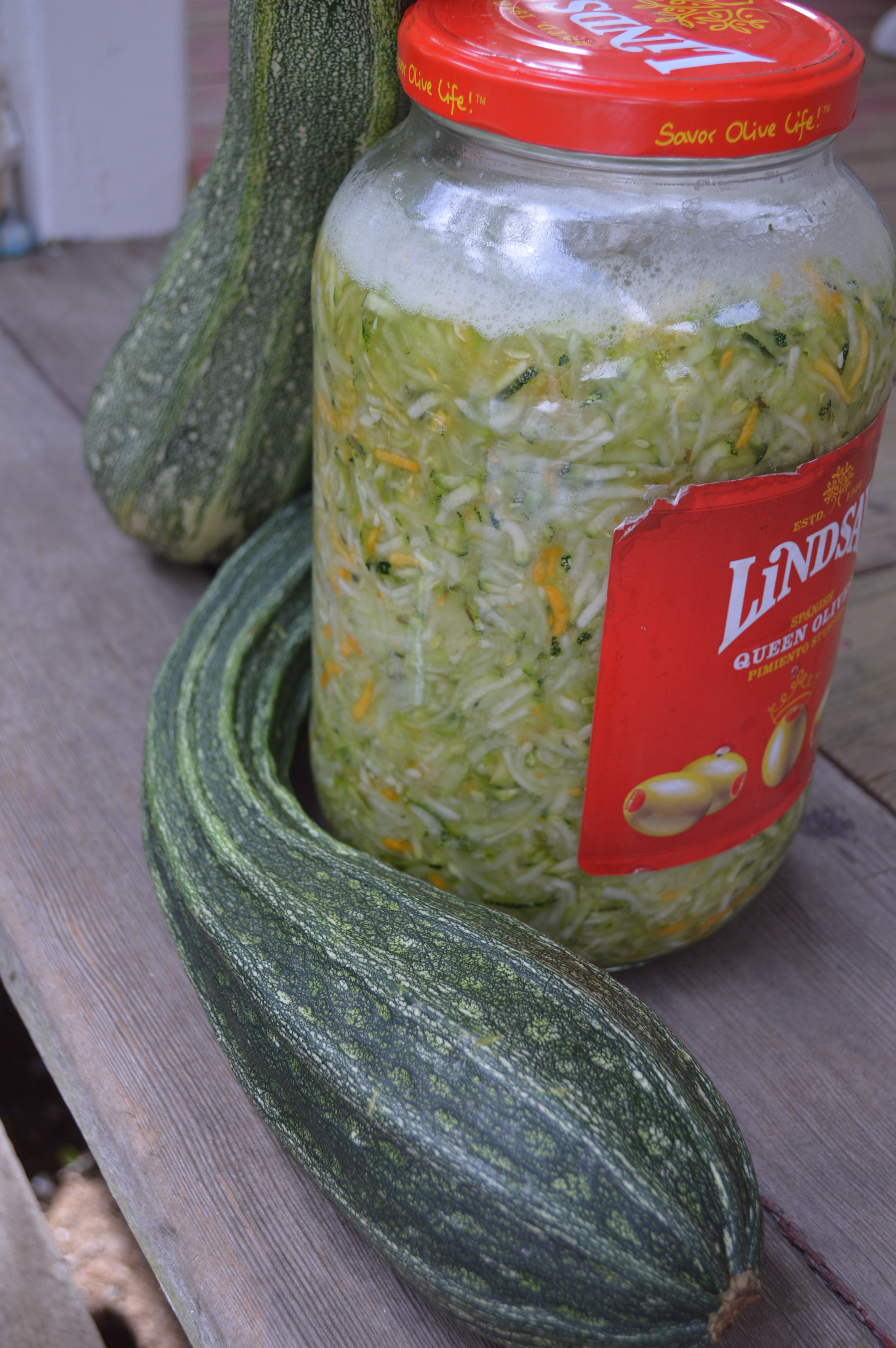
I decided to cook up some of my heirloom Christmas lima beans and make a casserole.  With a lot of work to do in preparation for the National Heirloom Expo, I need my energy.  I had the food processor out with the shred blade on, as I was already making my pipinola (chayote) kraut.  I was also sitting on several pounds of zucchini from a farm trade that I made with our local CSA.  I decided to just keep shredding and make a taco seasoned dish that I could use throughout the week. Here is what I did:  I had cooked the Christmas lima beans on low overnight in the crockpot with water enough to cover, and 1/2 of a Sweet Onion. I was already planning on using the beans, so I thought that all I needed was some more vegetables.I shredded one half of a large Hawaiian Sweet Onion, One large Zucchini, one pipinola(chayote squash) 2 orange habanero peppers, and 5 pickled hot peppers.  I then poured the shredded veg into a bowl, and pulsed 2-3 cups of the now room temperature cooked lima beans.  I added them to the bowl, and added two packages of taco seasoning, a sprinkle of sea salt, and a cup of breadcrumbs.  I mixed it all together and pressed it into a 9×9 square pan, baking it at 350 degrees for an hour.

I’ve been making homemade kraut for several weeks now, as a means of capturing the harvests that come and go at both the farm and garden. The salty zing of the sea salt brine is welcomed after a hot day in the field.  I thought, why not?  Add it to the taco.  I am happy to learn that this one taco casserole makes two completely different dining experiences.  Fresh out of the oven, it is warm and comforting, with melted cheese and steamed rice for an evening meal, but the next day, it is bright and light as a chilled lunchtime taco with the ice cold kraut.

Since I am doing a lot of physical labor, I need a lot of food energy to get me through the day, so this homegrown, healthy taco had enough staying power to keep me going. Granted, my farmer portion was probably a bit larger than many would make.  Overall, it was a simple feast made out of farm and garden goods.  I will certainly make it again soon.

Try experimenting, I am sure carrots or pumpkin would be equally nice additions to the taco.  Just think in terms of a meat loaf minus the meat.  You can add two beaten eggs to the mix as well, or add chopped boiled eggs if you are a hungry one like me. As for the kraut, I have made a wide variety of them in my initial experimentation.  It is all based around what is in arms reach. I have a few chili peppers producing now, and I always keep fennel fronds near.  Though I am not a seaweed (limu) collector, I support those few that do here in Hawaii.  I have been using seaweed as the majority of the salt in the recipe, topping off jars with just a bit more salt for fermentation.  If you haven’t read it, you may enjoy my earlier post on my summer fermentation trials with pipinola (chayote)

DSC_0753

Aloha from Squash and Awe

Stories in the Rain

I’ve been waking when I should be going to bed. Restless with fatigue as I try to continue on through what seems like an endless list of “to dos.”  The dogs huddle in close trying to warm themselves after what feels like six straight days of soakings.  The drought has ended in floods.  My no-till patch is a bog of hops.  Sloppy mush coming up past my ankles and squash leaves bigger than dinner platters. My Hunter boots have given way with a leak where I put a pitchfork through them, and the top of my foot, six months ago. So now I have as much of the hops slurry on the inside of the boot as on the outside.  The rains fall heavy from dark grey clouds, continuing through the night, but ending every morning before returning again at mid day.  This unlikely deluge has changed Summer to Winter.  I’ve lost track of the names of the hurricanes turned tropical storms.  Each one crossing over the Hawaiian islands and loosing it’s bearings, a bit like me.  I may be sleeping when I should be relaxing, Then awake when it is time for bed.  I read a few pages here and there from a book I picked up from the sale rack while visiting UH Manoa’s campus.  It is a beautiful book that tells the story of another time in farming, a time that doesn’t have to be in the past.  I had high hopes of raiding the agriculture text books, but my visit coincided with the bookstore cleanup where students dumped armloads of books off and fled to their summer freedom.

Stacia Spragg-Braude writes in lyrical prose, describing the daily life of an extraordinary character who continues to farm against the odds.  The beautiful hardbound volume met me eye to eye and I new it would be my birthday present to myself.  (The book summary ) I was heading back to the Big Island, and as I often do, I fill my arms with books, hoping to find the words and wisdom to keep me going even in the darker moments.  As tonight’s rains pour off the roof in an audible cascade, I think about drought and how much I, like Evelyn in the book, thinks of water.  Here in the town where I hang my hat, there is a demarcation line of precipitation levels.  Wet side and dry side.  This year, and for several years prior, the weather, like that in much of the world has been just plain confusing.  The drought was here before the year 2001 when I first planted chili pepper plants and Florence fennel on a washed out hillside in Hamakua.  I learned how to care for banana trees, and would walk buckets of lilikoi (passion fruit) to the elderly neighbors who would know what to do with a bucket of fruit.

In the book, the author writes of how water remains on one’s mind a lot in the dry near arid farmland of Corrales, NM. I can relate.  I find myself starting conversations with, “We never got our Winter rains this year.”  I often get back a blank stare.  In this town, few people think in terms of scraping out a life from the soil.  The few vegetable growers that remain, many of which on small parcels, are being hit hard.  Not only is it an uphill battle to get any to buy local produce, when unusual weather hits, our inability to produce, in walking on water fashion, is considered a let down, or worse yet, failure.  Farming is 100% risk, but we hide that risk by taking the faces out of farming, and international produce brokers stuffing our state full of the vegetable version of fast food.  Chemically contaminated, harvested too young, low in nutrition, and on every plate. You don’t often get rewarded by doing it right.  Fast and cheap has lowered our standards.

So when deluge like conditions strike up country Hawaii, I have to take a moment to rethink all things.  When a five gallon bucket is half full overnight, it leads to a drastic change of strategy.  In the book, the farmers created their own irrigation system from the river.  Here, the creek overflows it’s banks on days like this, I watch it cascading by on it’s route to the ocean. Our farmland irrigation is borrowed from the much wetter parts of the island.  We are taking their bounty.  This creates a false view of water, where farmers can squirt irrigation every day, all day until their fields are filled with puddles.  Almost nobody bothers to improve the soil, so that it actually once again hold water.  Water just appears from somewhere else, and few are even grateful for it.  I remember having a talk about water conversation that fell on many deaf ears.  The farmers crinkled up their noses when I noted that our water reserves were hitting desperate times, and that we were warned to conserve. The general attitude is that they should water more, so that they “get their share” even if they don’t need the water.  They should take it, so someone else doesn’t get it.  I realized that day that I would never relate. I said my bit about building the soil, so to cut their water usage and benefit their plants.  I was laughed at and told that their soil was some of the best in the state.  Weeks later part of the USDA’s soil team visited us, and shook their heads in the same way I did.  For once, “big government AG” agreed with the rookie. The generation before me may be the only one that bred farmers that don’t think about soil health.  My Grandfather would roll over in his grave if he heard them speak.

I was raised in a community that was a lot more like the town of Corrales, or at least the communities that surrounded our farm were a bit like that New Mexico community.  Here, the plantations left a scar on everything that it touched.  Though we focus on the damage done to the land, equal damage was done in taking away the pull yourself up by the bootstraps way of thinking.  Here farmers are pitted against each other, and imported produce is king.  It is hard to stand tall as a community of farmers when someone is standing on your neck.  It has been this way for so long that many barely remember another way, though much of the shift toward the outside suppliers happened within the span of my lifetime on the planet.

The rains now stopped, and the dogs snore.  I find myself getting tired and mistyping the town of Corrales as Corvallis, a place where I WWOOFed in torrential rains in a strawberry patch, as hail fell into the Spring mud just over 3 years ago.  I remember rounding up the animals to shelter them from the hail, feeling grateful to maneuver a stubborn ram, three Nubian goats, and a huge and defiant horse into their shelter.  I was shaking with a healthy dose of fear and adrenaline as I got them all tucked into the open sided barn.  The hail stones stung on my face as the spooked horse stomped and eyed me in that big eyed way that horses do.  The horse had leveled a few in it’s day with one swift kick.  That afternoon, I saw a different side when I clearly put myself in harms way so to help him.  He knew, and kept his kicks to a minimum.  I returned to the farmhouse kicked off the boots, and shivered as I purged myself of raingear in the entryway.  The farm owner, who had inherited the farm, was tucked in with a cup of coffee, feet up in front of the fire.  She was confused at why the animals were brought in out of the hail.  I realized then, just weeks into my farming journey, that what is common sense to one, isn’t to another, and owning a farm doesn’t make you a farmer.  That bit needs to be earned.

Population Density and the Farm

People dream of farming on Hawaii Island, aka the Big Island, and they are inspired by all of the potential that it holds.  So these agriculturally minded people create interesting CSAs, they make farms, and aspire to be a farmer’s market vendor.  What most of us fail to consider is the weight of a low population density and how it will affect business.  Without growing the demand for such goods, we will soon be in trouble.  Why? A lot of space between populations means long delivery distances.  With only a few restaurants that buy local produce, that  means that you must have all of them on your team. As in 100%. And that is tough to do unless you are the only farmer around.  That sounds funny, but I have met people in other parts of the country who have a lot of customers because they deliver a great product, but equally important, they have a captive audience and no competition from other farmers or imported goods.  That is an amazing scenario, but not likely here in Hawaii. And we all know that we are not getting much income off our markups in the first place.  We have to produce the product too. I am not discussing “hobby farms” here, I mean to address the issue of farmers that have to survive off their farming.  A friend of mine just couldn’t relate.  I only half-jokingly noted that it is like a realtor having to build the house, go door to door trying to sell it, then get only a few dollars over cost, or even not cover the costs, then immediately do it all over again.  Like I said, it is only half-joking. Maybe that isn’t a perfect example, but farmers are in a really different situation than most people can relate to.

Though in the past three years, I have only stuck one toe into the pools of complexity that surround agriculture in Hawaii. I was more than a little discouraged to find out that almost no farmer that I know is making a living off farming.  They are considered part-timers because their spouse hold a ft job in an office, a non-profit, or a hotel. It is survival.  Right now, grant monies are being directed to new farmers, and as these programs churn out students of all ages and abilities, in our nation’s most expensive place to live, it is hard to tell these inspired new farmers that on top of all else, they need to enter into the difficult task of building new markets as well.

So let’s get back to population density.  On my May trip to Oahu, I saw a familiar face at a unfamiliar farmer’s market. There was the banner of one of my neighborhood farms.  Why on earth were they selling leafy produce on Oahu, several island away from their farm?  It wasn’t just them, there was another Hawaii island farmer there as well, he noted that, “We just don’t have the business that we need to survive.” So they fly to Oahu every Saturday?  Looks like it.  Another well-respected local farmer ships about 90% of his produce to Maui.  Same idea.  Maui has a population density that we do not, and they also have a much better chance of someone caring that their produce is sustainably produced. It is at best, daunting to consider those logistics for farm survival.  Air travel to another island is not cheap in Hawaii, nor is shipping food.  Leafy greens are light, but they require refrigeration.

So what are my suggestions?  One is that I think we need to make a more intensive effort of gardening on Hawaii Island.  Switch gears back to the backyard.  We have yards on the big island, and with some training in soil building and gardening, it is quite possible to grow quite a bit of your own food.  Another idea is to build the movement. One long time Hawaii island resident noted that the desire for local, sustainable food never really took off, in fact it may have been better in the 70’s.   My research indicates that they are right, in the 70’s over 80% of the island’s food was from Hawaii, much of it from this island.  So are we backsliding?  Maybe.  The increase in our island’s importation of foods combined with a locally grown following that isn’t increasing at the same rate.  It feels like it is growing, but from what I hear, local is on many peoples lips, but not on a large number of Hawaii island plates.  I know a lot of circles who buy a large percentage of local produce, but I also know the Costco set who proudly announce that they bought produce from Europe that morning.

Facing Uncertainty on the Farm

One of the topics that I must address is the challenge beginning farmers face in having to experience “newness” all of the time. Beginning farming, establishing markets, and trialling seeds surround you with a lot of change, just like what we all face when starting down any new path. Add in that we also have to deal very directly with working in an unpredictable work environment. Ever changing weather, climate, markets, all make for a shifting situation, in addition to learning to farm in difficult times. Too much change can be stressful, and it will keep us from being our best. Facing the unknown on a regular basis does have some upsides, especially if you remind yourself that it is a part of learning. There are many issues in agriculture that can get me rattled, but on a day to day basis, I find myself trusting the process, and embracing the many aspects that come with trying to move forward as a new farmer. Each time we try new things, we challenge ourselves to step free and clear of safe zones. You are leading, and moving forward with every experiment, even if your idea fails commercially. Pushing yourself into new directions is uncomfortable at times, especially because the financial risks can be great. We all know that risk taking can be stressful, but let’s step back for a moment and allow us to look at things holistically.

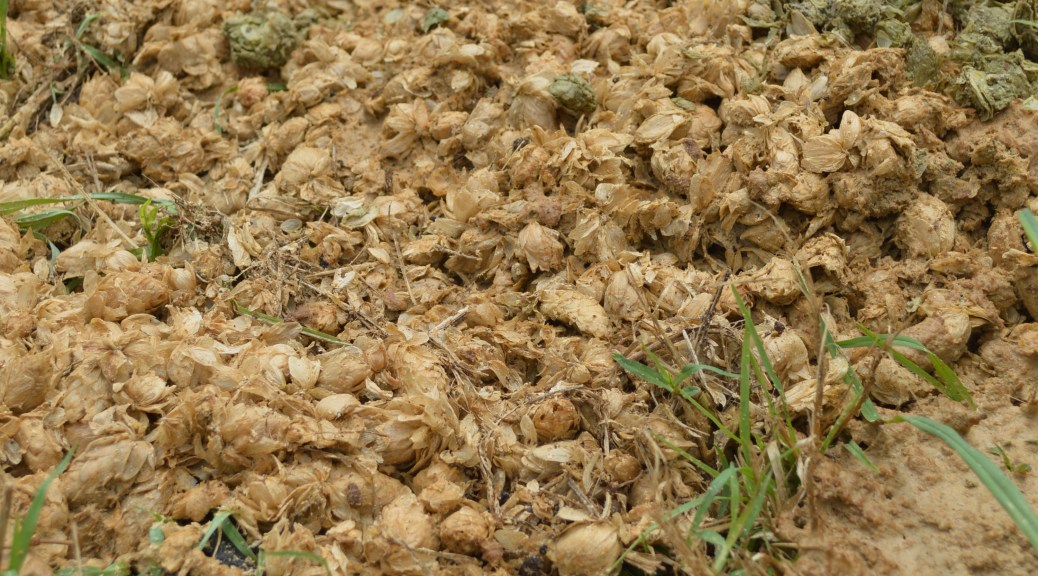
Yesterday, I was fretting and thinking that I should be planting more squash for our Nov-Mar high season. Instead, I was pouring 200 gallons of spent hops from our local brewery into the farm’s soil. Let’s look at this for a moment. Instead of fretting, I tried to stop and realize that the great haul of free soil building materials is a real gift. It is a gift that will nurture my plants all season long. By stopping and taking those opportunities, I have found that the healthier plants grow faster, resist disease, and often surpass the growth of plants that were planted earlier, but didn’t get the additional care that soil amendments added to their life.

It is normal to fret when looking at agricultural Calendars. Time ticks on regardless. The irony is that my friends in short season areas often have faster growing plants and more abundant harvests than we do in long season, but up and down weather that higher elevation Hawaii has. In Hawaii, one of the toughest questions to answer is “when do I plant?” I was getting plants in the ground in March, and they are not any bigger than the squash vines in May. Why? We had a strange weather pattern. The faith in continuing on, and soil building instead of worrying about timing helped me greatly. I now have healthy seedlings that are soaking up the benefits of my soil building, even though they were planted later. Late and healthy are better than “on time” and sickly. Too many are tempted to throw up their hands when things swerve off schedule, or when drought, pests, or weather sidelines us. All I can advise is don’t let yourself get too rattled.

In just the couple years that I have been farming, I have learned to throw in some radish, or mustard seeds when the cool weather stays too long. Why? You will have a happy take away to soften the blow. Yes, your heat loving commercial crop may be late, but often there isn’t a single thing you can do about it. You are not going to change the weather, worrying isn’t going to help you, so you may as well have some food in your stomach. I do it all the time. It keeps my farming fresh, and my ability to adapt becomes a comfort for me. Yes, I get disappointed as chefs want me to produce more, but the vines are not having it. The plants can hit the pause button, and that is how it is. The pressures of producing 24/7/365 is an absurd standard that no farm can do. Soil needs to rest, plants need to rest, as do farmers. We are more likely to let the soil and the plants rest before we do. I once had a talk with a distributor who believed that some farms produce everyday of the year, what she didn’t realize is that the produce that is coming into Hawaii is pooled together at warehouses. It isn’t from one farm. Nature doesn’t work like that.

Adaptability is hard, it takes practice, and I don’t always do it well. Before I lash out at the cloudy cold weather, the drought, the this, the that, I try to see it as and opportunity to do something else that needs some attention. Sometimes the one that needs attention is me, as the farmer. A strange stormy sky drove me indoors for one hour last week. High winds interrupted my flow. I decided to put my feet up and read a couple of farming articles. It was rejuvinating and I felt like that break actually put me forward. The skies cleared, and my mind thought about the words I had just read. I completed all of the work that needed to be done, and that break gave me an idea or two of things that I could do at the farm. It also reminded me of our shared experience. Farming isn’t always appreciated, and often it is made fun of by people who may not even realize that their words cut through you. Not all of us are surrounded by an immediate support team, so make sure to read the stories of others that are doing things similar to you.

I pick up memoirs of farmers, chefs, travelers and foodies. They are a great source of inspiration because their road isn’t easy either. If it was, it wouldn’t make for a very good book. Farming memoirs are popping up here and there, and they can be great to keep nearby. I happen to love William Woys Weaver’s book of vegetable essays 100 Vegetables and Where They Came From
It is the kind of book that inspires in snippets perfect for a short break. William Woys Weaver can make anything interesting. He is a historian, chef, educator, gardener, and seemingly, a pretty dynamic individual as a whole. Remind yourself that your actions matter, and celebrate your role in our food system.

Sometimes an injury drives me out of the field and garage completely. It can happen to us all. When I get hurt, be it a knot in my back, or a sprained hand, I try to take it as an opportunity to expand my photography, writing, research, or my kitchen trials. The injury can lead to inspiration. Like other unexpected events, we can react in many ways. Injuries make me very aware of plan B, especially since I am a one person farm. Everything is on my shoulders. Being injured may sidetrack us from our immediate plans, but it has made me make changes that were very positive. One change that came from one too many slips and twists was as simple as changing my shoes. One of my customers observed that I carry about with 40-50 lbs in my arms at most times. She was right. That can be 1/3 to nearly 1/2 of my body weight. When I twist an ankle, or turn on a slippery floor, the additional weight is felt, and it can cause injury. Making a simple change to wearing better shoes, even sporting running shoes, made my delivery days more enjoyable. The wider base for your foot, the arch support, and lightness all made for a better, safer day. I calculated that in one day I lifted and moved 1850 lbs so to set up a photoshoot for the Hana Hou Magazine photographer that was visiting the farm. It was just a few bushels of pumpkins, but they were lifted and carried back and forth as props. It adds up. With the change to better shoes, I found that I was working longer hours, but I was less tired.

I don’t really want to get injured, nor do I desire windstorms, but I also know that when you choose to garden or farm, you put yourself in a very physical job immersed in unpredictable conditions. Complaining about the weather is a bonding experience for many of us, but let’s remind ourselves that we can use those unpredictable times to push us in a new direction, to reinvent, rest, or seek inspiration. Let a scorcher of a day lead you to an ice cream cone once in a while. Open a book and rest your back. Your productivity may actually increase. We may help to motivate a new generation of farmers if we treat ourselves with the same care and respect with which we treat out soil, our produce, and our communities. So let’s farm by example, and do our best to roll with it.

For the Love of Hops

The Beer Garden is the nickname of my small farm parcel.  On April 1, 2013 (April Fools Day) I began to soil build.  When you know that you are growing a hungry crop, you know that you need to build your nutrients in as part of the plan.  So from day 1, spent hops from the award winning Big Island Brewhaus were used to amend the soil.  I am doing no-till, so the hops are dug into the growing piles.  Much like a 1/4 acre compost heap, it takes some attention and care to see that the soil stays healthy and that your microbes and worms can thrive.  People laugh when I say that it is a huge effort to “turn” a 1/4 acre.  Remember that each time I turn the farm, my zero-waste principles are at play.  Sure, it is easier to rip up plastic ground cloth, roll it into a ball, and drop it into our landfills, then they over till, and spray. That is one strategy, where you may save time there, but in the big picture, you are not saving anything. I do the opposite of that.  Each foot will either have a plant growing there, or will be used as a re-rooting place where vines will be buried under the homemade soil and get another hit of nutrients.

Yes, the other method can be done in a day, but your soil is on borrowed time, while mine is surging forward.  My labor of hauling and lifting create a nice, rich soil that holds water.  In a drought…that is worth gold.  So think before we discard.  Make connections with these local businesses who would like to help their farmers.  Yes “their” farmers.  Farmers belong to the community in the best possible way.

Here is a video where I explain a bit more about amending with fermented fish and brewery waste

I always do the warning about hops and dogs…they are poisonous to dogs, so watch your pet.  Many dogs have zero interest, but be cautious.

The image says it all.  The additions have changed the soil dramatically.
The image says it all. The additions have changed the soil dramatically.

So think about how you can make super soil.  This farm is small, but my soil is mighty.  Be a steward, and you will be rewarded with a bountiful harvest, reduced pests, and you will be a hero to the kindergartners…and who doesn’t want that?

Time to Shine: Being Ready for Farm Photoshoots

It can be a challenge to make everything come together on the farm, especially when we add in media publishing deadlines. Like squash farmers, publishers think far ahead, as in 4-6 months out for their articles.  That means that they are often working on a harvest issue while the farmer is planting.  It is an exciting challenge to meet. There is a buzz of activity that throws us farmers out of our daily routine. Photography and styling replace weeding and shoveling. I find myself getting stuck thinking that the farm needs to be in full vining glory to be interesting, but I am wrong in doing so.  The no-till soil building is the foundation of not just the health of the plants, and the environment, but also key to my water management strategy. The field at rest is a sign of health too.  Young plants are a part of the continuum, as are compost and the flowers before the fruit.  Every stage has it’s worth, though its beauty more subtle.

I think many of us use traditional methods that are intriguing to the media.  We need to remember that the tools of our everyday: the jars of seeds, the old rusted wheelbarrow are all a part of the character that our farm has.  Be creative when you get those inquiries from the media.  Your farm and garden is much more interesting than you may think, even in off-season. So say yes, when someone offers you and your farm a moment in the spotlight.  It is a wonderful thing that farmers are now getting the opportunity to be acknowledged for all that they do.

The image says it all.  The additions have changed the soil dramatically.
The image says it all. The additions have changed the soil dramatically.

Interplanting With Squash

Squash are not known being team players in the garden, but are we giving them a fair chance?  Squash will grow out and over everything in it’s path, but if you plant other vegetables at the base of your squash you solve many things at once, let me explain.

For example, the Three Sisters method was a smart interplanting solution invented by the Native Americans, including the Iroquois.  Don’t believe me? Well, squash stars (well assists) in the beautiful flip side of the 2009 US Dollar coin.  That is right, not only I say that squash can play fair in the garden, the evidence is minted.

Though I was not yet able to do a true, successful Three Sisters Native American planting technique, I’ve been able to keep true to the underlying truth that considered what plants need, and how those needs can be connected in a self caring system.  I add in cherry tomatoes, or tomatillos, along with beans, corn, and squash.  At times I add plantings of okra or sunflowers in lieu of corn.  Tall stands of okra become an excellent resting spots for small birds that feed upon the pickle worm moths and other flying foes.  They use the okra as a lookout spot before diving in for a bug. So for those of you who think that a squash farm is just squash, you are missing a lot of the fun, and a lot of the harvest.  Not only does it create multiple crops from one watering and one application of fish emulsion, but it also is good for the soil.

Need more convincing?  Please remember that squash vines will grow away from this central point, leaving the other plants to breathe. So give squash a chance in your small garden or farm.  It will smother weeds, feed your family, and reduce water evaporation for those, like me, who grow in drought conditions. If the vines threatened to take over, prune them.  It is that simple. There is little to lose, and much to gain.

Glass Gem popcorn, Tigerella tomatos, Hawaiian Black Kabocha, Jimmy T's Okra, Rattlesnake pole bean...in harmony
Glass Gem popcorn, Tigerella tomatos, Hawaiian Black Kabocha, Jimmy T’s Okra, Rattlesnake pole bean…in harmony