I love my Winter Squash, and each time I plant, I find beauty in their shapes and sizes, but as I get more seasoned as a grower, the nuances in the leaves also calls out to me.
Fig Leafed Gourd (above)
I am getting pretty good at being able to know a squash not just by it’s fruit, but also by it’s leaf. When selecting blooms for hand pollination seed purity, there may not be a fruit there on the vine to help you identify it. So if you plant a small intense plot like I do, it can get confusing. Learning how to identify the vines by the leaf patterns, colors, shapes and sizes will help you in so many ways. As you plant in future plantings, you can plant several different looking squash plants in very close proximity and still know who is who.
People see me coming and going with lots and lots of cardboard. I get more than a few questions as to why. These videos should sort out my no-till methodology.
No matter whether you like your meals spiced mildly or for maximum heat, here is a simple way to capture the delightful tastes of heirloom chili peppers. This ten minute process will allow you to keep some summer heat long after production stops, or for those of us with come and go chili seasons, it captures the bounty until it returns.
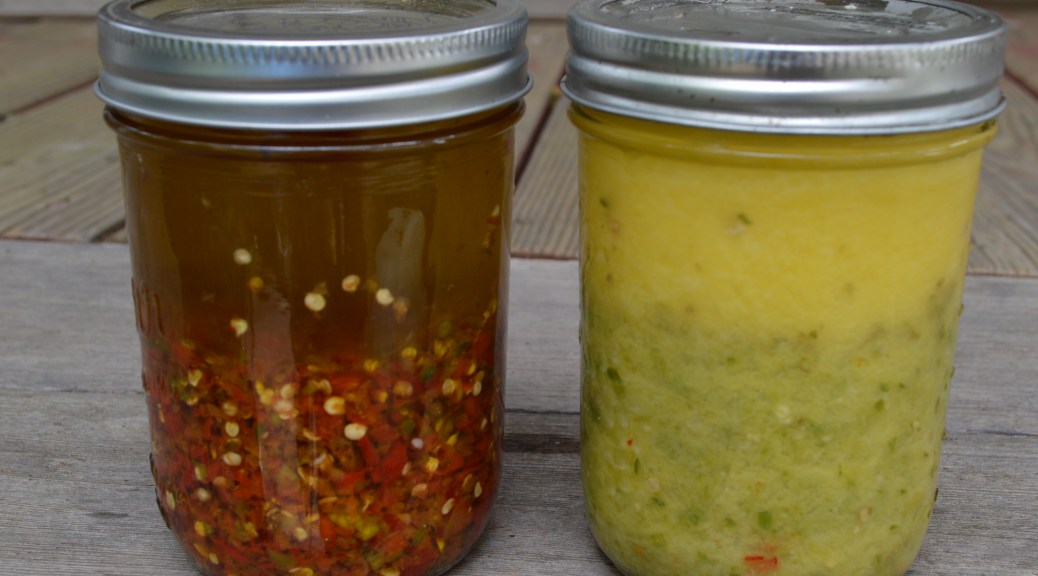
When I returned from the Ozarks, there was a wide array waiting for me to select from. I decided to make a nice hot version with the sun ripened fresh chilis. You can make a mild oil by using mild green chilis, then up the heat with ripe ones. The olive oil diffuses the flavor in a way very different from hot sauce. I like to start with a couple handfuls of peppers fresh from the plants. I cut off the stem end, and reserve the cuttings for my fire-breathing flock of hens. Cayenne tends to be the top poultry pleaser. They often get into a scuffle over the pepper bits. I have read that it is healthy for them, just like chilis are for us.
Then simply drop the trimmed peppers into the food processor container that is fitted with the chopping blade. Be careful not to breathe in the crushed chili fumes, as it will irritate your lungs. Some people prefer to use safety glasses and gloves as well. This process allows the food processor to do most of the chopping, instead of you, but use caution regardless.
Pulse them to a fine chop, and add a bit of olive oil at the end, so to make the mixture easy to pour. Garlic lovers: peel and add a couple of cloves to the container and pulse them right along with the chilis.
Minced chilis ready for the olive oilA good organic olive oil is added
With a rubber spatula, scrape the sides of the container as you pour the chili mix into a clean 1/2 pint or pint jar. I make this by the pint, because I use it in so many things. It adds a refined chili infusion rather than over the top heat. Top off the jar with more good quality organic olive oil. Place on the lid, and shake lightly. I will leave this jar on the counter overnight for the flavor to set, then invert the jar onto a plate, and place in the refrigerator.
Inverting the mixture allows the chilis to be dispersed evenly
As the oil is refrigerated, it will solidify. Turning the jar every couple of hours, or at least once before it is solidified, will make the chilis more evenly dispersed. When I use up the top 1/2 of the jar, I often add more oil and mix it in with the glut of chilis that sunk to the bottom of the jar.
I like to take a heaping spoonful, and use it as you would use olive oil in any recipe. I use it mixed with basil, garlic, and rosemary to marinate my pumpkin slices on the grill. It is lovely mixed into stir fry, with greens, spaghetti sauce, and mixed into plain rice. The olive oil will return to liquid at room temperature, so spoon out what you need, and return the jar to the fridge for storage. Try dragging a piece of toasted garlic bread through it, or drizzling over pizza instead of pepper flakes. The uses are endless, and it will make a well seasoned meal in minutes. This oil should last a couple of months in the refrigerator. Mine rarely lasts, simply because it is a part of so much of my cooking. Enjoy this little bit from pepper paradise!
I am a bit nervous as I prepare to leave the farm for 7 days so to be an active participant of the Baker Creek Heirloom Seeds Spring Planting Festival. http://www.rareseeds.com/spring-planting-festival/ It will be taking place at their Missouri headquarters on Sunday and Monday, May 3rd and 4th. Forgive the fact that I say Sat and Sunday in my video…It is Sunday and Monday, and I am a bit giddy about the whole thing. I will be giving two talks now, one on Sunday and one on Monday. I am most grateful and excited to be going.
So now, aside from saying the wrong days in the video, the rest is good information, that I hope you will enjoy. How do you get ready to go especially when it is prime time to be farming here in Hawaii? Take some small, but strategic steps toward starting seedlings, so that they are ready to go upon your return. I use reclaimed basalt blocks that are cut down and soaked in water. Each will hold one squash seedling, and they will make it so that minimal disturbance to the root system will take place at transplanting. Squash generally do not like to be transplanted…so this is a real happy success to share. I have increased both productivity, and my germination speed by this method. So sit back and enjoy, and maybe I will see you on Sunday or Monday there at the Spring Planting Festival!
If given the opportunity to dine on avocados everyday, I would. This time of year, in upcountry Hawaii, that opportunity arises. So what better way to celebrate then by doing a series of kitchen trials to celebrate both Tahitian limes and avocados. Last night I made swipe #3 at a DIY version of avocado pie. I wanted to see what would happen if I mixed in two things that work well with avocado: salt and lime. Here is what I did for this spoonable desert…that is disappearing as fast as I can type.
No Bake Avocado Pie (Gluten Free variation)
Crust:
2 T butter
one bag of pecans 10-12 oz or so
coarse sea salt to taste
Filling:
2 large ripe avocados, 8 oz block cream cheese, lilikoi syrup, powdered sugar, juice of 1 lime.
I used a food processor for the lot. Place nuts, and butter into the container, and add a pinch or two of sea salt. Pulse and taste. It should have a salted nut quality to it. Once pulsed to a crumbled texture, remove and press into the bottom of a pie pan. In the same container, pulse the cream cheese, avocado, and lime juice, then blend well by putting the food processor from pulse to ‘on.’ Add your desired sweetener. I chose lilikoi (passion fruit) syrup made by my friends in Hawi, and powdered sugar. High quality local honey or agave would also work, or powdered sugar on it’s own. Stop the blending, and try the mix. It should taste sweet, but not over the top. add a touch more sweetener if needed, Blend well. Spoon onto the nut “crust” smoothing as you go, and place filled pie plate in the refrigerator. It is a simple little dish that can be made in under 10 minutes, when you have ripe avocados that need to be used. This desert could be expanded into a full on cheese cake, but when in a rush, this little gem does the trick.
In mid April, I have my days set on clean up. Pulling grass, pruning chilis and eggplants, and replanting for the seasons ahead. In the ever variable weather conditions of upcountry Hawaii, “now or never” springs to mind. So here I am showing you how my mini kitchen gardens dapple the farm. Though the invasive grass of the area may smother, it also protects the freshly made soil from wind erosion, as well as dehydration from the sun.
So try to think your way through tough situations, like how to deal with a smothering, drought hearty invasive grass that was brought in for the cattle industry, yet smothers the rest of us. You are never going to win in this battle, you can only figure how to work with it’s existing properties. Kikuyu grass exists in Hawaii from 6000 ft elevation on down. It also smothers other places like Australia. Mowing it is one use, but the grass can be used as a living mulch that will retain soil moisture as squash vines crawl on top of it. The grass can make bee pollination difficult, but at the same time, for squash, it can also make it difficult for melon fly and pickle worm to attack your squash plants. There is an upside and usually a downside to just about any farm related matter in Hawaii.




 Squash and Awe